


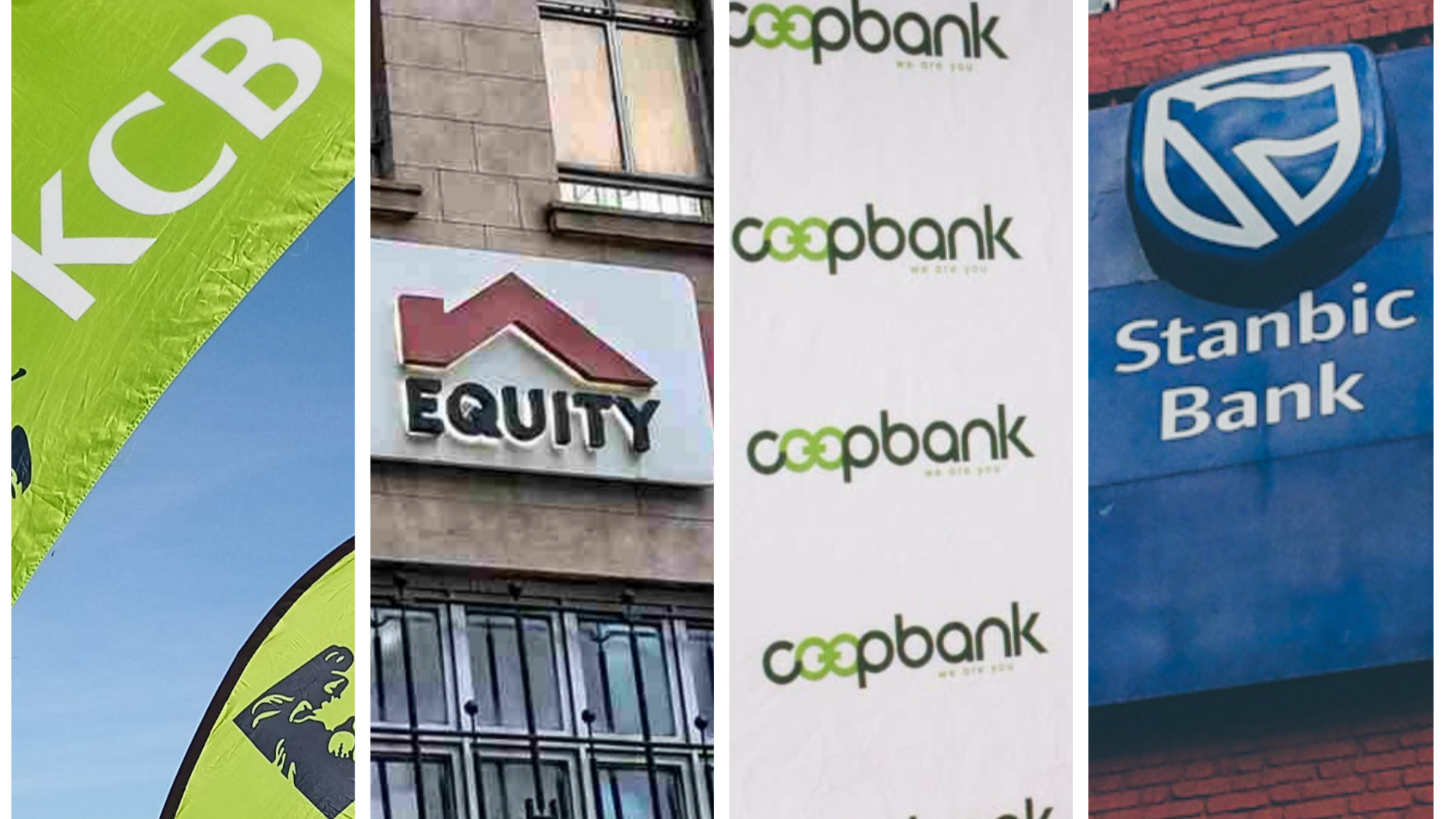
Forbes has placed four Kenyan banks among the world’s top performing lenders, giving East Africa a rare seat at a table built mostly for Wall Street and the City of London.
KCB Group, Equity Group, Co-operative Bank of Kenya, and Stanbic Holdings all appear on Forbes’ inaugural World’s Top Performing Banks 2026 list, a 500-bank ranking spanning 89 countries. Produced with the research firm Statista, the list judges banks on financial performance rather than customer surveys, a shift Forbes says makes the results easier to compare across markets and currencies.
No other East African institution made the cut this cycle, which puts the spotlight squarely on Nairobi.
How Forbes Built the Ranking
Forbes scored every bank on four measures. Profitability, covering return on average assets, cost to income, and net interest margin, carried the heaviest weight at 30 percent. Growth and earnings quality, which tracked deposit growth and earnings stability over three years, counted for 20 percent. Capital and funding resilience and asset quality and efficiency each made up 25 percent, drawing on equity ratios, loan to deposit ratios, credit quality, and risk management.
Eligibility rules kept the field narrow. A bank needed a license as a deposit taking institution, audited statements for its most recent full fiscal year, three straight years of reportable data, and total assets above $3 billion. Forbes then sorted qualifying banks into six tiers by asset size, from global giants with more than $500 billion to smaller lenders holding $3 billion to $10 billion.
“The profitability score was calculated by combining return and efficacy metrics, such as return on average assets, cost-to-income ratio and net interest margin,” Forbes said.
That asset floor explains the shortlist. Kenya’s four largest banks by balance sheet size cleared the bar; smaller lenders such as Diamond Trust Bank and Absa Kenya, both active regionally, did not.
Kenya’s Four Qualifiers
Equity Group posted the strongest half year of the group. Profit after tax climbed 32 percent to KSh45.5 billion for the six months to June 2026, while profit before tax rose 39 percent to KSh57.8 billion, according to results the bank released. Subsidiaries outside Kenya now generate roughly half of group profit, a mix chief executive James Mwangi points to as evidence that the bank’s regional bet is paying off.
KCB Group, the region’s largest bank by assets, grew profit before tax 20.8 percent to KSh49.32 billion in the same period. Total assets reached KSh2.3 trillion, and the board raised its interim dividend to KSh3.00 per share from KSh2.00 a year earlier. Chief executive Paul Russo credited disciplined cost management and stronger contributions from the bank’s regional subsidiaries, which now account for close to a third of the balance sheet.
Co-operative Bank of Kenya reported a 28 percent jump in profit after tax to KSh18 billion for the half year, supported by a 15.8 percent rise in full year profit to $310.3 million, per Global Finance Magazine’s Africa banking review. The bank now routes more than 90 percent of transactions through digital and agency channels rather than branches, a shift it credits for much of its efficiency gain.
Stanbic Holdings, the Kenyan arm of South Africa’s Standard Bank Group, rounded out the list with a smaller balance sheet than its three peers but enough scale to clear the $3 billion threshold.
Beyond the Headline
A Forbes ranking hands Kenyan lenders a reference point that investors and rating agencies outside the region actually recognize, at a moment when several of them are courting foreign capital and weighing listings or debt raises abroad.
In addition, Kenyan banks increasingly earn their profit outside Kenya. Equity’s non-Kenyan units now account for over half of group deposits, loans, and assets. KCB’s regional units carry a similar weight. That diversification cushions the lenders against a domestic backdrop the World Bank has flagged as strained, with gross non-performing loans across the sector running near 15.6 percent as of March 2026 and roughly KSh2.2 trillion of banking assets tied up in government securities.
Tanzania’s CRDB Bank and NMB Bank, and Rwanda’s Bank of Kigali, have built comparable regional footprints and led national rankings elsewhere this year, but neither appeared on the Forbes list, likely a function of the $3 billion asset threshold rather than a comment on their performance.
For depositors and borrowers, the practical effect will be gradual: more investment in digital channels, continued expansion into neighbouring markets, and pressure on smaller lenders to consolidate or specialize.
