


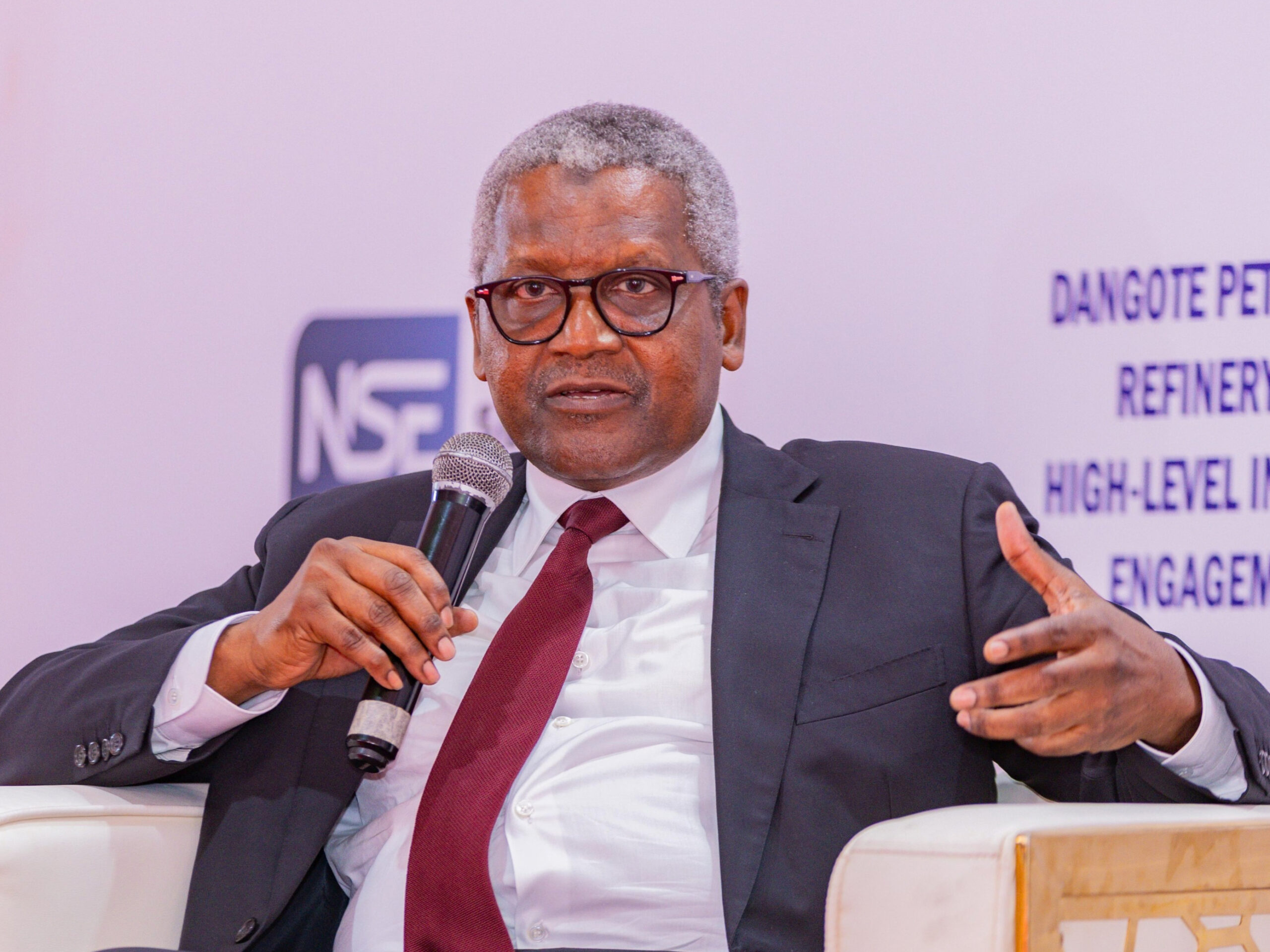
Asked by NSE chief executive Frank Mwiti what he would tell business owners with large ambitions, Aliko Dangote drew on 47 years in business. He started in 1978 as a cement distributor selling four truckloads at a time.
“Don’t go and try and do 100 different businesses,” he said. “Be very, very focused, and don’t go into any business that you don’t understand.”
The lessons
1. Stay in one business you understand
Dangote said a founder who enters an unfamiliar sector ends up relying on the people running it to explain it. His group learned this in banking.
“We realised that we are no professional bankers. We are only investors,” he said. The group left banking to concentrate on industry.
2. Set a target above your current reach
Dangote said small goals limit growth. “If you have a smaller dream, you will never ever grow,” he said. The group’s Vision 2030 targets more than US$100 billion in revenue.
He said he plans in five year cycles and not ten, because “when people have a ten year vision they get tired, they will relax.”
3. Choose work over comfort
Dangote said building a large company and a luxurious life do not go together. “Enjoyment does not go along with building a big business,” he said.
He has lived in the same house for 36 years and used the same office for 26. “If I’m looking for luxury, then I should be in the south of France by the beach,” he said.
4. Risk your own money before asking others for theirs
Dangote said the group avoids project finance, because lenders can take years to approve a feasibility study, by which time the opportunity has passed.
“We risk our money, and then when we get to the promised land, if you believe we have done something good, then join us,” he said.
He cited the group’s early days, when it funded a project with 90 day commercial paper at 44% interest.
5. Continue when lenders doubt the plan
Dangote said some advice to slow down is meant to discourage African founders. He recalled an IFC loan of US$478 million that arrived in 2006. The group told lenders it could repay in three years. They said that was impossible. The group repaid the full amount in 18 months.
“Don’t be discouraged,” he said.
6. Use African banks and African capital
Dangote said international banks will not lend to develop the continent, while local lenders understand the risk. He said Africa Finance Corporation committed US$600 million to the group’s fertilizer business and delivered it in six weeks.
He said the group’s first unsecured, unrated bond drew US$1.3 billion in demand for a US$750 million issue. Its five year refinery bond priced at 7.5%, below Nigeria’s sovereign rate. He said the group now holds more cash than debt for the first time in 20 years.
7. List the company so it outlasts you
Dangote said family owned businesses often fold when the founder dies. “That business will go into the grave with them,” he said. He urged owners to list their firms and spread ownership.
He said he would accept holding as little as 20% to 25% of his companies over time, and told investors they could vote management out at annual meetings.
Reinvest before you distribute
Dangote said the group has paid no dividends from businesses it owns outright. “Any business that we own 100%, we have never ever given dividend. 100% of all our money is reinvested,” he said. Dividends come only from listed companies, where other shareholders hold stakes.
Governance for minority shareholders
On investor protection, Dangote said independent directors will outnumber internal directors at Dangote Petroleum Refinery. He said no Dangote executive chairs a committee at Dangote Cement. “Minority shareholders, to us, they are number one,” he said.
African capital markets and border rules
Dangote said demand for the current offer surprised him. He said the private placement drew US$3.7 billion in demand against a US$1 billion target. “Sometimes you don’t know how big you are until you test,” he said.
On movement of people, he said visa barriers cost investors. “If we are having problems with visas for our staff, we are not going to even think about investing here,” he said. He noted that Rwanda and Kenya have opened entry to Africans without visas.
He offered free advice to founders in the room. “Any question that you have, we are here to help,” he said.
More business coverage at Khusoko.
