


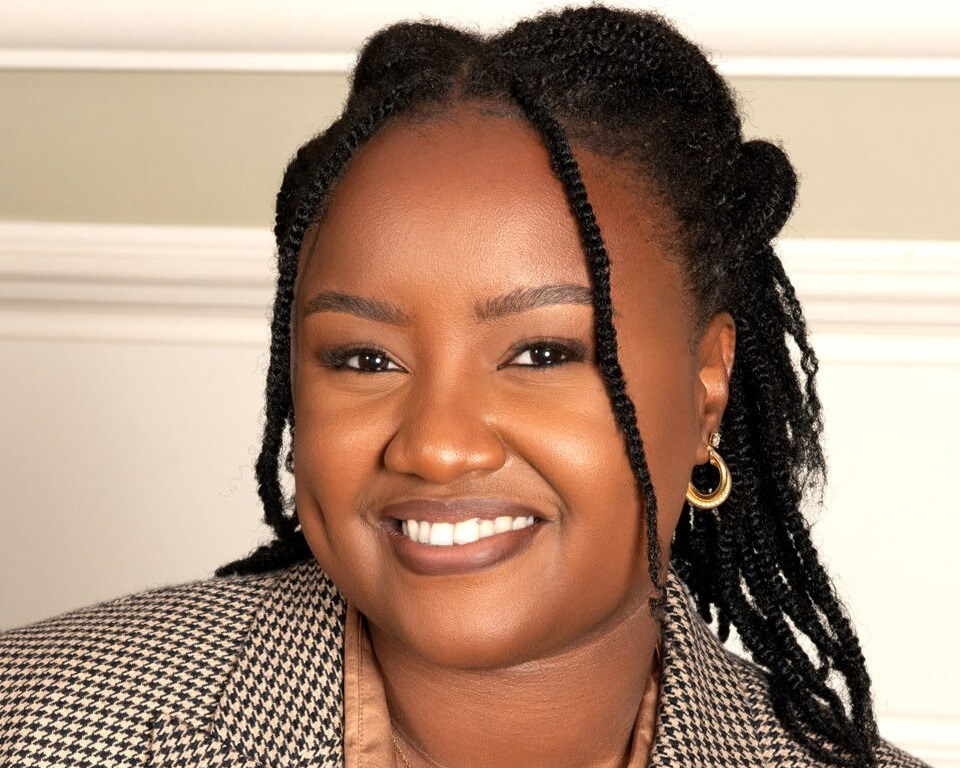
Wawira Njiru, founder and chief executive of Kenyan school feeding nonprofit Food4Education, appears on the 2026 TIME100 Next list. Comedian Trevor Noah wrote her profile, published September 30.
Njiru said on X that the world does not always expect world-class organisations to come from Africa, especially in school feeding. “We’re changing that,” she wrote, and thanked Noah.
Noah credits logistics and dignity
Noah wrote that Njiru would be a business leader of note if she ran a multinational, and that she chose to apply her logistics skills to “making sure children can eat.” He said her operation coordinates thousands of employees, hundreds of kitchens, farmers, technology and distribution. It delivers over 600,000 meals a day to children in more than 1,500 schools, he wrote. He said it began with one kitchen that fed 25 children.
The two have shared a stage. Food4Education’s Q4 FY2026 report says Njiru joined Noah at the Skoll World Forum in April to discuss school feeding and African led solutions.
Njiru: “There was no blueprint”
In a statement on the listing, Njiru described the distance between the first kitchen and the current operation:
“When I started Food4Education at 21, the ambition was simple: feed 25 children in my hometown so they could stay in school. There was no blueprint for what it could become.
Today, we serve more than 660,000 school meals every day and have created more than 6,000 jobs. But what I am most proud of is what we are proving: that solutions designed and built in Africa can reach extraordinary scale, and that investing in our children is one of the most important investments we can make in the continent’s future.”
The jobs figure exceeds the organisation’s published counts. Its 2025 annual report counted a team of more than 4,300, and its website lists more than 5,000.
How fast the count has grown
The Q4 report, which covers the quarter ending in June, says Food4Education closed it feeding over 635,000 learners a day in more than 2,100 schools across 15 counties. It has served over 220 million meals since 2012. The 2025 annual report had put the daily count at 576,000 at the end of that fiscal year, up from 357,000 at the start.
The 200 millionth meal came on May 15 at the Dandora kitchen in Nairobi, served to a Grade 1 learner at Tom Mboya Primary and Junior Secondary School, the report says. In the same annual report, the organisation had projected 750,000 meals a day by June 2026. The Q4 figure sits below that projection, though the report says Food4Education remains on track for its goal of 1 million learners a day.
Where the new meals go
The quarter’s gains came from counties where the organisation already operates. In Uasin Gishu, 73 public primary schools joined, adding 14,518 learners and bringing daily lunches to 29,690. That reaches 25 percent of the county’s public primary school learners, the report says. In Kisumu, a new kitchen with capacity for 30,000 children was producing 28,351 lunches a day.
The report also tracks younger children. In Embu, a fortified porridge programme reaches over 95 percent of preprimary learners, at 19,930 cups a day across 389 schools. In Nyandarua, a programme built on Kenya’s first Model Pre-Primary School Feeding Policy, co developed with the Council of Governors, grew from 1,000 cups to 3,150 cups across 46 schools in one quarter. Narok, Kisii, Siaya, Trans Nzoia and Bungoma are next.
A mobile money top up becomes a lunch
Technology sits at the centre of the model. Tap2Eat gives each child a wristband with a chip for contactless payment. Parents add small amounts through mobile money to a digital wallet linked to the band. At lunchtime the child taps the band and receives a meal. The system records it in real time, and no cash or paper changes hands.
The data serves two purposes. Food4Education says its impact page data tracks reach and affordability, and that it combines those records with school and national figures to measure nutrition and education outcomes. Kitchens use the same records to plan. Willow Health Media reported that the wristbands cut delays to afternoon lessons, lost money and theft among pupils.
The Q4 report says the next version, Tap2Eat v2, will join payments, operations, logistics, compliance and data in one system. A WhatsApp based service called SemaTap is meant to improve contact with parents. Six Harvard Business School students who worked with the organisation recommended improvements to parent communication and the Tap2Eat experience.
A meal costs about 30 cents. Cartier Philanthropy says parents and the government covered about 67 percent of direct meal costs in 2025, and the impact page lists four county governments investing in school feeding. Margaret Wanjiru, a parent in Kiambu Township, calls the programme “a lifesaver for my family.” She pays KES 15 a day and has two children enrolled. The annual report puts parent satisfaction at 96 percent.
Rural delivery gets its own systems
Food4Education built its model in towns. The Q4 report describes how it is adapting for rural areas.
In Tetu, Nyeri County and Murang’a, it piloted the Leta logistics platform, which tracks meals from kitchen dispatch to school delivery. Before the pilot, deliveries relied on manual coordination. The report says 97 percent of riders are onboarded, and on time delivery stood at 67% against a target above 97% by quarter end.
In Lari, meals once travelled more than 100 kilometres by truck to a few schools. Now a nearby production hub prepares the food and motorcycles cover the last stretch. The report says monthly logistics costs fell 90 percent, from over KES 180,000 to KES 18,000, and serving temperatures rose from below 60 degrees Celsius to 85 degrees. In Homa Bay, a kitchen serves over 3,700 learners across seven schools, which the organisation treats as evidence for its rural strategy. A digital compliance system called iComply now takes one minute per check, down from 20.
What the meal and the data show
Food4Education says each lunch supplies 86 to 100 percent of the recommended daily allowance of zinc, 40 percent of iron, 65 to 100 percent of potassium and 60 percent of calcium. The menu rotates with the season through rice, lentils, beans and vegetables sourced locally, with protein and carbohydrate in a 1 to 1 ratio.
On schooling, the organisation’s 2024 annual report cites internal analyses showing test scores up as much as 20 percent year on year and enrolment up as much as 28 percent at participating schools. These are the organisation’s figures, not independent evaluations.
Suppliers and cooks
Food4Education says it sources 80 percent of its ingredients from smallholder farmers, according to a June 2025 report. The Q4 report says it brought together more than 160 suppliers and aggregators for a capacity workshop. Risk and Compliance Manager Brenda Kiptoo said, “we want our vendors growing with us.”
The report profiles suppliers who grew with the programme. Samuel Ndung’u of Boresha Africa supplies jerricans. His orders rose from under 250 to over 1,000 a month, enough to justify a new factory and two trucks. Peter Njunguna, a Jua Kali artisan who makes serving ladles, grew from working alone to a team of over 20.
Winfred M’Mukiri Nkuene, a cook at Food4Education, told Willow Health Media that her pay covers children’s school fees. “I’ve managed to buy a plot,” she said. Njiru says school feeding is “an economy ready to be jumpstarted.” In a German Africa Prize interview, she said, “We have proven it is economic infrastructure.”
Zambia gives the model a test abroad
At the end of June, Food4Education signed a four year agreement with Zambia’s Ministry of Education. The organisation will not run school feeding there. It will advise the government on policy, programme design, data, financing and kitchen equipment, with work starting in July.
Zambia’s programme reaches 4.6 million children in more than 8,200 schools, the report says. The government wants to expand it to 5.6 million. Zambia’s Free Education Policy added two million learners to the system in 2022. The report calls the agreement a shift from direct delivery to technical partner. It says an agreement with Ethiopia is expected next quarter, and that the organisation advises the End School Age Hunger initiative with CIFF and the African Development Bank.
Where the money goes
Food4Education spent $16,019,296 in the quarter, according to the report. Programme costs, including capital spending, were $11,731,445, or 73.2 percent. Operating expenses were $2,707,046 (16.9 percent) and administrative staff costs were $1,580,805 (9.9 percent). The report does not list revenue or funders.
Targets and prizes
The Q4 report sets the goal as 1 million children a day in Kenya by the end of 2027. The annual report adds 2 million more across Africa by 2030, which matches the 3 million in Njiru’s profile. The first kitchen was funded by a dinner in Australia that raised about Sh126,000.
The Germany Africa Foundation named her the 2026 German Africa Prize recipient, and Germany’s development minister will present the award in Berlin on November 4. Her earlier honours include the Skoll Award for Social Innovation, the Elevate Prize and the UN Kenya Person of the Year title in 2021.
The test ahead
The model works in towns. The Mulago Foundation, a funder, notes that 70 percent of Kenya’s children live in rural areas, where Food4Education is still testing how to deliver. Its own report shows rural delivery running at 67 percent on time at last count. The model also depends on government subsidy, and Zambia will show whether it travels without Food4Education running the kitchens.
Noah wrote that governments across the world are learning from what she built. Njiru’s next measure is whether she reaches 1 million children a day by 2027.
