


Bamburi Cement Plc wants to supply the cement and concrete for Aliko Dangote’s $16 billion oil refinery at Lamu. Construction began on Wednesday 30 September.
Chief Executive Geoffrey Ndugwa said the company is pursuing the contract as part of its business development plans. He said Bamburi can compete to supply Dangote East Africa Petroleum Refinery & Petrochemical SEZ across the full build.
What Bamburi is offering
Officials have said the project will use locally made products, according to Ndugwa. Bamburi plans to propose Bamburi DuraCem Cement, a 42.5 grade speciality cement made in Kenya. The company says it resists sulfate and chloride, which suits marine and large construction.
Its proposal also covers the Ultra-series speciality concrete range, made in Kenya:
- Ultra Waterproof Concrete for areas exposed to moisture.
- Ultra Self Compacting Concrete for pours that settle without vibration.
- Pervious Concrete for drainage.
- Ultra Fibre Reinforced Concrete to resist cracking.
The refinery’s civil and related works will use about 1 million tonnes of cement and concrete products, Ndugwa said. “We are well positioned to manufacture and deliver to the project site from our Mombasa plant,” he said.
He also welcomed the start of work. “At Bamburi Cement, we are celebrating the Dangote Group and the Government of Kenya milestone,” he said, describing the plant as the world’s largest single train crude oil refinery. That description is the company’s.
Groundbreaking at Lamu
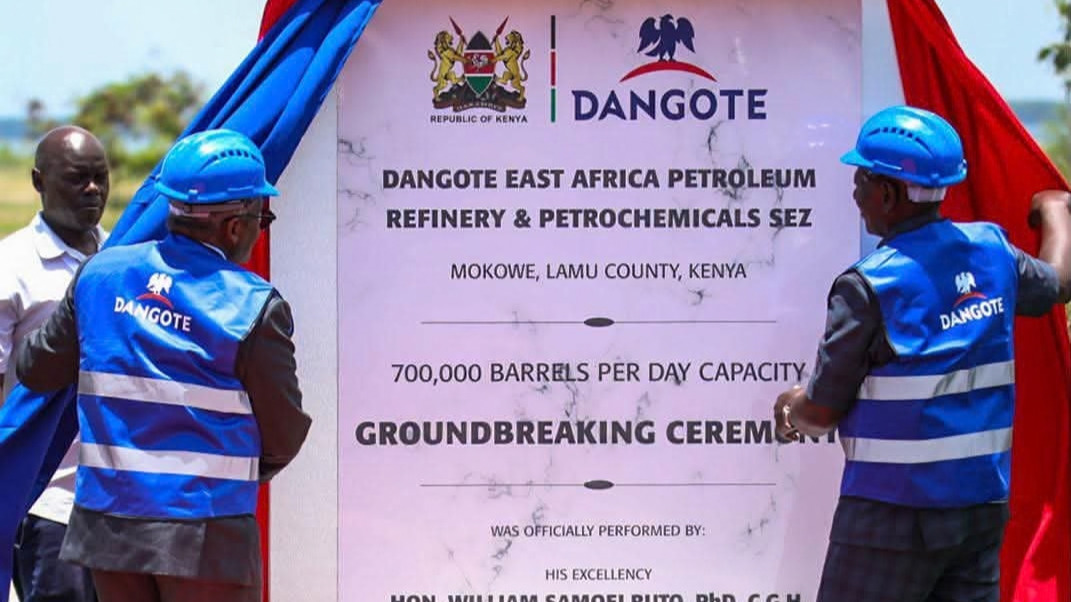
Dangote and President William Ruto broke ground at Lamu Port on Wednesday, in front of excavators, graders, rollers and cranes. Ethiopia’s Prime Minister Abiy Ahmed, Uganda’s President Yoweri Museveni, Benin’s President Romuald Wadagni and Togo’s President Jean-Lucien Savi de Tové attended.
Dangote wants to repeat the Nigerian refinery his group built, which produces 700,000 barrels a day. The Kenyan plant is due to finish in 2030. Engineers India Limited holds a $450 million project engineering contract, and Honeywell Technologies will provide technology support. Dangote is developing the project with the Africa Finance Corporation.
Why Lamu. Lamu Port took its first cargo ships in 2021 and anchors Kenya’s plan for a transport corridor that links its northern region and neighbouring countries to the sea. Dangote said his group chose Lamu over Mombasa and Tanzania’s Tanga because it offered enough water, sea depth and land. Ruto told Dangote that Kenya is working on a route to carry oil from the Turkana fields to Lamu.
What Ruto promised. Ruto called the refinery the largest foreign direct investment in Kenya’s history and said it would lift annual gross domestic product by 12 per cent. “It is an investment in energy security, industrialisation and regional integration,” he said. He put foreign direct investment at $3.2 billion in 2025, against $1.6 billion in 2022, and said he expects the refinery to push annual inflows to between $6 billion and $7 billion once it operates.
What Dangote promised. Dangote said the plant would replace imports of refined products across a region from Ethiopia to Mozambique. He said the refinery will also aim to export jet fuel to Europe and Britain. A 1,000 megawatt power plant on the site will sell surplus electricity to other customers. Dangote said about 500 megawatts could go to the Kenyan government. Officials say the complex will support petrochemicals, base oil and bitumen production and create more than 50,000 jobs.
The demand case. David Ndii, Ruto’s chief economic adviser, put annual regional demand for petroleum products at 20 million to 30 million tonnes. A financier involved in African refineries told Reuters that meeting it would need capacity above 1 million barrels a day. East Africa has faced higher fuel prices from the Iran war, and the increase set off deadly protests in Kenya over pump prices.
Local hope. “I have a chance to work and change my life,” said Evans Hundo, a Lamu resident who trained as a machine operator and now does casual work.

Listing: how Kenyans could own a share
The refinery will list on the Nairobi Securities Exchange (NSE), Dangote and Ruto have said. Ruto said on 29 September that the Kenyan government would hold a stake and that ordinary Kenyans could own shares through the NSE.
Dangote told an investor event in Nairobi that day that the East African refinery would list on the Nairobi bourse. Dangote has also offered regional governments a combined 30 per cent stake.
No timetable or structure exists yet. Construction should take about three years, which puts any Nairobi listing several years away. The NSE has also not confirmed how local investors would subscribe.
A separate share sale is already open. Dangote’s Nigerian refinery opened a $1.6 billion initial public offering in Nigeria on 14 September, with 4.1 billion shares at 525 naira each. Kenyan investors cannot yet subscribe through the NSE.
NSE Chief Executive Frank Mwiti said the exchange is in talks with Dangote, the Nigerian Exchange and Nigeria’s securities regulator on a possible cross listing in Nairobi.
For the Lamu project, a listing would let Dangote raise part of the cost from shareholders and borrow less. That puts the depth of the NSE into the project’s financing timetable.
Questions the project still faces
Analysts say Kenya may not repeat the Nigerian result, where a fuel importer turned into a fuel exporter. Doubts remain over crude supply and regional energy infrastructure. Environmental campaigners say the project could harm Lamu Old Town, a World Heritage site, and nearby marine life.
Kenya’s High Court has ordered parts of the site preserved until it hears a case brought by local residents. A court order lets a group that claims the proposed site keep the status quo until a hearing in October, though it did not stop the groundbreaking.
On Monday, 133 residents of Chandavai in Lamu sued the government, the LAPSSET Corridor Development Authority, Lamu County and Dangote Industries, saying they were pushed off ancestral land without compensation.
Dangote blamed the opposition on traders and businesses whose profits the refinery would threaten. “We are really not scared about people taking us to court,” he said.
Cost figures also differ. Reuters puts the cost at $16 billion, the Kenyan government has used 2.2 trillion shillings, and Dangote has cited $20 billion, with the gap turning on whether port infrastructure is counted.
Bamburi’s record and expansion
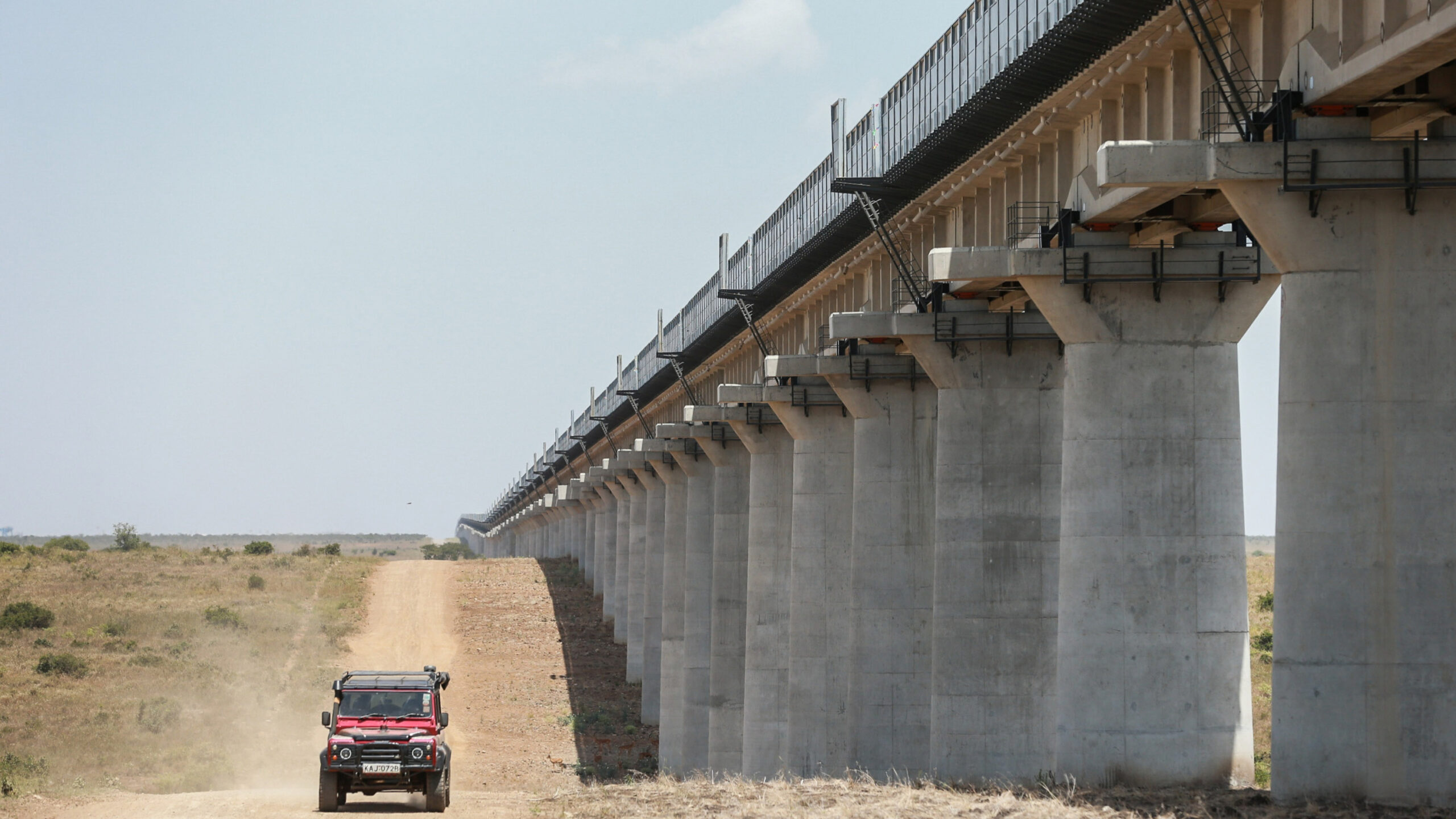
Bamburi lists the Talanta Sports Stadium, Rironi Mau Summit Road, the Standard Gauge Railway, Dongo Kundu Highway, Mwache Dam, Thwake Dam and Makupa Bridge among its national projects.
The company now belongs to Amsons Group. Amsons took a 96.54 per cent stake in December 2024. Khusoko reported the takeover and later covered Ndugwa’s appointment as chief executive, which took effect in April 2026.
Bamburi wants to supply its own clinker, the baked material ground into cement. It signed a $250 million (KES 32 billion) engineering, procurement and construction contract on 16 December 2025 with Sinoma CBMI Construction Co., Ltd to build a clinker plant at Matuga in Kwale County. The plant will produce 1.6 million tonnes a year and use technology the company describes as carbon neutral.
It would lift Bamburi’s clinker capacity from 1 million to 2.6 million tonnes a year and its cement capacity from 1.8 million to 4 million tonnes.
What to watch
Bamburi has made an offer. It has not won a contract. The next signals are Dangote’s procurement decisions, the High Court hearing in October, the structure of any NSE listing and whether the Matuga plant finishes while Lamu is under construction.
For more on markets, companies and energy in East Africa, see Khusoko.
