


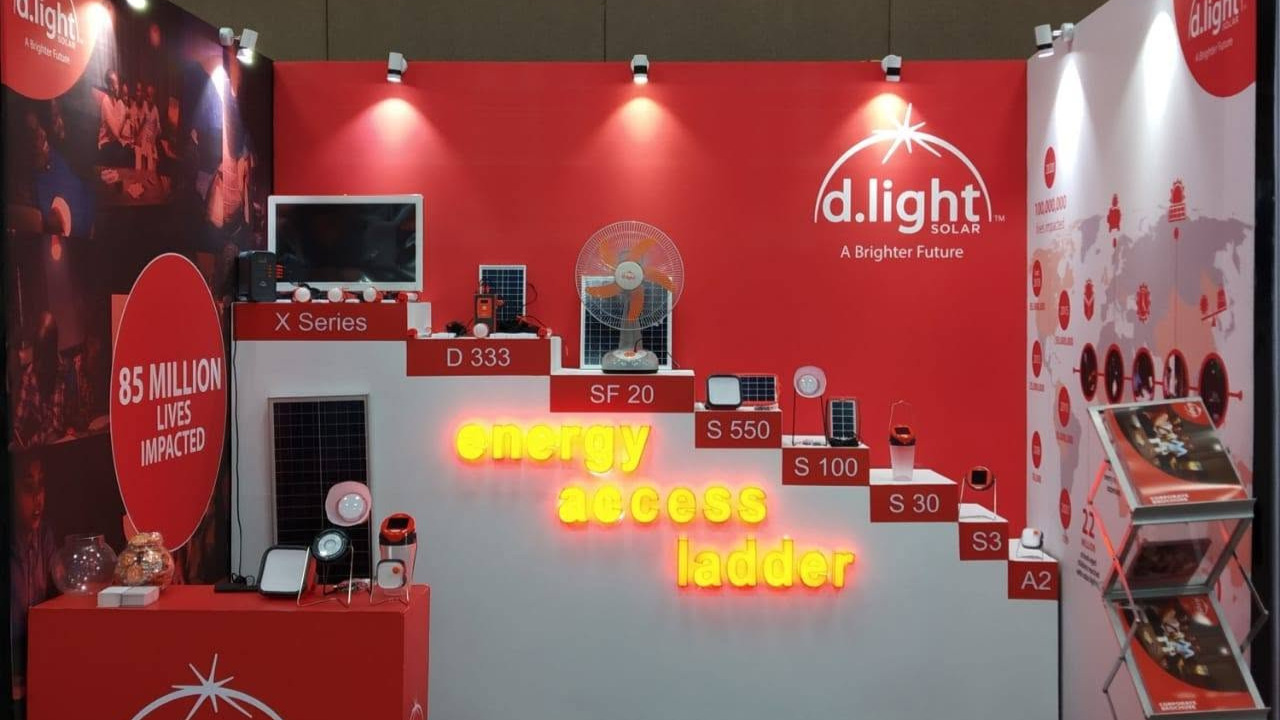
d.light has crossed Sh130 billion in cumulative purchasing capacity after African Frontier Capital closed a Sh6.5 billion public Green Bond, marking the first time the off-grid solar sector has raised capital through public bond markets using a PAYGo receivables securitization structure.
The bond will list on the London Stock Exchange’s International Securities Market, placing d.light alongside a global exchange that has steadily become a destination for African green finance issuers who lack deep domestic capital markets but need access to international institutional investors.
Six years in the making
The $50 million bond is less a single transaction and more the output of a deliberate six-year effort to make a new asset class legible to global capital markets. Each structural innovation along the way answered a specific investor concern. The first PAYGo securitization in 2020 established the concept. An investment-grade private credit rating in August 2023 addressed questions about credit quality.
The full ahead-of-schedule repayment of BLK1’s senior debt in February 2024 — entirely from internally generated cash flows — sent a signal to investors that the underlying borrowers, often classified as unbanked and uncreditworthy by traditional lenders, were in fact repaying reliably. A multi-currency structure followed in July 2024, hedging against the foreign exchange volatility that has historically undermined cross-border lending across African markets.
The LSE-listed Green Bond is where that track record lands.
Opening the door for institutional capital
For more than a decade, financing for off-grid solar in Africa flowed almost exclusively from development finance institutions and impact investors. This transaction changes who can participate. By accessing public bond markets, it creates a pathway for institutional buyers who can only hold publicly listed, rated, and certified instruments, allowing them to diversify funding beyond bank and development finance channels and access global investor pools for the first time.
The bond was placed with a mix of UK and US institutional investors including Legal & General, Calvert Impact Capital, and Ceniarth, names that signal genuine crossover from the mainstream finance world into what has historically been a niche asset class.
“In 2020, d.light helped pioneer the first securitization of PAYGo solar receivables in the sector. Since then, we have built a platform with $1 billion of cumulative purchasing capacity, and today we are bringing that platform into the public bond markets,” said Nedjip Tozun, Co-founder and CEO of d.light.
“That is a major step not just for d.light, but for the entire off-grid solar sector. It shows that high-quality energy access receivables in Africa can attract institutional capital at scale when they are structured with the transparency, discipline, and credit enhancement that global investors require.”
The guarantee that made it possible
The Green Climate Fund supports the Green Guarantee Company guarantee backing the bond — a structure that improves its credit profile and lowers the cost of capital. The notes carry a BBB rating from Fitch and mature in 2030. Standard Chartered Bank acted as placement and settlement agent.
African Frontier Capital CEO Eric De Moudt framed the transaction as a blueprint: “By combining AFC’s operating track record with GGC’s guarantee and Standard Chartered’s capital-markets expertise, we were able to connect international institutional investors with a proven portfolio of African assets. We believe this establishes an important blueprint for future capital-markets financing in the sector.”
Lasitha Perera, CEO of the Development Guarantee Group, described it as a milestone for the guarantee model itself: “We are proud to have closed the Green Guarantee Company’s second transaction. We are grateful to our partners for bringing these impactful deals to market and laying the groundwork for many more transformative transactions as we continue scaling our impact and mobilising capital where it is needed most.”
Rob Mason, Senior Originator for Debt Capital Markets Africa at Standard Chartered, said the deal demonstrates “how innovative capital markets structures can mobilise private capital for high-impact solutions.”
Scale and what it means on the ground
The $50 million bond alone is expected to expand clean energy access for approximately 4.3 million people across Sub-Saharan Africa. Across d.light’s wider securitization platform, the company projects 20 million new first-time energy access connections by 2030, alongside more than 50,000 jobs. African Frontier Capital has purchased more than $400 million of PAYGo off-grid solar assets across Kenya, Tanzania, Nigeria, and Uganda — the pipeline that underpins the bond’s receivables.
Those numbers position d.light as one of the few platforms capable of contributing meaningfully to the World Bank’s Mission 300 initiative, which targets 300 million first-time electricity connections across Africa by 2030.
What comes next
The securitization model that d.light has spent six years refining is, at its core, a mechanism for connecting informal-economy borrowers with global capital markets. Energy access is where it has been proven. Agriculture, mobile devices, water infrastructure — other sectors where PAYGo-style lending is beginning to take hold — may be next.
The question the sector now asks is whether the next billion takes less time than the first. It took fifteen years, several sector firsts, and a guarantee from a climate fund backed by the UK government and the Green Climate Fund to get here. The architecture, however, now exists. Other issuers can use it.
Ecobank raises $450m through world-first Nature Bond on London Stock Exchange
