



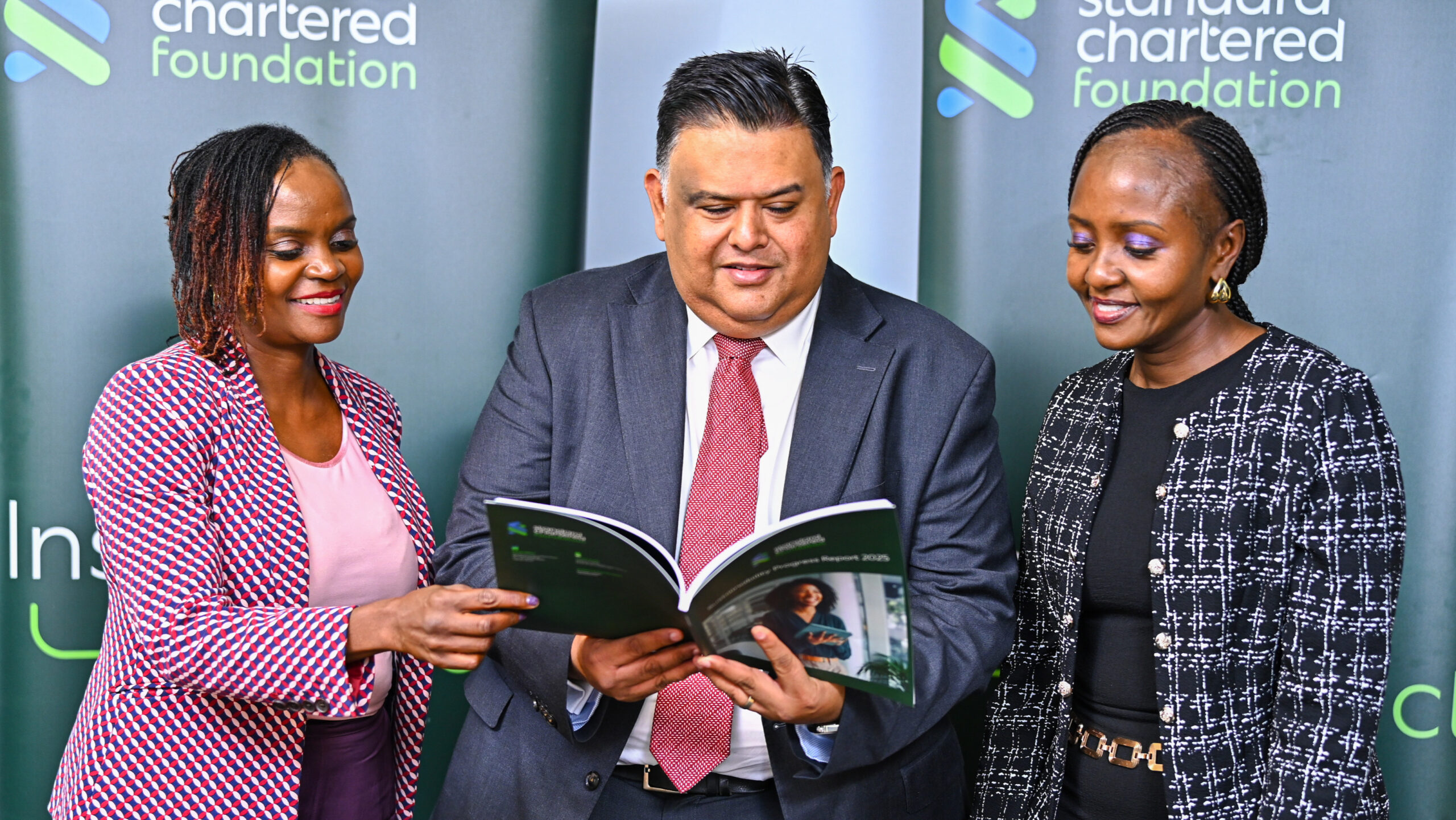
Standard Chartered Kenya released its Sustainability Progress Report 2025. The report shows sustainable finance revenue climbing 16 percent to KES 3.5 billion, while sustainable finance assets grew 11 percent to KES 62.5 billion.
Since 2021, the bank has generated KES 7.9 billion in cumulative sustainable finance revenue. That growth points to rising client demand for products that support climate resilience, financial inclusion, and long term growth.
Birju Sanghrajka, Chief Executive Officer and Head of Coverage at Standard Chartered Kenya, connected the numbers to a shift in how clients approach banking.
He said:
“Sustainability is no longer a separate conversation from business growth. Our clients are increasingly looking for banking partners that can help them access capital, manage risk and build more resilient businesses in a rapidly changing operating environment. We are helping connect clients to capital and expertise that enable them to contribute to Kenya’s long-term development priorities.”
Client financing drives the numbers
Corporate and Investment Banking carried the bank’s performance this year. Sustainability linked lending, trade finance, transaction banking, and advisory work supported clients as they build transition plans and respond to new ESG requirements.
Assets under management in the digital SC Shilingi Money Market Fund rose 47 percent to KES 27.8 billion. Investors under 40 make up 62 percent of SC Shilingi clients, and women account for 49 percent of the investor base. Younger and more diverse clients are adopting these products faster than older segments.
The Standard Chartered Women International Network programme now serves 491 entrepreneurs, with KES 2.9 billion in assets under management.
Operations get cleaner, communities gain ground
The bank cut its own environmental footprint this year. Scope 1 and Scope 2 carbon emissions fell 9.7 percent. Water use dropped 22.6 percent. The bank recycled 84 percent of operational waste.
Community work moved in parallel. The Standard Chartered Foundation has reached over 55,900 young people since 2019. It enabled 1,583 jobs through entrepreneurship support and placed 519 young people into decent employment, with continued focus on women and persons with disabilities.
Staff volunteering held steady too. Colleagues logged 4,039 hours of skills based volunteering in 2025, and 87 percent of staff took part in at least one initiative. The Standard Chartered Nairobi Marathon drew 30,668 runners and raised KES 76.3 million for Foundation programmes. Organisers also distributed 10,000 tree seedlings and 30,000 seedballs as part of the event.
Sanghrajka summed up the bank’s approach to measuring impact:
“Progress is measured not only by the capital we mobilise, but also by the opportunities we help create. Our ambition is to connect clients, communities and future generations to lasting economic opportunity by combining our international network with deep local expertise, responsible banking practices and long-term partnerships.”
2025 at a glance
| Metric | 2025 figure | Change from 2024 |
|---|---|---|
| Sustainable finance revenue | KES 3.5 billion | up 16% |
| Sustainable finance assets | KES 62.5 billion | up 11% |
| Cumulative revenue since 2021 | KES 7.9 billion | — |
| SC Shilingi assets under management | KES 27.8 billion | up 47% |
| SCWIN assets under management | KES 2.9 billion | 491 entrepreneurs served |
| Scope 1 and 2 emissions | — | down 9.7% |
| Water use | — | down 22.6% |
| Waste recycled | 84% | — |
| Skills based volunteering hours | 4,039 | 87% staff participation |
| Nairobi Marathon participants | 30,668 | KES 76.3 million raised |
| Foundation reach since 2019 | 55,900+ young people | 519 placed in jobs, 1,583 jobs enabled |
The report positions Standard Chartered Kenya’s 2025 results as evidence of a bank tracking its own numbers closely, from carbon output to volunteer hours to loan books. What stands out is the range: a single report links boardroom lending decisions to tree seedlings handed out at a marathon finish line, treating both as part of the same balance sheet.
