



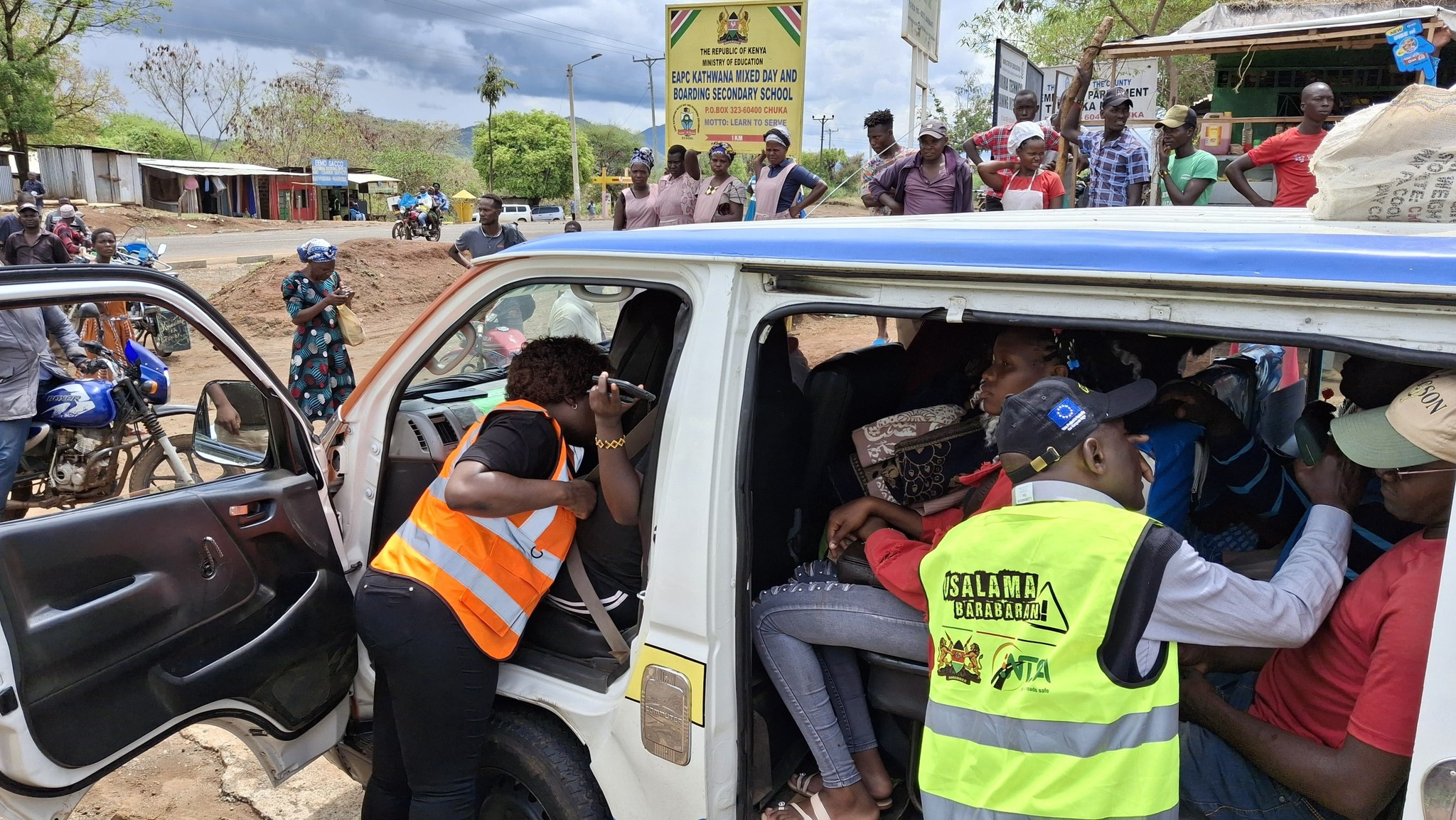
Kenyan motorists caught committing minor traffic offences will no longer face mandatory court appearances. The National Transport and Safety Authority (NTSA) confirmed on Thursday, May 28, that a revised instant fines framework takes effect on June 1, 2026, allowing drivers to admit liability and settle penalties through digital channels without ever entering a courtroom.
The announcement marks the second attempt at rolling out the system. NTSA suspended the original launch on March 27, 2026, following public backlash and legal challenges. Two months of consultations with the Office of the Director of Public Prosecutions and the National Police Service produced the revised framework now taking effect.
How the New System Works
Once a traffic officer or roadside camera detects an offence, NTSA issues the driver or registered vehicle owner a Police Notification of Traffic Offence. The notice sets out the nature of the offence, the date, time and location, the prescribed penalty, payment instructions, and the deadline to respond.
Drivers receive notifications through one of several channels: personal delivery by a police officer, a notice affixed to the vehicle, SMS, email, or approved digital platforms. NTSA advises all motorists to confirm that their contact details are current in the registration system.
“Upon receiving a notice, motorists have two options: they may admit liability and pay the prescribed fine within the stipulated period, or they may dispute the allegation in court. If the motorist chooses to pay the fine, the matter can be settled without the need for a court appearance,” NTSA said.
Drivers who dispute a charge retain the right to request supporting evidence — including photographs or video recordings — before proceeding. NTSA assured that personal data collected through the system will be handled in line with the Constitution and the Data Protection Act.
What Happens If You Ignore the Notice
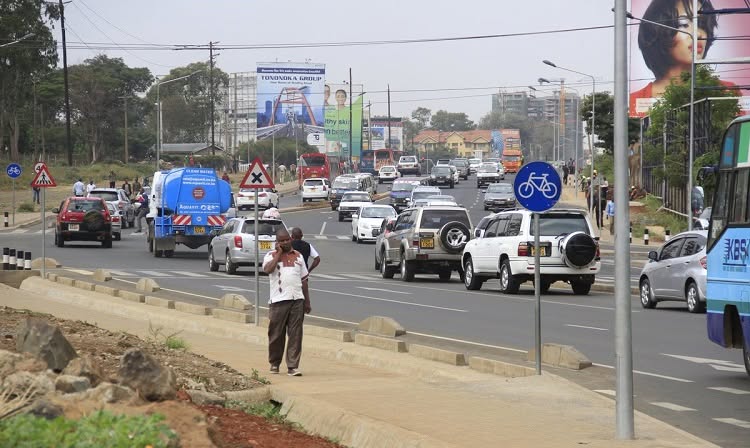
The system carries consequences for non-compliance. Motorists who fail to pay within seven days begin accruing interest on the outstanding amount and lose access to all NTSA service platforms until the debt clears. Failing to appear in court when required following a dispute can attract harsher penalties at the discretion of the court.
Courts retain authority to reduce or refund penalties based on mitigating circumstances and may administer demerit points to a driver’s licence as appropriate.
The Fine Schedule: 35 Offences and Their Penalties
NTSA published a full list of 35 offences and their prescribed penalties under the Traffic, Minor Offences, and Rules of 2016. Below are the key categories.
General Driving Offences
Driving without identification plates or improperly fixed plates — Ksh10,000. Driving without a valid inspection certificate — Ksh10,000. Driving while unqualified — Ksh5,000. Driving without a valid licence endorsement for the vehicle class — Ksh3,000. Failure to carry and produce a driving licence on demand — Ksh1,000. Failure to renew a driving licence — Ksh1,000.
Speeding
Exceeding the speed limit by 1 to 5 km/h earns a warning. Between 6 and 10 km/h over the limit carries a Ksh500 fine. Between 11 and 15 km/h draws Ksh3,000. Exceeding the limit by 16 to 20 km/h attracts a Ksh10,000 penalty.
Public Service and Commercial Vehicles
An unlicensed person acting as a PSV conductor — Ksh5,000. A PSV owner permitting an unlicensed conductor — Ksh10,000. Failure to fit prescribed speed governors — Ksh10,000. Touting — Ksh3,000. Driving or operating a PSV with tinted windows — Ksh3,000. Failure to refund passengers for incomplete journeys — Ksh3,000. Allowing an unauthorised person to drive a PSV — Ksh3,000. Failure to wear the prescribed badge and uniform — Ksh2,000. Failure to carry a functional fire extinguisher and first aid kit — Ksh2,000. Using a mobile phone while driving — Ksh2,000.
Vehicle Compliance
Failure to fit prescribed speed governors in PSVs and commercial vehicles — Ksh10,000. Causing road obstruction through improper parking — Ksh10,000. Failure to carry reflective warning signs — Ksh2,000. Failure to display reflective triangles when a vehicle stalls — Ksh3,000. Failure to display learner plates on a learning vehicle — Ksh1,000. Failure to wear a seat belt — Ksh500. Failure of PSV owners to maintain clean seat belts — Ksh500.
Road Conduct
Failing to stop when required by a police officer — Ksh5,000. Driving on a pavement or pedestrian walkway — Ksh5,000. Failing to obey directions from a police officer — Ksh3,000. Ignoring traffic signals — Ksh3,000. Failure to display reflective triangles when a vehicle stalls — Ksh3,000. A motorcycle carrying more than one pillion passenger — Ksh1,000. Pedestrians obstructing the free passage of vehicles — Ksh500.
The Bigger Picture
Beyond convenience for drivers, NTSA framed the system as a tool to decongest Kenyan courts, improve enforcement efficiency, and encourage consistent compliance with traffic law.
Detection runs through two channels: police officers conducting routine enforcement, and traffic cameras and other digital monitoring systems installed along major roads. Evidence collected through either method triggers the notification process.
“Motorists are advised to observe all traffic regulations and respond promptly to any official notifications received,” NTSA said. “Further details will be communicated through official government channels.”
The June 1 launch gives Kenya one of the more structured roadside penalty frameworks in East Africa. Whether it holds this time — without the legal challenges that derailed March’s attempt — will depend on how clearly the system operates in its first weeks on the ground.
