



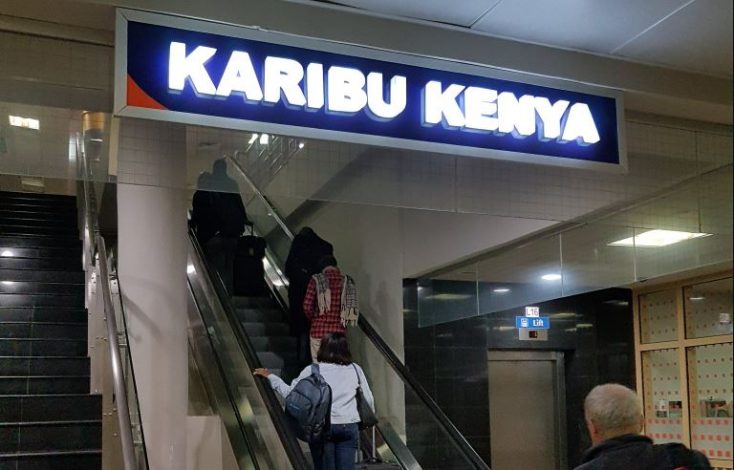
Kenya will require travellers entering the country to hold mandatory travel health insurance with minimum policy benefits of at least US$50,000, about Ksh6.4 million.
Health Cabinet Secretary Aden Duale set the thresholds in Gazette Notice No. 11492, published on July 29, 2026, under the Social Health Insurance Act, 2023, and the Social Health Insurance Regulations, 2024.
“The Cabinet Secretary for Health gives notice that the minimum policy benefits for mandatory inbound travel health insurance shall be as specified in the Schedule below, provided that the cumulative policy benefit limit shall not be less than fifty thousand United States dollars (US$ 50,000),” the notice read.

Insurance providers must ensure their travel health policies meet the set benefit thresholds before offering them to inbound travellers.
Minimum Cover by Category
| Benefit | Limit (US$) | Limit (Ksh) |
|---|---|---|
| Medical expenses | 20,000 | 2,500,000 |
| Emergency medical transportation | 25,000 | 3,200,000 |
| Repatriation of mortal remains | 5,000 | 644,823 |
| Mental illness related treatment | 1,000 | 128,964 |
| Prescribed medicines | 300 | 38,689 |
| Cumulative minimum | 50,000 | 6,400,000 |
Approved Insurers Only
The notice states that cover will only be provided by companies approved and licensed under the Insurance Act.
“The mandatory inbound travel health insurance shall be provided by insurers approved and licensed under the Insurance Act, Cap. 487,” the notice stated.
Foreign travel policies not issued by a Kenyan licensed insurer will not meet the requirement. The notice does not specify verification procedures at points of entry.
Who the Rule Applies To
The limits form part of the Ministry of Health’s implementation of mandatory travel insurance rules. Non-Kenyans staying in the country for under 12 months are required to hold valid health cover.
The Ministry has stated the measure is intended to ensure visitors can meet medical expenses, access mental health support where needed, and cover repatriation costs in the event of death, without placing the financial burden on the government.
READ: Kenya’s New Digital Nomad Visa: A Gateway to Adventure
Regional Context
Kenya is not the first country in East Africa to introduce mandatory travel insurance for visitors.
| Country/Region | Requirement | Minimum Cover |
|---|---|---|
| Kenya | Mandatory, licensed local insurer | US$50,000 cumulative |
| Zanzibar | Mandatory since October 2024 | US$44 premium, up to 92 days |
| Tanzania (mainland) | Mandatory, EAC/SADC citizens exempt | US$44 premium, up to 92 days |
| Uganda | Required as part of visa conditions | No fixed minimum benefit published |
| Rwanda | Required as part of visa conditions | No fixed minimum benefit published |
Tourism Data
Kenya’s international arrivals reached 2.55 million in 2025, up 6.2 percent on the prior year, according to the Kenya National Bureau of Statistics 2026 Economic Survey. Holiday travel accounted for 47.8 percent of arrivals.
KNBS data for the first quarter of 2026 recorded international arrivals through Jomo Kenyatta International Airport and Moi International Airport at 506,622 passengers, a 13.1 percent increase. The accommodation and food service sector grew 14.7 percent over the same period, the fastest growing sector of the economy in that quarter.
Cytonn Investments said in its latest sector outlook that it maintains a positive outlook for hospitality, citing marketing campaigns promoting Kenya’s tourism, international recognition of the industry, sector partnerships, and events aimed at improving guest experiences.
The firm noted competitive pressure from neighbouring markets: “Kenya continues to face significant competition from neighboring markets, such as Rwanda, which employs aggressive promotional strategies, alongside Zanzibar, Tanzania, and South Africa.” It added that the hospitality sector remains exposed to travel advisories issued during periods of crisis.
What Remains Unclear
The Ministry of Health has not published a list of approved insurers or indicative premiums. Verification procedures at airports and other points of entry have not been detailed. Tour operators and insurers are awaiting further guidance before advising travellers on cost and process.
