



Uganda’s industrial property market now delivers the highest yields anywhere Knight Frank tracks across Africa, at 12 to 13 percent, according to the firm’s H1 2026 Africa Industrial Market Dashboard released this week.
Kenya and Tanzania trail but still outperform most asset classes on the continent, as a shortage of modern warehouse space keeps rents firm and pushes occupiers to compete for a shrinking pool of Grade A buildings.
The report, which tracks ten African cities, found that prime industrial rents across the region held largely steady through the first half of the year even as older, poorly located warehouses struggled to fill space. Mark Dunford, CEO of Knight Frank Kenya, said the shift reflects growing investor appetite for professionally managed, income producing industrial assets with strong tenant fundamentals and long term relevance to regional supply chains.
East Africa by the Numbers
| Country | City | Prime Rent (US$ psm/month) | Average Yield | Occupancy |
|---|---|---|---|---|
| Uganda | Kampala | 7.00 | 12-13% | Above 80% |
| Kenya | Nairobi | 6.00 | 9.5% | Above 80% |
| Tanzania | Dar es Salaam | 5.00 | 10% | 70-75% |
Kampala recorded the highest headline prime rent tracked anywhere on the continent, ahead of Lagos at US$6.50 and Nairobi at US$6.00. Dar es Salaam sat in the middle of the pack, both in rent and in occupancy, a gap Knight Frank attributes to a smaller base of institutional grade stock rather than weak demand.
Uganda’s Oil Sector Is Reshaping Industrial Leasing
Uganda’s industrial expansion now runs on two engines: established manufacturing and logistics corridors around Kampala, and a newer wave of activity tied to the East African Crude Oil Pipeline. Namanve Industrial Business Park remains the country’s largest hub, backed by serviced land and direct transport links into the capital. The Ntinda Nakawa Corridor continues to draw logistics tenants because of its position on the Kampala Jinja Highway.
Further out, Kabalega Industrial Park in Hoima is pulling in contractors and suppliers tied to the pipeline’s refinery development. Oil and gas firms are locking in longer lease terms than the market has typically seen, a sign they expect sustained activity rather than a short construction cycle. Cold chain warehousing remains the most undersupplied segment in the country, squeezed by rising demand from agriculture, pharmaceuticals and food distribution.
Kenya’s REIT Listing Signals a Maturing Market
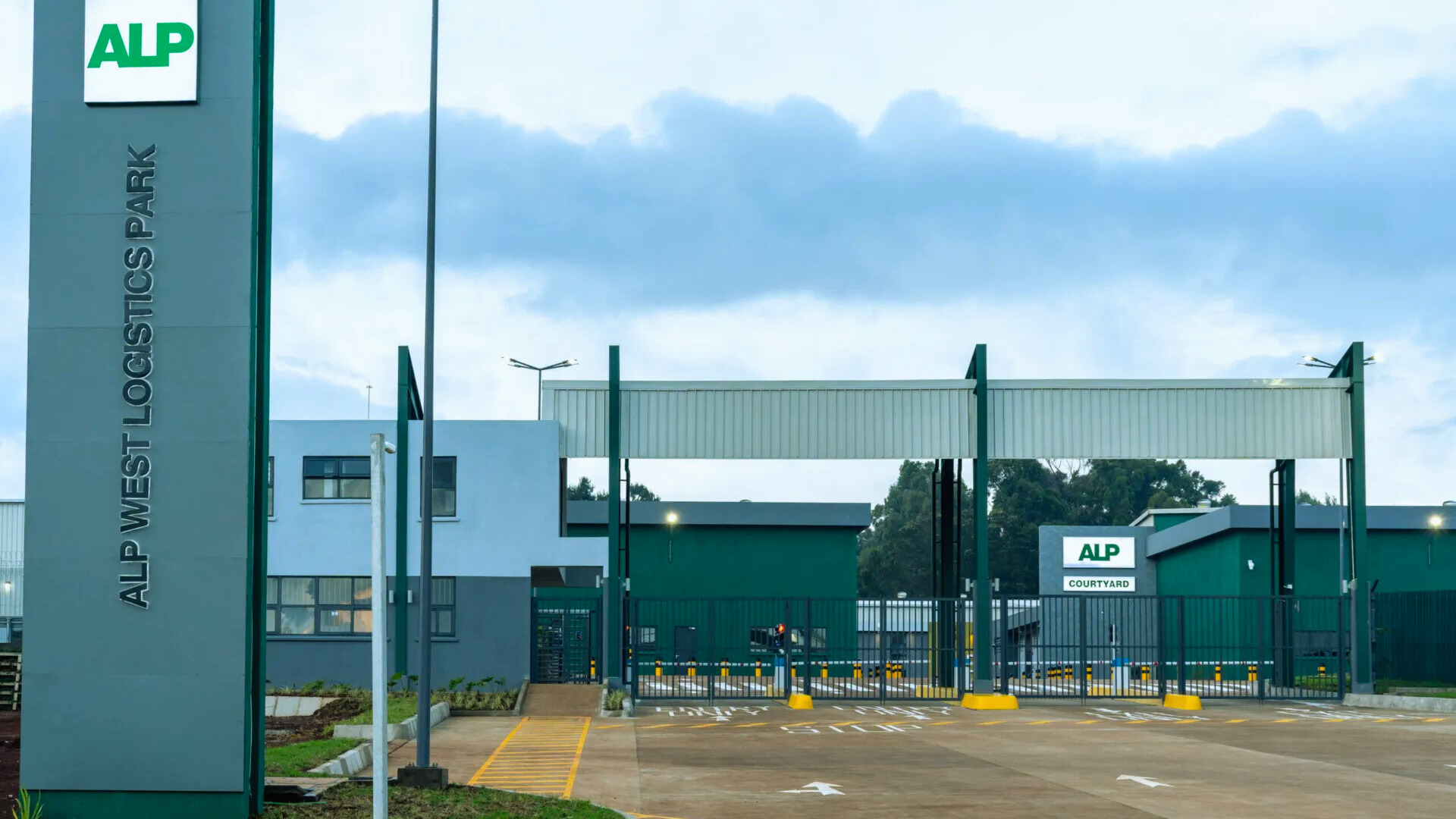
Nairobi’s prime rents held at roughly US$6 per square metre for a second straight year, with yields steady at 9.5 percent. The clearest sign of where the market is heading came from capital markets rather than leasing activity: the Africa Logistics Properties Industrial REIT listed during the period, backed by a combined US$24 million investment, giving Kenya’s industrial sector its first dedicated listed vehicle.
Boniface Abudho, Knight Frank’s Africa Research Analyst, said strong occupier demand from manufacturing, regional trade, e-commerce, FMCG, mining and third party logistics is running into a limited supply of high quality warehouses across the continent’s main hubs, a dynamic playing out clearly in Nairobi.
The city’s EDGE certified Nairobi Gate Mara Warehouse has become the reference point for energy efficient design, reflecting a shift Knight Frank sees hardening into a baseline expectation rather than a selling point. Government policy is reinforcing the trend: the Kenya Association of Manufacturers is pushing its Manufacturing Priority Agenda 2026 for lower energy costs, better transport links and easier access to industrial financing.
Khusoko has tracked this shift in East African industrial demand for several years. A 2021 Knight Frank review covered by Khusoko flagged Uganda’s plans to expand the Kampala Industrial and Business Park to 500 companies, a build out that has since fed directly into the corridor activity the current report describes.
A related 2025 Knight Frank office market review found landlords in Nairobi and Kampala already charging a premium for ESG credentials in office space, the same pattern now showing up in warehouses.
Tanzania Holds Steady on Infrastructure Bets
Dar es Salaam’s industrial rents stayed flat at US$5 per square metre, with yields around 10 percent and occupancy in the 70 to 75 percent range, the softest of the three East African markets Knight Frank tracks. Activity concentrates along established corridors including Nyerere Road, Pugu Road and the port linked logistics zones around Kurasini, all of which benefit from proximity to the Port of Dar es Salaam and Julius Nyerere International Airport.
Government investment through the Tanzania Investment and Special Economic Zones Authority is aimed at closing the gap with its neighbours, alongside continued road and rail upgrades. Warehouse operators in the market are adopting inventory management systems and automation tools faster than the underlying occupancy numbers might suggest, a bet that supply catches up with demand over the next few years rather than the reverse.
A Widening Split Between Old and New Stock
Across the continent, Knight Frank frames the moment as a shift toward what it calls a two tier industrial market. Ben Woodhams, Partner for Knight Frank’s Africa Desk, put it plainly: occupiers are increasingly paying for efficiency, connectivity and resilience rather than simply the cheapest available warehouse, with reliable power, adequate yard space and strong security becoming decisive factors in where tenants choose to sign.
That split is sharper in East Africa than in most regions Knight Frank covers, given how much of Uganda’s, Kenya’s and Tanzania’s modern industrial stock sits in a handful of named parks and corridors rather than spread evenly across each city. Landlords who own that modern stock are seeing rents hold and occupancy stay high. Everyone else is competing for tenants willing to accept a compromise on power reliability, security or highway access.
For a region where industrial land has historically been treated as a residual asset behind office and retail development, that gap is becoming the story. Whoever builds the next generation of East African warehouses, whether around Nairobi’s transport corridors, Kampala’s oil linked parks or Dar es Salaam’s port zones, is positioned to capture yields that few other property types on the continent can currently match.
