


Nation Media Group PLC has replaced nearly half its board in one announcement, confirming six new directors while four sitting members step down. The reshuffle, dated 28 August 2026, is the clearest sign yet that Tanzanian billionaire Rostam Aziz intends to run East Africa’s largest independent media house his way.
It also closes a chapter that stretches back 66 years. The changes follow the Aga Khan Fund for Economic Development’s sale of its 54.08 percent stake in NMG to Taarifa Ltd, Aziz’s investment vehicle, a deal signed in March 2026 at the Serena Hotel in Nairobi. For readers who track Kenyan boardrooms for a living, this is the moment ownership finally meets governance.
Who Joined the Board
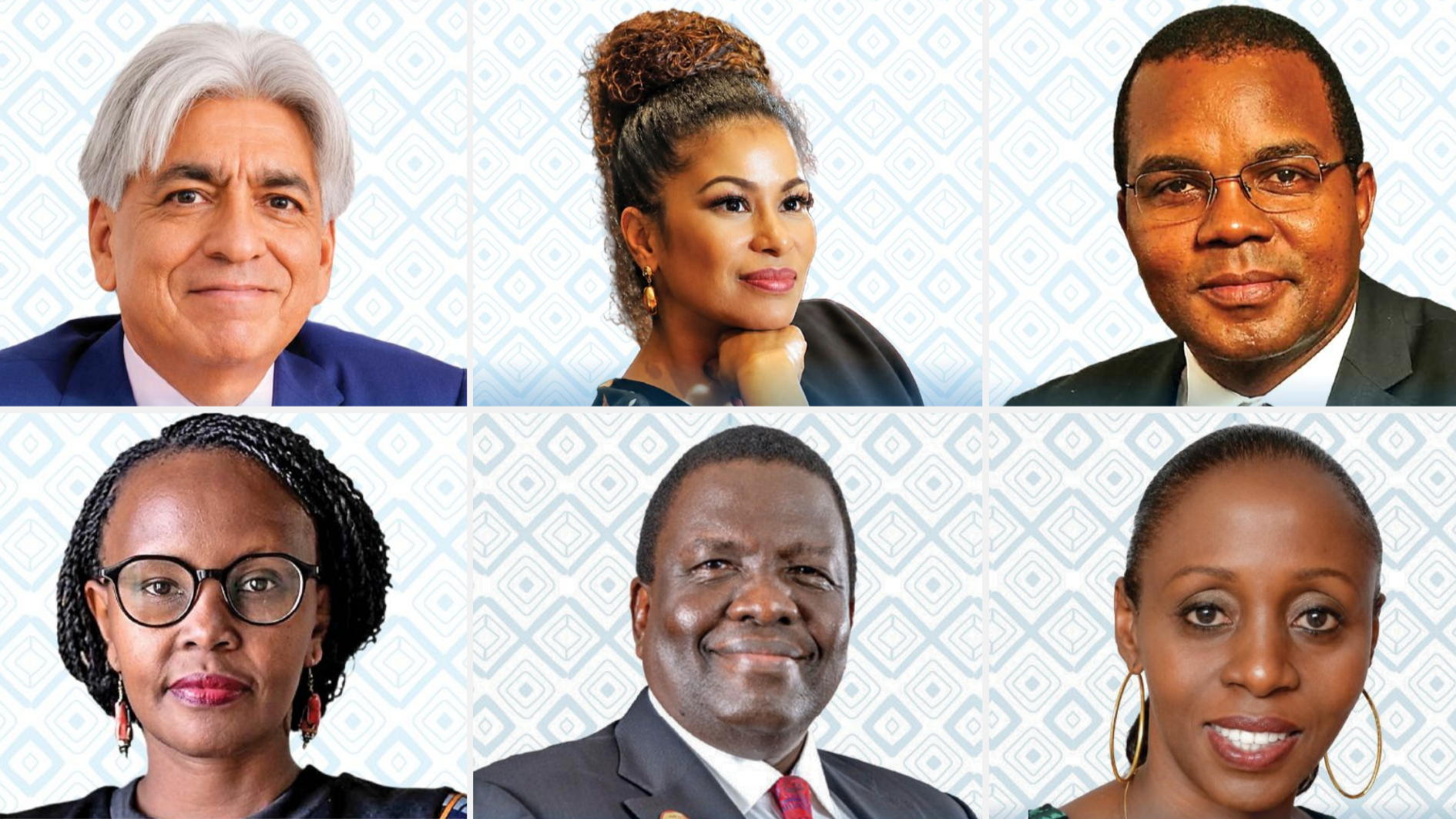
The company brought in six directors with backgrounds that span media, banking, advertising, technology and public affairs.
Georgia Mutagahywa, a non-executive director, arrives after more than three decades in corporate affairs across telecoms, mining, brewing and consumer goods in East Africa. She currently serves as Chief of Staff to the Chairman of the Taifa Group, Aziz’s own conglomerate, a detail that signals how closely the new ownership intends to stay involved. Her earlier roles include senior positions at AB InBev East Africa, Vodacom Tanzania and Barrick Tanzania.
Juliana Rotich brings the boardroom’s clearest technology credentials. She co-founded Ushahidi and BRCK, ran fintech at Safaricom, and now leads Kehmett Consulting, which advises governments and companies on digital transformation and artificial intelligence. Fortune has named her among the world’s 50 greatest leaders, and she sits on the Bill & Melinda Gates Foundation’s AI Ethics Committee. Her appointment points to where NMG wants to grow: digital subscriptions and paid content, not print runs.
Bharat Thakrar spent five decades building advertising businesses across Africa. He founded Scanad Marketing in 1982 and grew it into Scangroup Plc, which listed on the Nairobi Securities Exchange in 2006. Under his leadership, the group expanded into twelve African countries before he stepped down as CEO in March 2021. Forbes Africa named him Advertising Leader of the Year in 2012.
Wilfred Musau carries the banking expertise the board needs. As Managing Director and CEO of the National Bank of Kenya, he steered the institution back to profitability and led the deal that merged it into the KCB Bank Group. He began his career at Standard Chartered and Barclays, now Absa.
Dr Julie Gichuru, an independent non-executive director, is a familiar face to NMG’s own audience. She anchored news at NTV during its launch, a role that puts her return to the group in a full circle. Since then she has built the Africa Leadership and Dialogue Institute and served as Chief Public Affairs and Communications Officer at the Mastercard Foundation, where she led global stakeholder engagement across three continents. She holds an honorary doctorate from Concordia University and Kenya’s Order of the Grand Warrior.
Julius Kangogo Kipngetich rounds out the group. He is currently Group CEO of Jubilee Holdings and previously ran Equity Bank’s operations, the Kenya Wildlife Service and Uchumi Supermarkets. He was named Kenya’s CEO of the Year in 2009 and has taught management at the University of Nairobi and Strathmore University.
Together, the six directors give NMG a board built around three priorities: digital revenue, financial discipline and closer ties to its new controlling shareholder.
Who Left, and Why It Matters
Four directors resigned effective 28 August 2026: Al-Noor Ramji, who joined in March 2020 and sat on the Audit, Risk and Compliance Committee; Sultan Ali Akbar Allana, a former AKFED director who joined NMG’s board in May 2024; Fayyaz Nurmohamed, who served on the Editorial Board Committee; and Prof. Nancy Booker, the Editorial Board Committee’s Deputy Chair.
Allana’s exit is the most telling. He is the same AKFED director who signed the sale documents handing NMG to Aziz in March. His departure, alongside the other AKFED era appointees, marks the formal end of the Aga Khan Fund’s oversight of a company it built from a Kiswahili weekly bought in 1959.
Company Secretary Angela Namwakira confirmed the changes on behalf of the board, thanking the outgoing directors for their service and welcoming the new appointees.

Why the Ownership Change Happened
The Aga Khan Fund for Economic Development held its NMG stake through NPRT Holdings Africa Limited for 66 years, a period during which NMG launched the Daily Nation, listed on the Nairobi Securities Exchange in 1973, and built The EastAfrican and NTV Kenya into regional institutions. According to Khusoko’s coverage of the sale, the fund said it remained confident NMG would continue upholding independent journalism after the sale, while shifting its own focus toward other development priorities.
Aziz is not a newcomer to East African media. He co-founded Mwananchi Communications in 1999, launching The Citizen and Mwanaspoti in Tanzania before NMG itself acquired those titles. He has said the acquisition reflects a commitment to strengthening NMG rather than dismantling it. In his own words, reported by Khusoko, Aziz called himself “honoured and deeply committed to becoming the majority shareholder” of the group, while pledging to protect its editorial independence.
Taarifa Ltd has confirmed it will not launch a buyout offer for the remaining shares or seek to delist NMG from any of the four exchanges where it trades: Nairobi, Kampala, Dar es Salaam and Kigali.
What the Share Price Tells Investors
Markets reacted fast. NMG shares jumped sharply in the days after the ownership announcement in March, with some reports pointing to gains of more than 28 percent as investors priced in the prospect of fresh capital and a more commercially aggressive owner. By mid May, the stock had climbed 13.9 percent for the year, trading around KES 13.15 and ranking 20th on the Nairobi Securities Exchange for year to date performance, even after a rough four week stretch in which it shed 12 percent of its value.
The rally has not erased NMG’s underlying business challenges. Full year 2025 results showed a loss of KES 1.80 per share, worse than the KES 1.47 loss the year before, on revenue of KES 6.04 billion, down 3.1 percent. The first half of 2026 was harder still: revenue fell 4.8 percent to KES 2.85 billion, the group’s weakest first half turnover in 21 years, while the net loss widened to KES 357.2 million from KES 41.7 million a year earlier. Higher bad debt provisions, delayed government payments, rising fuel costs and continued pressure on print advertising all weighed on the numbers.
That is the real story behind the board reshuffle. A new owner with deep pockets and a background in telecoms, energy and media has taken the wheel of a company still losing money on its core print business.
The board he has assembled leans hard into digital expertise, financial turnaround experience and advertising know-how, exactly the skill set needed to convert a storied Nairobi newsroom into a company that can compete for advertising revenue online rather than just in print.
What Comes Next
NMG’s next results release will be the first real test of whether the new board can translate boardroom credentials into a turnaround. Investors will be watching whether Rotich’s digital strategy background shows up in subscription numbers, whether Musau’s banking discipline shows up in the balance sheet, and whether Aziz keeps his promise to protect editorial independence while pushing for growth.
For a media house that has shaped Kenyan public life since before independence, the next chapter will be written under entirely new ownership, for the first time in 66 years.
Kenya’s Advertising Market Braces for a Modest Rebound as the 2027 Election Cycle Looms
