



A boda boda rider crashes and cannot work for three weeks. A market trader’s stock burns in a stall fire. A smallholder farmer loses a herd to disease. None of them had insurance, not because they did not want it, but because every policy they looked at was built for someone with a payslip.
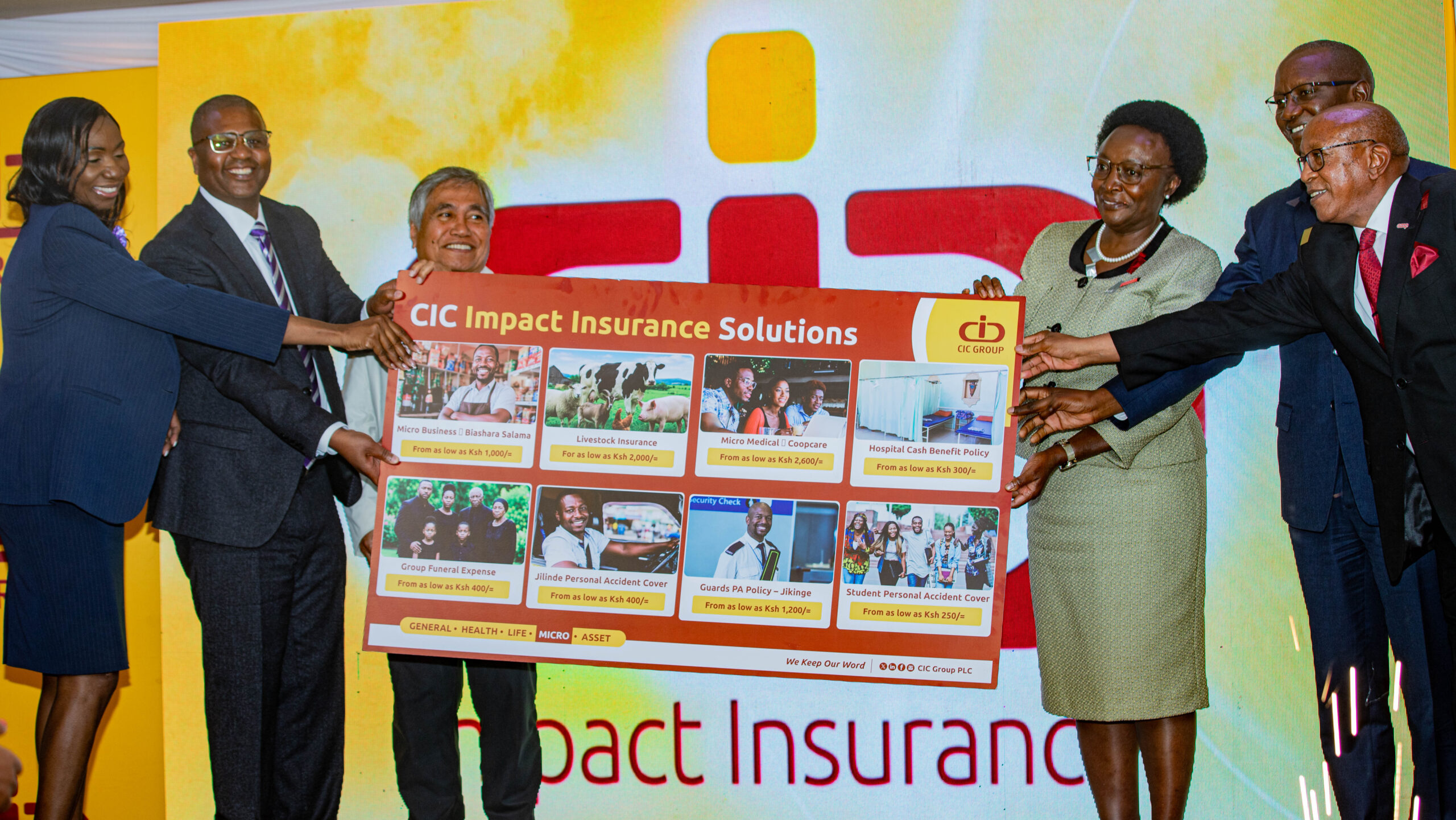
CIC Insurance Group is betting that changes now. The company has launched CIC Impact, a subsidiary built for people whose income does not arrive as a fixed salary on the 25th of every month, and whose annual premiums start below Ksh 3,000.
Why Most Insurance Was Never Built For You
Kenya’s insurance penetration sits at just 2.3%, according to the Insurance Regulatory Authority, and most of that thin sliver of cover belongs to people in formal employment. Meanwhile, roughly 83% of working Kenyans earn their living in the informal economy: riding boda bodas, running kiosks, farming small plots, working construction sites, driving matatus, trading in open air markets.
For that majority, one bad week can undo years of saving. A stolen phone, a hospital bill, a burned down stall, none of it is covered because the products on the market were never priced or packaged with an unpredictable income in mind. CIC Impact is trying to close that specific gap, not the insurance gap in general, but the gap for people who get paid in cash, day by day.
What You Can Actually Buy
The product list reads less like an insurance brochure and more like a list of the things that actually go wrong in informal work. There is personal accident cover built for boda boda riders, security guards and other workers whose job puts their body at risk every shift. There is medical cover for registered groups, useful for SACCOs, chamas and trade associations that want to cover members collectively rather than one by one. There is cash support paid out daily during hospitalisation, money meant to replace the income you lose while you are not working, not just to cover the hospital bill.
For business owners, there is cover for MSME operational risks, the fire, theft or equipment breakdown that can wipe out a small shop overnight. For families, there is group funeral cover, one of the most common reasons Kenyans borrow money or dip into savings without warning. For farmers, there is agriculture and livestock cover, protecting against the loss of a crop or a herd that took years to build. Students on attachment get personal accident cover too, and there is a pension product for people who want to start saving for later life without needing a formal employer scheme.
How You Actually Get It
None of this requires walking into a bank style branch or filling out paperwork built for salaried applicants. CIC Impact is being distributed through the channels informal workers already use and trust: SACCOs, trader associations, employers of casual labour, and mobile platforms. If you already pay your SACCO contribution or your trade association dues on your phone, buying cover through the same channel is the model CIC is building toward.
Group Managing Director and CEO Patrick Nyaga said the pricing reflects real demand rather than a guess. “With annual premiums starting below Ksh 3,000, more Kenyans can protect their businesses, livelihoods, and families,” he said, pointing to numbers that back that up: microinsurance premiums at CIC grew from Ksh 131 million in 2020 to a cumulative Ksh 1.2 billion by the first half of 2026.
This Is Not CIC’s First Attempt
CIC has tried to serve this market before, first with a product launched in 2000 alongside Vision Fund Kenya, then with a package called Bima ya Jamii in 2007. Both lost momentum over time, and competitors Britam and APA eventually built their own dedicated microinsurance units while CIC’s early lead faded. The difference this time is structural: CIC Impact is a standalone subsidiary with its own mandate, not a product line competing for attention inside a larger, formal sector focused business.
CIC has also brought in outside expertise. It has signed a partnership with the Philippines’ CARD Mutual Benefit Association, which covers more than 25 million people and holds an 83% share of its home market, the kind of scale that comes from years of building products, pricing and claims systems specifically for low income customers.
Dr Jaime Aristotle Alip, CARD MRI’s founder and chairman emeritus, framed the partnership around a bigger goal than insurance alone. “Our mission is not only microinsurance but eradicating poverty,” he said. “That is why we are sharing knowledge to strengthen products, improve service delivery, build staff capacity and use technology to reach more people with simple, affordable insurance solutions that will improve lives.”
What To Watch For
Cheap cover only works if claims actually get paid, and that is the real test CIC Impact now faces. The company has set a target of growing microinsurance to a quarter of its total policy portfolio by 2030, under its 2025 to 2030 sustainability plan, which suggests this is not a side project it plans to quietly shelve. For the boda boda rider, the trader and the farmer this is aimed at, the product list matters less than what happens the first time someone actually files a claim. That track record, not the launch announcement, will decide whether CIC Impact becomes the exception in a market where 39 out of every 40 people still have no insurance at all.
