



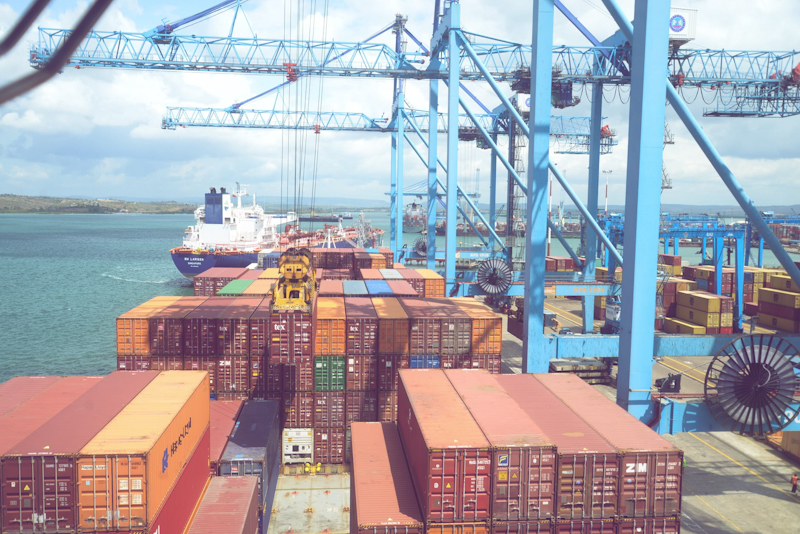
The International Finance Corporation and Standard Chartered have launched a $300 million risk-sharing facility to accelerate supply chain finance across eight African markets — targeting the working capital gap that keeps smaller businesses locked out of regional and global trade.
The announcement marks IFC’s first project under its Global Supply Chain Finance Program and the Africa Trade and Supply Chain Recovery Initiative, backed by the International Development Association Private Sector Window Blended Finance Facility. It builds on a broader push by multilateral lenders to close a financing gap that commercial banks have historically left open in emerging markets.
Eight Markets, Three Sectors, One Shared Problem
The facility rolls out across Côte d’Ivoire, Egypt, Ghana, Kenya, Nigeria, South Africa, Tanzania, and Zambia — markets where agriculture, healthcare, and manufacturing anchor the productive economy but where suppliers routinely wait weeks or months to get paid.
That payment delay is not just an inconvenience. It forces suppliers to borrow at higher rates to cover operating costs, compressing margins and limiting their ability to hire, invest, or grow. Supply chain finance solves the problem by accelerating payment from the buyer’s bank, using the buyer’s creditworthiness to unlock cheaper capital for the supplier.
Global demand for this type of financing reached an estimated $2.7 trillion in 2025, an 8% increase year on year. The growth in Africa has not kept pace. Commercial banks tend to concentrate their supply chain finance operations in developed markets, where risk is lower and ticket sizes are larger. This facility directly targets that structural gap.
How the Facility Works
The $300 million facility covers supply chain and trade finance assets originated by Standard Chartered across the region. It draws on a range of underlying instruments — payables finance, receivables discounting, and pre-shipment finance programmes — each designed to move working capital to suppliers faster and at lower cost.
IFC provides guarantees of up to $150 million from its own account. The first tranche commits $100 million, supporting transactions in both US dollars and selected local currencies. The local currency component matters: it removes the exchange rate risk that makes dollar-denominated supply chain finance impractical for smaller domestic suppliers.
Over the next three years, the partnership projects approximately $1.9 billion in supply chain finance transactions, reaching more than 500 suppliers including SMEs operating in both domestic and global value chains. The programme carries the potential to reach over one million farmers indirectly — a figure that reflects how deeply agricultural supply chains underpin economic activity across the eight target markets.
What the Partners Said
Mohamed Gouled, IFC’s Vice President for Products and Clients, pointed to the structural urgency behind the deal. “Supply chain finance is among the fastest ways to narrow the growing finance gap that businesses, particularly small and medium enterprises, are facing in emerging economies,” he said. “By partnering with Standard Chartered to support companies at the centre of strategic value chains, we can unlock much-needed working capital at scale for businesses across Africa, including smaller firms and farmers, making supply chains more competitive and boosting job creation.”
Dalu Ajene, Chief Executive and Head of Coverage at Standard Chartered Africa, placed the facility within the bank’s regional positioning. “This $300 million facility with IFC underscores our shared commitment to strengthening Africa’s supply chains and enabling sustainable business growth,” he said. “As a bank with deep expertise across key trade corridors linking Africa to Europe, Asia, the Middle East and the Americas, we are uniquely positioned to channel capital and innovation into the real economy. By expanding access to supply chain finance, we are helping African companies unlock liquidity, manage risk, and invest with confidence.”
Ajene added that the collaboration brings together Standard Chartered’s cross-border expertise and IFC’s development mandate to help businesses — from large corporations to smaller local suppliers — engage more actively in regional and global trade.
Part of a Larger Multilateral Push
This facility does not stand alone. In December 2024, IFC and HSBC launched a $1 billion risk-sharing trade finance programme covering emerging markets across Africa, Asia, Latin America, and the Middle East. The Standard Chartered deal extends that momentum specifically into African supply chains, with a sharper focus on local currency transactions and the agricultural and manufacturing sectors that drive employment across the continent.
The combination of IFC’s guarantee capacity and Standard Chartered’s trade corridors creates a structure that commercial banks operating alone cannot easily replicate. IFC absorbs a portion of the portfolio risk that would otherwise price smaller suppliers out of the facility entirely.
For the businesses at the end of these supply chains, the farmer waiting on a grain buyer, the small manufacturer supplying a large retailer, the healthcare distributor bridging a payment cycle — the difference between waiting 90 days and getting paid in 10 is not a financing technicality. It is the difference between staying solvent and going under.
