



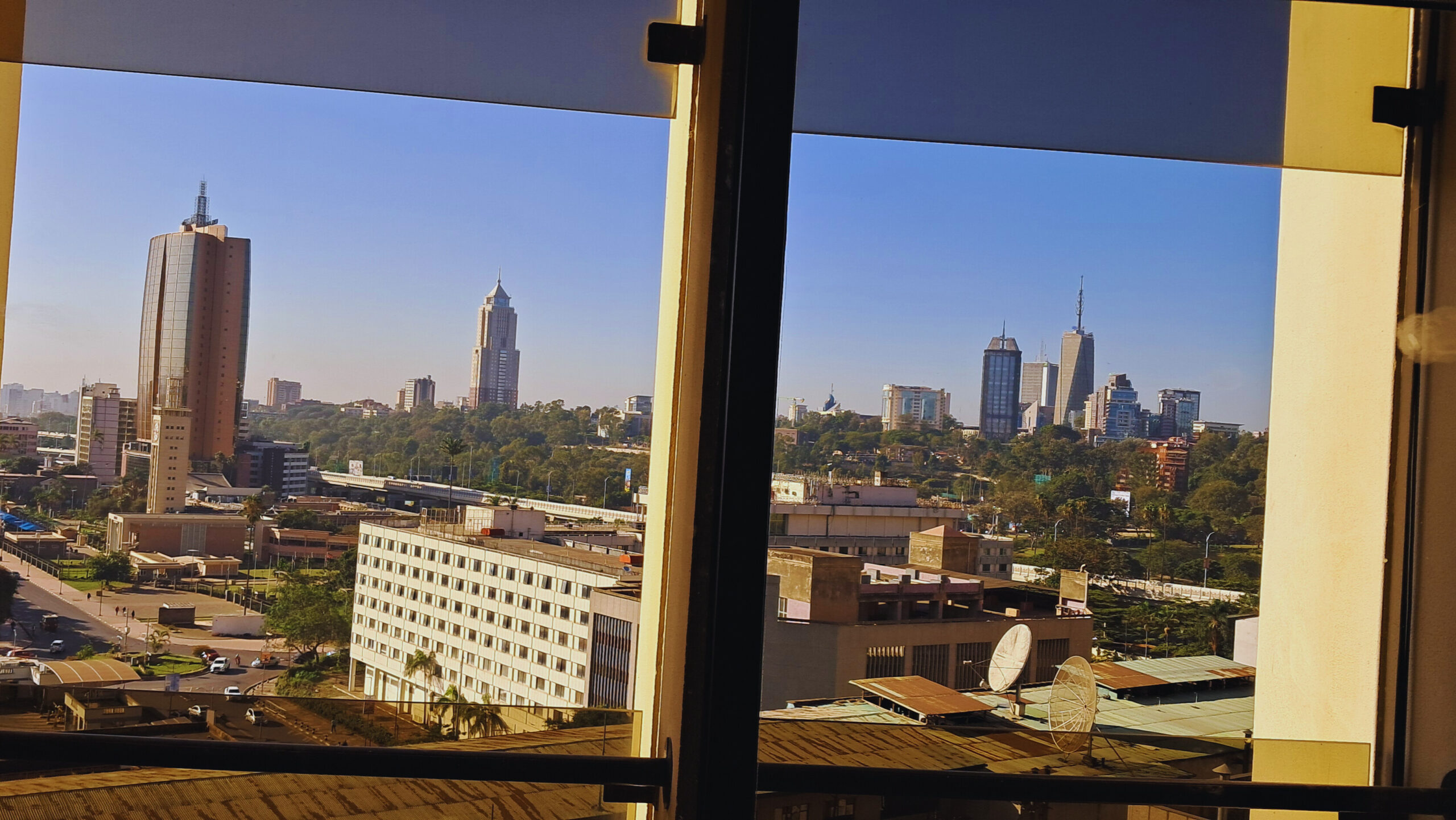
Property prices in Nairobi’s suburbs strengthened in the first quarter of 2026, even as land values across both suburbs and satellite towns grew at their slowest pace in years.
The divergence reflects a market where demand for standalone houses in established neighbourhoods remains firm, while tighter economic conditions and a regulatory dispute over planning approvals weigh on developer activity and land acquisition.
These findings come from HassConsult’s Property and Land Price Index for Q1 2026, which tracks price movements across 18 Nairobi suburbs and 14 satellite towns.
House Prices: Suburbs Strengthen as Satellite Towns Contract
Overall sale prices in Nairobi’s suburbs rose 1.1 percent in Q1 2026, up from 0.8 percent in the fourth quarter of 2025. Satellite towns moved in the opposite direction, with prices falling 0.9 percent after growing just 0.1 percent in the previous quarter.
Lavington led the suburbs with quarterly house price growth of 4.2 percent, followed by Spring Valley at 4.0 percent and Kilimani at 3.9 percent. Karen, Loresho and Westlands each recorded growth of 3.8 percent.
| Suburb | Quarterly Sales Change | Annual Sales Change | Change From Apr 2016 |
|---|---|---|---|
| Lavington | +4.2% | +12.7% | 1.35 Fold |
| Spring Valley | +4.0% | +6.8% | 1.32 Fold |
| Kilimani | +3.9% | +6.8% | 1.39 Fold |
| Karen | +3.8% | +13.2% | 1.51 Fold |
| Loresho | +3.8% | +10.8% | 2.05 Fold |
| Westlands | +3.8% | +6.6% | 1.27 Fold |
| Langata | +2.4% | +1.8% | 1.71 Fold |
| Kileleshwa | +2.2% | +3.1% | 1.22 Fold |
| Kitisuru | +0.7% | -0.2% | 1.20 Fold |
| Runda | +0.5% | +7.7% | 1.21 Fold |
| Gigiri | +0.4% | -0.3% | 1.22 Fold |
| Ridgeways | +0.3% | +6.5% | 1.54 Fold |
| Muthaiga | -0.7% | +5.1% | 1.90 Fold |
| Nyari Estate | -1.0% | -0.8% | 1.69 Fold |
“House sale price growth in the suburbs partly stems from undersupply of units and strong increases in many city suburbs, led by the likes of Lavington and Spring Valley. The correction in apartment prices reflected increased supply, moving to saturation in some areas,” said Sakina Hassanali, HassConsult Co-CEO and Creative Director.
The apartment segment told a different story. Price declines in Westlands at 2.8 percent and Upperhill at 2.5 percent dragged on overall suburban apartment performance, despite solid gains in Muthangari at 3.6 percent and Riverside at 1.8 percent.
In the satellite towns, buyer resistance was broad. “Rising living costs and limited household incomes reduced buyers’ ability to afford homes, leading to price correction in both house and apartment segments,” Hassanali added. Only Kitengela posted growth among satellite town houses, at 1.0 percent for the quarter.
| Satellite Town | Quarterly Sales Change | Annual Sales Change | Change From Apr 2016 |
|---|---|---|---|
| Kitengela | +1.0% | +5.2% | 1.46 Fold |
| Tigoni | +0.7% | +6.3% | 1.48 Fold |
| Ruiru | -0.7% | +6.2% | 1.62 Fold |
| Kiserian | -0.8% | +1.3% | 1.50 Fold |
| Kiambu | -1.2% | -0.9% | 1.57 Fold |
| Limuru | -1.3% | +2.0% | 1.34 Fold |
| Ongata Rongai | -1.5% | +3.1% | 1.53 Fold |
| Juja | -1.8% | +5.7% | 0.97 Fold |
| Ngong | -2.3% | -3.2% | 2.01 Fold |
| Athi River | -2.4% | +2.4% | 1.41 Fold |
Rental Market: Record Rents Signal Affordability Ceiling
Rental prices continued to climb across both markets, though the pace of growth suggests affordability is reaching a limit. Average rent in the suburbs crossed KSh 200,000 for the first time this quarter, settling at KSh 201,832. Average rent in the satellite towns reached a record KSh 64,765.
Rents in the suburbs rose 1.3 percent in Q1, down from 1.5 percent in Q4 2025. Satellite town rents grew 1.4 percent, up slightly from 1.2 percent in the previous quarter.
Westlands and Gigiri led house rent growth in the suburbs at 4.3 percent and 4.2 percent respectively, while Langata recorded the steepest drop in both house and apartment rents at 3.2 percent and 2.9 percent. Ridgeways posted the strongest annual rental growth across all suburbs at 14.7 percent. In the apartment segment, Riverside and Muthangari led with quarterly rental increases of 3.6 percent and 3.2 percent.
In the satellite towns, Juja at 4.0 percent and Ngong at 3.9 percent recorded the fastest quarterly house rent growth. Kiserian and Ruiru were the only towns where house rents fell, declining 2.0 percent and 1.6 percent respectively.
These rental levels kept yields firm. Suburb yields held at 7.4 percent for the third consecutive quarter, while satellite town yields edged up from 5.2 percent in December 2025 to 5.3 percent in March 2026. Both figures compare favourably with returns from short-term government securities.
Land: Planning Uncertainty Slows Suburb Acquisitions
Land prices in Nairobi’s suburbs grew just 0.8 percent in Q1 2026, down from 1.3 percent in Q4 2025, taking the average price per acre to KSh 228.8 million. The annual rate of 5.0 percent translates to a nominal gain of KSh 10.94 million per acre — meaningful, but earned slowly.
The slowdown traces directly to a specific problem. Uncertainty over the validity of Nairobi County planning approvals has reduced momentum in land acquisitions. Developers cannot confirm what they can build before committing to a purchase, and resident association resistance has delayed several projects further. The drop in value of new building approvals in Nairobi County by 9.3 percent in the 12 months to December 2025 reflects exactly this kind of pipeline constriction.

“Demand for land parcels for new suburban projects eased during the period, as developers continued to face uncertainty around planning approvals at county level, with some projects further delayed by resistance from resident associations,” said Hassanali.
Five suburbs recorded price declines in the quarter. Muthangari fell the most at 2.8 percent, followed by Loresho at 2.0 percent and Kitisuru at 1.5 percent. At the other end, Nyari posted the strongest quarterly growth at 3.1 percent, with Langata at 2.4 percent.
| Suburb | Quarterly Change | Annual Change | Average Price Per Acre (KSh) | Change From Apr 2016 |
|---|---|---|---|---|
| Nyari | +3.1% | +7.0% | 125,000,000 | 1.19 Fold |
| Langata | +2.4% | +5.7% | 90,900,000 | 1.86 Fold |
| Kileleshwa | +1.6% | +4.7% | 336,200,000 | 1.24 Fold |
| Kilimani | +1.4% | +5.6% | 437,800,000 | 1.03 Fold |
| Karen | +1.3% | +8.5% | 77,000,000 | 1.48 Fold |
| Riverside | +1.5% | +7.5% | 374,600,000 | 0.96 Fold |
| Runda | +1.5% | +7.3% | 102,600,000 | 1.34 Fold |
| Spring Valley | +1.1% | +7.6% | 310,600,000 | 2.14 Fold |
| Parklands | +0.8% | +3.5% | 469,700,000 | 1.19 Fold |
| Lavington | +0.6% | +4.2% | 276,900,000 | 1.25 Fold |
| Ridgeways | +0.4% | +1.9% | 92,500,000 | 1.43 Fold |
| Gigiri | +0.2% | +5.1% | 263,000,000 | 1.26 Fold |
| Westlands | -0.2% | +2.6% | 501,600,000 | 1.28 Fold |
| Muthaiga | -0.7% | -0.7% | 232,200,000 | 1.36 Fold |
| Kitisuru | -1.5% | +2.1% | 100,900,000 | 1.36 Fold |
| Loresho | -2.0% | +3.8% | 117,000,000 | 1.49 Fold |
| Muthangari | -2.8% | -1.4% | 386,600,000 | 1.13 Fold |
Satellite Town Land: The Infrastructure Boom Has Priced In
Satellite town land recorded its slowest quarterly growth in five years, rising just 0.5 percent to an average of KSh 33 million per acre. The annual rate stands at 4.3 percent. That modest current figure sits against a striking long-term record: the average acre cost KSh 22 million five years ago and KSh 16 million a decade ago, meaning values have roughly doubled over ten years and climbed 50 percent in the last five alone.
The explanation for the slowdown is straightforward. “The infrastructure-led uplift across many of Nairobi’s satellite towns that underpinned earlier growth is now largely priced into land values. Against a tighter economic backdrop, this has reduced affordability for self-build buyers, narrowing the addressable market,” Hassanali said.
Seven of the 14 towns surveyed recorded negative price movement. Athi River fell 2.5 percent, Ngong dropped 1.7 percent and Syokimau slid 0.7 percent — all previously among the fastest-growing towns in the index. Growth pockets remain: Ruiru climbed 2.8 percent in the quarter and 10.6 percent over the past year, the strongest annual performance in the satellite town segment. Juja and Ongata Rongai also held positive ground.
| Satellite Town | Quarterly Change | Annual Change | Average Price Per Acre (KSh) | Change From Apr 2016 |
|---|---|---|---|---|
| Ruiru | +2.8% | +10.6% | 40,500,000 | 2.38 Fold |
| Juja | +1.2% | +9.9% | 26,600,000 | 3.31 Fold |
| Ongata Rongai | +0.9% | +3.9% | 29,400,000 | 1.80 Fold |
| Kitengela | +0.8% | +5.2% | 18,800,000 | 2.04 Fold |
| Ruaka | +0.6% | +1.3% | 112,600,000 | 1.77 Fold |
| Thika | +0.5% | +3.4% | 31,200,000 | 1.99 Fold |
| Kiambu | +0.1% | -1.9% | 48,900,000 | 1.30 Fold |
| Mlolongo | -0.1% | +4.7% | 47,100,000 | 1.90 Fold |
| Kiserian | -0.1% | +7.0% | 13,500,000 | 2.10 Fold |
| Syokimau | -0.7% | +0.8% | 39,500,000 | 2.22 Fold |
| Limuru | -0.7% | +7.5% | 27,400,000 | 1.74 Fold |
| Tigoni | -0.9% | +1.0% | 34,800,000 | 1.93 Fold |
| Ngong | -1.7% | -2.3% | 35,600,000 | 1.99 Fold |
| Athi River | -2.5% | +0.8% | 20,800,000 | 1.89 Fold |
There has also been a steady shift in how cautious investors are allocating capital. Inflows into unit trusts and government securities have increased, pointing to a wait-and-see stance among buyers who might otherwise have entered the land market.
Land as a Long-Term Investment
For investors tracking long-term returns, the HassConsult data makes a clear case. KSh 1 million invested in Nairobi satellite town land at the end of 2007 would now be worth KSh 13.52 million. The same amount invested in suburban land would have grown to KSh 7.56 million, compared to KSh 4.94 million in bonds, KSh 2.92 million in property broadly, KSh 1.72 million in savings and just KSh 0.63 million in equities.
Against global commodities, Nairobi land also holds its own. The Satellite-14 index stood at 1,351.9 points since its 2007 base, well ahead of gold at 581.8 and crude oil at 129.0.
The near-term picture is more cautious. Planning uncertainty, tighter household budgets and a preference for liquid assets have taken the edge off a market that ran very fast between 2019 and 2023. The structural fundamentals — growing urban population, constrained supply of developable land, infrastructure investment still under way in several corridors — remain intact. What the market appears to be doing in Q1 2026 is pausing to absorb the cost of previous gains before deciding where to move next.
