



Safaricom Ethiopia customers reached 15.43 million active in the six months to September 2026, up 38.4% year on year, but the network covers about 60% of Ethiopians, Vodacom’s staff magazine said. That leaves roughly 40% of the population outside its signal.
For Safaricom shareholders in Kenya, Ethiopia’s next phase depends on extending coverage, selling more SIM cards and building M-PESA, which remains at an early stage.
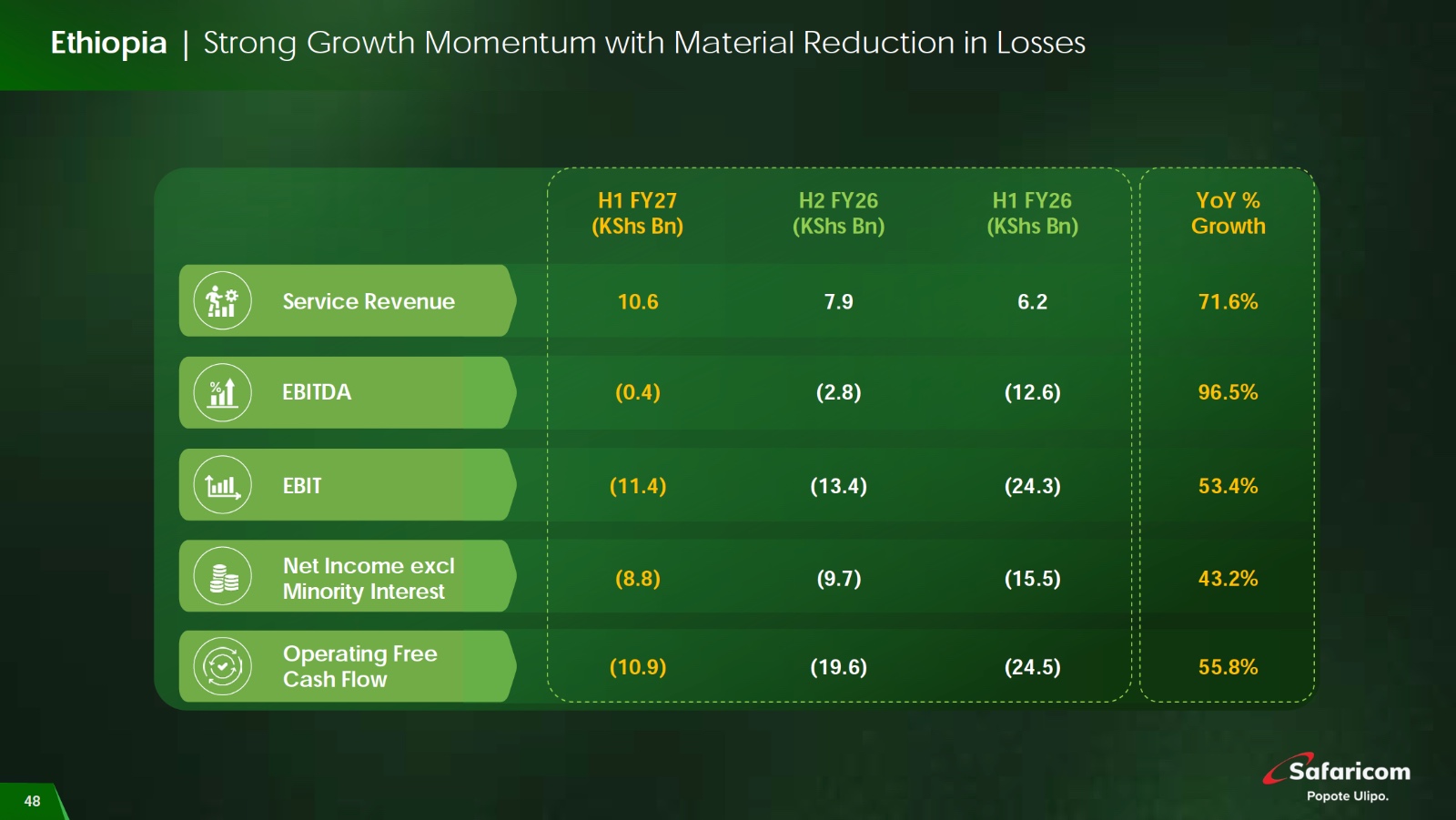
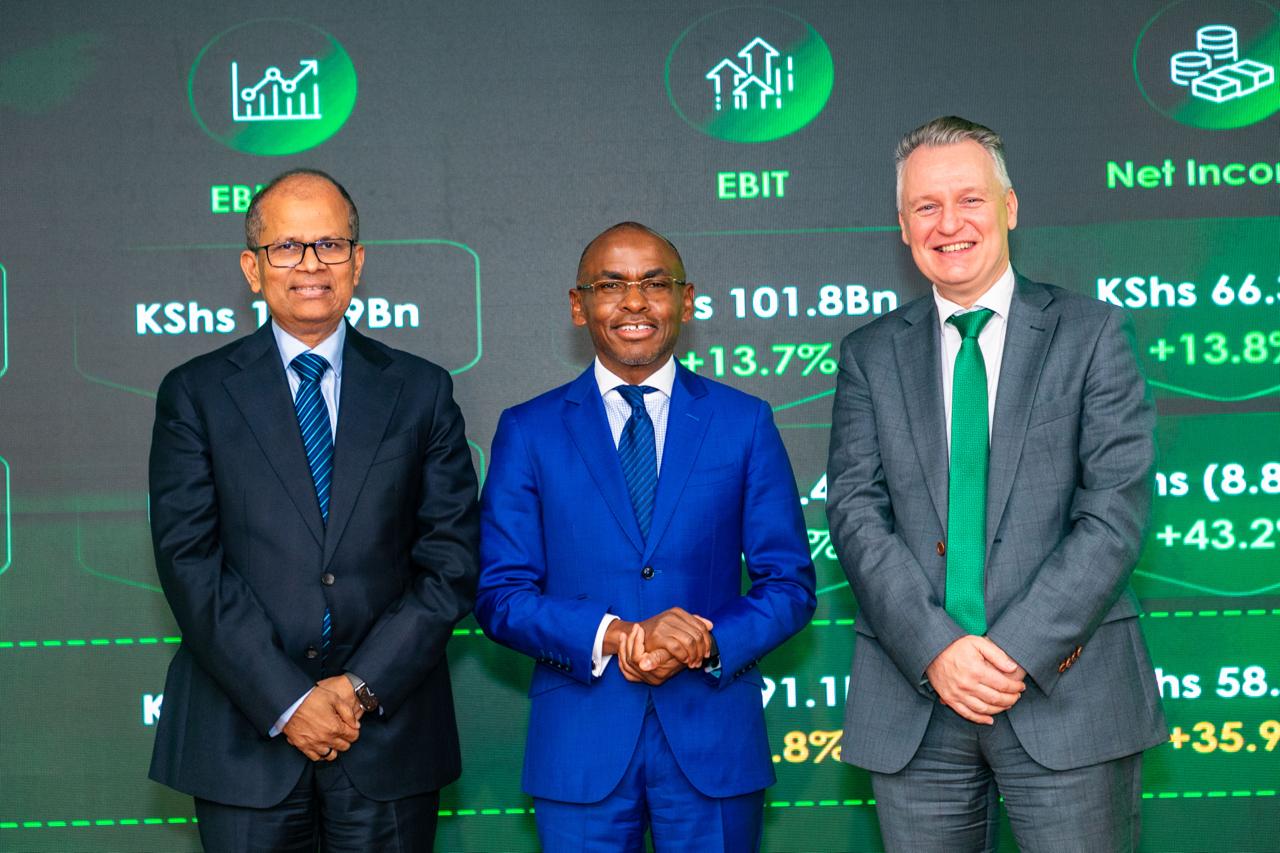
The unit’s loss before interest, tax, depreciation and amortisation (EBITDA) fell 96.5% to Sh434.4 million. Safaricom said lower Ethiopia losses and Kenya growth lifted group net income 35.9% to Sh58.2 billion.
The company says it is already looking towards its next 15 million customers.
Safaricom Ethiopia customers rose 38.4% to 15.43 million active
Safaricom counts customers on a 90 day active basis. Peter Ndegwa, Safaricom’s group chief executive, said the company set a customer scale marker at an investor forum in Ethiopia three years ago and crossed it this year.
“Ethiopia is gaining scale,” he said.
Network covers about 60% of Ethiopians across 3,600 sites
Vodacom’s magazine put the population above 130 million, with about two thirds under 30.
Vodafone reported more than 97 million mobile subscribers and 57 million internet users, and a plan for 128 million mobile connections. The counts are not like for like with Safaricom’s 90 day active customers, but they show the room left.
Vodafone wrote that network teams must stop matching growth and start “staying one step ahead of it.” Ndegwa said Safaricom directs network investment to areas with the strongest demand.
Data revenue grew 90.2% and customers use 8GB a month
Service revenue rose 71.6% to Sh10.62 billion. Mobile data revenue grew 90.2% to Sh7.85 billion, about 74% of the total, and voice supplied 9.1% of service revenue, Safaricom said.
Customers use 8GB of data a month on average.
Wim Vanhelleputte, chief executive of Safaricom Ethiopia, said revenue growth came from more users, more usage and a higher rate, each contributing about equally.
Fuel costs, inflation and security risks slow the rollout
Ndegwa said the economy shows resilience despite inflation and policy pressure. The election ended with a new government, which adds political certainty, though localised security risks remain.
The Middle East conflict disrupted fuel supply and raised transport costs, which cut customer affordability and slowed network rollout, he said. Safaricom is navigating those pressures with discipline while it grows its customer base and makes better use of the network, he said.
Regulator led steps are building a more sustainable industry, Ndegwa said, though prices need further correction.
7,000 brand ambassadors sell about 40,000 SIM cards a day
About 7,000 brand ambassadors work across Ethiopia on a typical day and together sell about 40,000 SIM cards, Vodacom’s magazine said. The business supports nearly 1,000 direct jobs and more than 20,000 indirect jobs through suppliers, partners and distributors.
Vanhelleputte told the magazine an early lesson was “we could not import a blueprint from another market.” The first customers connected in Dire Dawa in 2022, when coverage stopped at the city’s edge and they could reach only a limited community of Safaricom users.
M-PESA in Ethiopia remains at an early stage
Safaricom Ethiopia is working on payments that move across banks, wallets and networks, the magazine said. Open loop payments let a merchant accept money from customers of participating banks and wallets. M-PESA Lehulum, the Ethiopian design, works across telecom operators, so customers need not use Safaricom’s SIM.
Ndegwa said M-PESA adoption and merchant payments are growing as Safaricom expands digital distribution. Safaricom gave no M-PESA customer or transaction figures for Ethiopia at the briefing.
Fibre, 5G, digital recharge and device financing offer more routes
Safaricom is expanding through fixed fibre partnerships and 5G fixed wireless access, Ndegwa said. It also uses personalised offers, digital recharge and simpler sign up to grow adoption.
Customers also need devices they can afford, and the magazine named device financing as one way Safaricom Ethiopia helps them buy.
Community investment reached 684 million Ethiopian birr, about US$4.2 million, over four years, including shareholder contributions, the magazine said. The Safaricom Ethiopia Foundation will extend it through digital inclusion, device financing, health, education and economic empowerment. The next phase supports Digital Ethiopia 2030, the national plan, with openings in financial services and enterprise services.
The next fact to watch is the financial year end in March 2027, when Ndegwa expects Ethiopia to break even at the EBITDA level. Safaricom has not given a coverage target or a date for reaching the other 40% of the population.
