


For years, money market funds, bank deposits and government securities have been familiar starting points for Kenyans looking to save and invest. However, as the investment market evolves, there is growing room for conversations about what else investors can do with their money, particularly when opportunities in other markets are considered.
The question is no longer simply where to put money locally, but whether investors are making the most of the opportunities available beyond Kenya’s borders. From international equities and bonds to industries such as technology, healthcare and advanced manufacturing, global markets offer access to businesses and sectors that are not widely represented on the local exchange.
This shift is informing the development of investment products that allow Kenyans to participate in a wider range of markets without having to manage multiple international investments themselves.
Kenya’s investment market is opening up to more options
The growing interest in alternative investment products is reflected in the performance of Kenya’s Special Funds segment.
According to Capital Markets Authority (CMA) data, Special Funds held KSh 252.8 billion in assets under management in the second quarter of 2026. This represented 26.6% of the collective investment schemes (CIS) market, valued at KSh 948.7 billion during the period.
The segment recorded approximately 24% growth from the KSh 203.5 billion reported in March 2026, pointing to an expanding market for investment products beyond conventional offerings.
The figures point to a sizable pool of money that could find its way into different investment products, provided investors have access to suitable opportunities and confidence in how their funds are managed.

Why investors are looking beyond Kenya
One of the challenges of investing exclusively in a single market is the limited range of opportunities available. While the Nairobi Securities Exchange provides access to listed companies across different sectors, it represents only a small portion of the global investment universe.
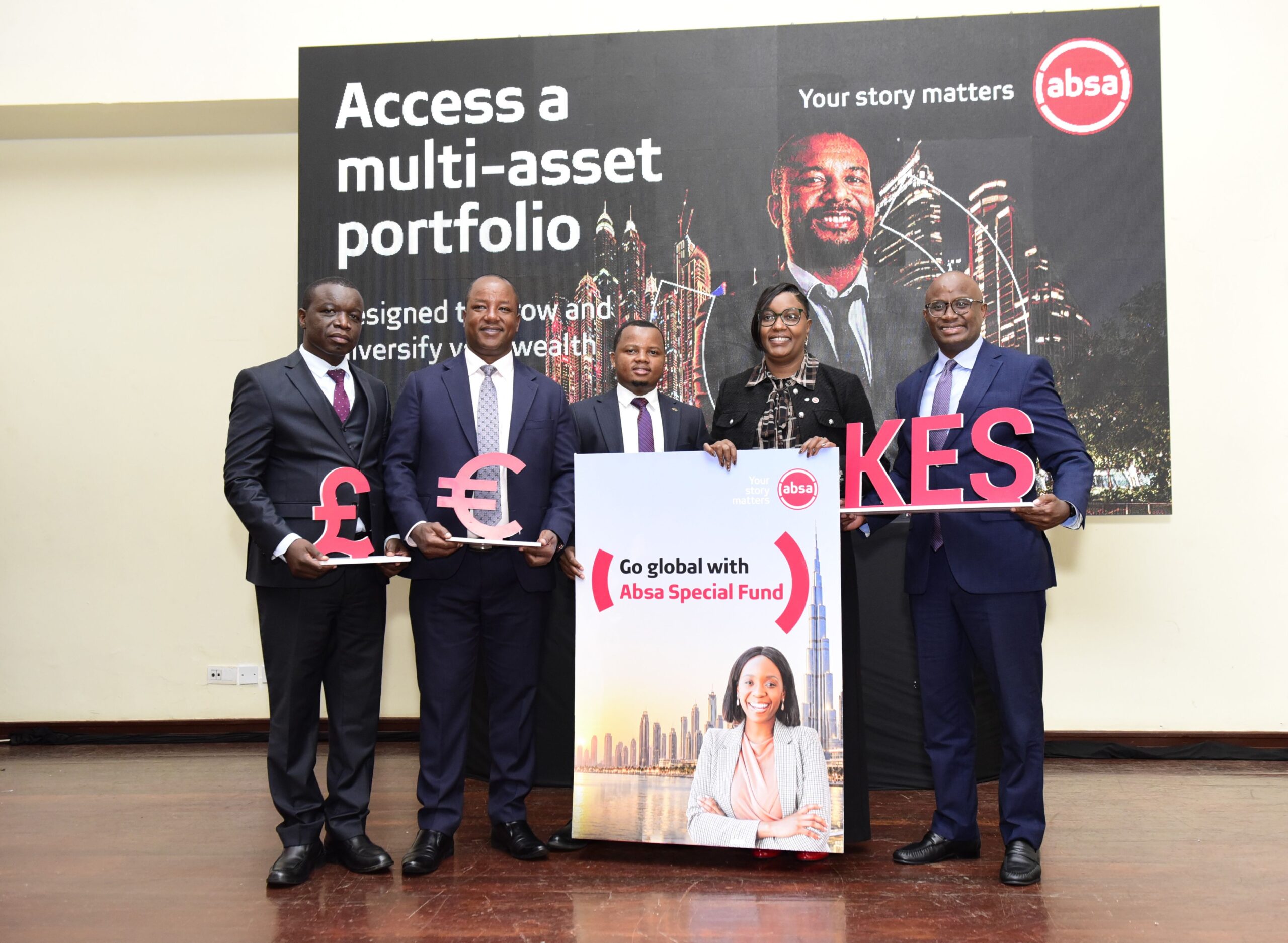
During the launch of Absa Global Multi-Asset Special Fund on November 19, 2026, Absa Asset Management CEO Elizabeth Irungu highlighted the difference between the number of companies listed locally and the much larger pool of investment opportunities available internationally.
For investors, this matters because different economies and industries do not necessarily perform in the same way at the same time.
Global markets provide exposure to sectors such as semiconductors, advanced manufacturing, technology and healthcare, which have a significant presence in international markets but are less represented on Kenya’s stock exchange.
This does not mean local investments have lost their relevance. Rather, investors can consider combining opportunities in Kenya with investments in other markets, reducing their dependence on the performance of one economy or sector.
“This Fund gives investors access to a broader universe of opportunities across markets, asset classes, and currencies through a single professionally managed solution. Our goal is to offer greater choice while helping investors achieve their long-term financial objectives through disciplined investment management and prudent risk oversight. Our ambition is to empower investors with more choice and greater flexibility as they pursue their financial goals,” said Ms. Irungu.
Absa commits KSh 230 million to new global investment fund
It is against this backdrop that Absa Asset Management Limited launched the Absa Global Multi-Asset Special Fund, committing KSh 230 million in seed capital.
The fund is available in Kenya shillings and US dollars, giving investors an opportunity to diversify their currency exposure while accessing a portfolio of international investments.
Unlike products that focus on a single asset class, the fund will invest across equities, bonds, cash, commodities, precious metals and fixed deposits.
Investors can access the fund with a minimum initial investment of KSh 250,000 or USD 2,500. Additional investments start at KSh 100,000 or USD 1,000, while each investment comes with a six-month lock-in period.
The seed capital represents Absa’s initial investment in the fund and signals its confidence in the opportunities presented by international markets.
The launch also expands the bank’s existing investment offering, which includes its shilling and dollar money market funds, fixed income fund, balanced fund and equity fund.
Access to global markets also requires professional management
Having access to international investment opportunities is one thing. Knowing how to navigate them is another.
Investors can now access a wide range of financial products, but choosing which assets to buy, when to invest, how much to allocate and when to exit requires research and an understanding of how different markets behave.
This is where professional fund management becomes important.
A diversified portfolio still requires careful decisions about how money is distributed across different investments. Market movements, currency fluctuations and changing economic conditions can affect the performance of individual assets differently.
Investment management involves more than pursuing returns. It also requires discipline, responsible decision-making, risk oversight and putting clients’ interests first.
The fund is managed by Absa Asset Management Limited, which is regulated by the Capital Markets Authority. NCBA Bank Kenya PLC serves as trustee, while Standard Chartered Bank Kenya Limited is the custodian responsible for safeguarding the fund’s assets.
Building wealth requires a longer-term investment approach
The introduction of more specialised investment products reflects a market where investors have greater room to consider different ways of building and preserving wealth.
However, having more options does not necessarily mean investors should abandon familiar products or move all their money into international markets. The appropriate investment mix depends on individual financial goals, risk tolerance, investment timelines and liquidity needs.
For those considering global investments, currency diversification also deserves attention. Holding investments in both Kenya shillings and US dollars can provide exposure to different currencies, although exchange rate movements can also affect returns when converted back into local currency.
At the Absa launch, the message from the leadership team was that successful investing requires patience and consistency rather than constantly moving money in and out of different opportunities.
