


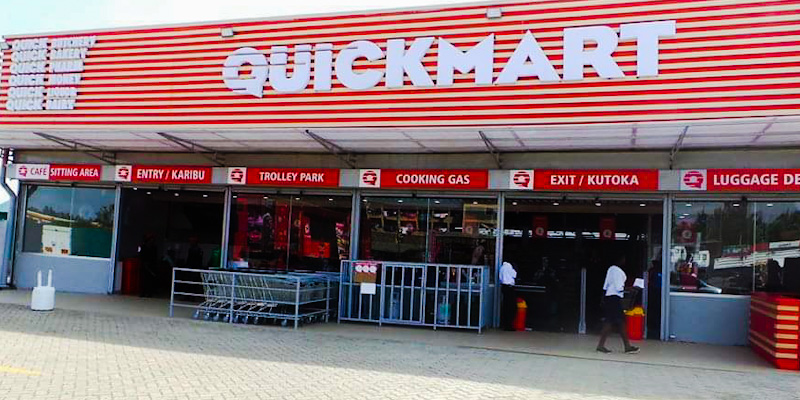
Quickmart PLC opened its initial public offering 5 October 2026, selling 2 billion shares at KES 7.50 each. The price values the supermarket chain at KES 30 billion.
The sale could raise KES 15 billion, all of it for the selling shareholder, Sokoni Retail Kenya Limited. Quickmart receives no proceeds, and its filings show KES 10.9 billion owed to suppliers at the end of 2025.
What the Offer Covers
The IPO is an offer for sale of 2 billion existing shares, equal to 50% of Quickmart’s 4 billion issued shares. No new shares are issued. Sokoni Retail Kenya keeps the other 50%. The announcement lists no overallotment option.
The Capital Markets Authority approved the offer, and the Nairobi Securities Exchange approved listing on its Main Investment Market Segment. Quickmart said the listing would “broaden its ownership base and create a meaningful public free float.” The audited FY2025 accounts report 66 branches across 16 counties, and the company plans 73 stores by the end of 2026 and 125 by 2030. The full terms are in the Information Memorandum.
Key Dates
- October 5: Offer opens at 9:00 am.
- October 30: Offer closes at 5:00 pm.
- November 6: Results and allocation notices announced.
- November 10: Qualified institutional investors pay.
- November 11: CDS accounts credited and refunds processed.
- November 12: Trading begins on the NSE.
The offer proceeds only if investors subscribe for at least 75% of the shares, or 1.5 billion. If subscriptions fall short, all application money is refunded.
How to Apply
The minimum application is 500 shares, which costs KES 3,750. Larger applications go up in multiples of 100 shares, with no maximum. Applicants need a CDS account, and applications cannot be withdrawn or changed without the Issuer’s written consent.
- Electronic: Use the online application portal or dial USSD code 483803#. USSD covers applications of up to KES 250,000.
- Physical: Download the form from the portal and submit it to a Placing Agent by 5:00 pm on October 30.
Retail investors in Kenya receive 20% of the offer. Kenyan institutions receive 35%, East African Community investors 12%, foreign investors 20% and the International Finance Corporation 13%.
IFC Anchors the Offer
The IFC has conditionally committed up to USD 15 million, about KES 1.94 billion. That is roughly 13% of the offer and about 6.5% of Quickmart’s shares after listing.
IFC’s board must still approve the commitment. The IFC said its participation is a commercial investment and does not endorse the company or the offer.

Valuation and Dividends
At KES 7.50, Quickmart trades at 12.9 times projected FY2026 adjusted earnings and 5.7 times projected FY2026 EV to adjusted EBITDA. Kenyan Wall Street calculated that listed African supermarket peers average 25.14 times earnings among profitable firms, so the offer price sits below that average on this measure.
The Information Memorandum sets a dividend policy of at least about 80% of annual profit after tax, paid twice a year. The company expects to pay about KES 2.0 billion in FY2026 and KES 2.5 billion in FY2027, payout ratios of 95.1% and 90%. The FY2026 figure equals KES 0.50 per share, a 6.7% yield at the offer price.
The audited accounts show the history behind those payouts. Quickmart reported FY2025 revenue of KES 50.4 billion and profit after tax of KES 1.51 billion. It paid an interim dividend of KES 1.65 billion, more than the year’s profit. Retained earnings fell from KES 394 million to KES 256 million, and total equity ended 2025 at KES 1.06 billion.
What the Supplier Ledger Shows
Quickmart funds much of its stock with supplier credit. Customers pay at the till, while suppliers are paid later. The Information Memorandum calls this a structurally negative working capital profile and lists withdrawal of trade credit as a risk. It cites supermarket operators that failed after a “loss of supplier and lender confidence.”
| Dec 2024 | Dec 2025 | Jun 2026 | |
|---|---|---|---|
| Trade payables (KES billion) | 8.93 | 10.89 | 8.97 |
| Gross trade payable days | 89 | 101 | 77 |
| Net supplier days | 76 | 88 | 67 |
| Net current liability (KES billion) | 3.33 | 3.69 | 3.36 |
| Bank borrowings (KES million) | 177 | 46 | 6.8 |
Sources: audited FY2025 accounts; Information Memorandum for June 2026, which is unaudited. Net current liability is current liabilities less current assets. December balances fall in the peak restocking month, which the company says affects the comparison.
The 2025 cash flow statement shows how much the supplier book mattered. Payables rose KES 1.93 billion during the year, counted as a source of cash. That exceeds the KES 1.65 billion paid in dividends.
Why Regulators Look at Payment Terms
Section 24A of the Competition Act bars abuse of buyer power. The Retail Trade Code of Practice, gazetted on June 11, 2021, covers recorded supply agreements, payment terms, cost shifting to suppliers, fees for store openings and listings, and dispute resolution. The Information Memorandum says Quickmart’s supplier relationships are “materially conducted in accordance with the requirements of the RTCP.” It also says the company is in material compliance with the Competition Act.
Recent cases show what the Competition Authority of Kenya examines:
- Carrefour: In December 2023 the CAK fined the Kenyan operator of Carrefour KES 1.1 billion for abuse of buyer power and ordered refunds to suppliers. The CAK found at least three types of non negotiable rebates of up to 12%, plus listing fees for each new branch. An earlier case from the supplier Orchards ended with the High Court finding that the conduct amounted to abuse of buyer power, as Khusoko reported.
- Unilever: Under a January 2023 settlement, Unilever cut payment terms for small and medium suppliers from 90 days to 60, and to 45 from January 1, 2025. The CAK alleged that Unilever changed the terms unilaterally and exempted 23 large and foreign suppliers. The case turned on how long suppliers waited and which suppliers waited longest.
- Penalties: A conviction for abuse of buyer power carries a penalty of up to 10% of prior year gross turnover. On Quickmart’s FY2025 revenue, that ceiling would be about KES 5.0 billion. That is arithmetic, not a forecast.
The sector has a history of late payment. Khusoko reported when manufacturers and retailers signed the prompt payment code in 2019. A government study then found retailers paying late against agreed terms of 90 or 120 days, some by more than a year.

What the Filings Disclose
The documents raise four points investors can check:
- Payable days. Gross trade payable days were 101 at the end of 2025, up from 89 a year earlier. Note 28 of the audited accounts refers to supplier terms averaging 60 payables’ days. At 60 days, the year end balance would have been about KES 6.5 billion, KES 4.4 billion below the reported figure.
- Rebates. Trade receivables consist mainly of supplier rebates and volume discounts. Management nets them against payables to reach net supplier days, which gives 88 days for 2025.
- No ageing. All KES 11.2 billion of trade and other payables sits in one “less than one year” line in the audited liquidity table. The Information Memorandum says the company monitors payable ageing, but the text reviewed contains no ageing table.
- Going concern language. Note 28 of the audited accounts says the KES 3.7 billion net current liability “could represent a material uncertainty that may cast significant doubt” on the company’s ability to continue. The directors concluded they were satisfied it can continue, and the auditor’s report has no separate going concern section. Note 28 also lists freezing dividends as a possible measure. The Information Memorandum does not repeat that disclosure, and its stated dividend policy is at least about 80% of profit.
The Information Memorandum offers mitigants. It cites net cash excluding leases, a mostly undrawn bank facility, and consignment terms for selected fresh categories. At June 30, 2026, current borrowings were KES 6.8 million. Its litigation section lists employment, data protection and defamation matters. The sections reviewed list no Competition Authority proceeding.
What an Offer for Sale Changes
No new capital enters Quickmart through this sale. If the supplier book comes under pressure, whether from regulators, from suppliers seeking shorter terms, or from weaker trading, the company meets it from its own cash flow, its dividend policy and its bank facility. The Family Bank facility has a limit of KES 1.85 billion, with KES 46.3 million drawn at the end of 2025.
Investors reading the Information Memorandum will want the supplier ageing, the payment terms against the Retail Trade Code, the rebate and deduction terms, and any correspondence with the Competition Authority. They will also want an explanation for why note 28 changed between the audited accounts and the offer document.
The offer closes October 30, with trading set for November 12.
For more coverage of the Kenyan market, visit Khusoko.
Karakuta Fresh Produce plans to list on Nairobi Securities Exchange
