



President William Ruto has declared war on Kenya’s raw mineral exports. Speaking to reporters in Kisumu on Monday, he announced that shipping unprocessed gold out of the country will soon become illegal, part of a broader plan to keep more mineral wealth inside Kenya’s borders.
The government will build at least three gold refineries, in Kakamega and Nairobi, and give the Central Bank of Kenya first priority to buy domestic gold under a new purchasing programme. Ruto framed the move as catching up with continental peers rather than breaking new ground.
“We’re going to make it illegal for anybody to export gold from Kenya” unless it passes through approved government channels and gets processed locally, Ruto told reporters. He pointed to precedent elsewhere, saying, “That’s what Ghana did and what Zimbabwe has done,” and promised the policy will eventually cover every mineral Kenya mines, not just gold.

Why Now
The announcement lands weeks after a bruising dispute with a unit of India’s Tata Group, which cost the company its century old soda ash concession in Magadi. Ruto has spent recent months arguing that Kenya loses jobs and revenue every time it ships raw materials abroad instead of processing them at home.
He made the same case days earlier at a thanksgiving service in South Horr, Samburu County, telling the congregation plainly, “we will no longer export raw materials.” He went further still, calling it “imprudent for any government to export raw materials, create jobs and value in other countries” while young Kenyans need work. He has floated similar plans for limestone, iron ore, graphite and titanium, and cited talks with Nigerian businessman Aliko Dangote over a planned oil refinery in Lamu as evidence the strategy reaches well past gold.
Small Miners Dominate the Trade
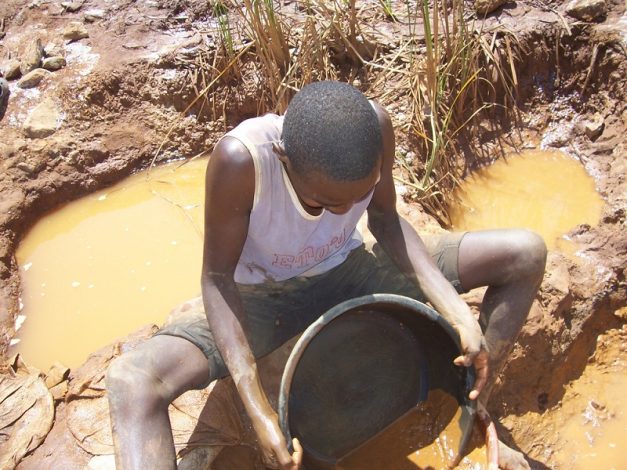
Kenya’s gold sector runs mostly on artisanal labor. The State Department for Mining estimates the country produces roughly 300 kilograms of gold each month, and more than 90 percent of that comes from small scale, informal miners rather than large operators. That informal trade translates into about 36 billion shillings in transactions each year that fall outside government oversight, costing the state an estimated 1.2 billion shillings annually in lost royalties.
Formal, large scale miners already active in Kenya include Shanta Gold Kenya, Karebe Gold Mining, Kilimapesa Gold (a Goldplat subsidiary), and Red Rock Resources through its Migori Gold Project. These companies will need to adjust to a system where refining and government approved sale channels become mandatory rather than optional.
Following Ghana and Zimbabwe’s Lead
Several African producers have tightened control over their mineral supply chains in recent years, betting that local processing pays off in jobs, revenue and currency stability.
| Country | Policy | Result |
|---|---|---|
| Ghana | Established GoldBod in 2025 as the sole authorized buyer of gold from small scale miners | Central bank gold reserves and export earnings climbed sharply, with officials crediting the board for lifting foreign reserves to roughly $13.8 billion by early 2026 |
| Zimbabwe | Made a central bank unit the sole buyer of domestic gold and banned some mineral exports this month | Aims to force mining companies to refine locally rather than ship raw ore abroad |
| Kenya | Plans to ban unprocessed gold exports and build three refineries, with the central bank as lead buyer | Policy still in early stages; refineries planned for Kakamega and Nairobi |
Ghana’s experience offers the clearest test case. Its state gold board, created to formalize trade with small scale miners, has been credited by officials with pulling billions of dollars into the country’s reserves and helping stabilize the cedi.
What Comes Next
Kenya has flagged intentions to build a Kakamega gold refinery before, most recently in 2020, though the project has yet to materialize.
Whether this latest push produces working refineries, or simply another round of announcements, will depend on financing, timelines and how the government brings artisanal miners, who dominate production, into a formal, regulated system. For now, Ruto has set a clear direction, gold stays in Kenya, gets processed in Kenya, and only leaves once it carries added value.
