



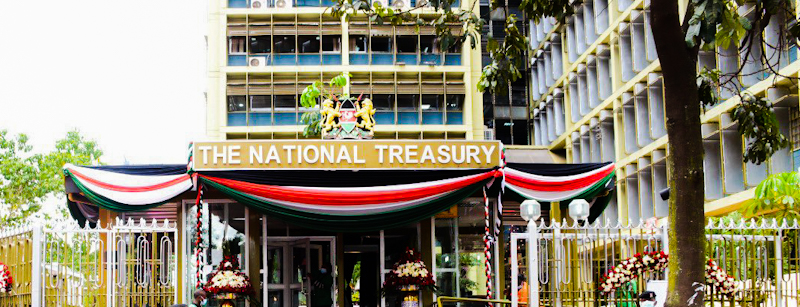
Kenya’s National Treasury has released a compressed budget calendar for the 2027/28 financial year, alongside the numbers behind the current 2026/27 budget and a look back at how the outgoing 2025/26 budget actually performed.
The country goes to the polls in August 2027, which means every constitutional and statutory deadline in the budget process must clear before a new administration takes over. That single fact reshapes the entire calendar.
Why the Timeline Has Tightened
Government budgets normally follow a set rhythm stretched across most of the year. This cycle compresses that rhythm. Treasury officials must finish the Budget Policy Statement, pass the Finance Bill and secure Parliament’s approval of the Appropriation Bill months earlier than usual, all so the country enters an election year with its fiscal framework locked in rather than left hanging.
The FY 2027/28 Calendar, Milestone by Milestone
| Milestone | Date |
|---|---|
| Draft Budget Review and Outlook Paper issued | August 15, 2026 |
| Cabinet approves the Budget Review and Outlook Paper | August 30, 2026 |
| Sector Working Groups draft and review budget proposals | September 7 to October 2, 2026 |
| Budget Policy Statement, Division of Revenue Bill and County Allocation of Revenue Bill submitted to Cabinet | November 13, 2026 |
| Same documents submitted to Parliament | November 30, 2026 |
| Medium Term Expenditure Framework estimates and Finance Bill 2027 submitted to Parliament | January 29, 2027 |
| Appropriation Bill reaches Parliament | March 8, 2027 |
| Cabinet Secretary presents FY 2027/28 Budget Highlights to the National Assembly | March 18, 2027 |
| Parliament passes both the Finance Bill and the Appropriation Bill | March 31, 2027 |
Sector Working Groups translate national priorities into ministry level plans during their review window in September and October. From there, the process runs through Cabinet twice, once for the Budget Review and Outlook Paper in August, and again for the Budget Policy Statement package in November, before Parliament takes over the remaining approvals through March 2027, closing the cycle with enough runway before campaigns for the August election take over the political calendar.
What Kenya’s Current Budget Actually Looks Like
While the 2027/28 calendar sets the pace ahead, the FY 2026/27 budget already approved gives a sense of the fiscal position Treasury is managing right now.
| Item | Amount | Share of GDP |
|---|---|---|
| Total revenue including Appropriation in Aid | KSh 3,630.6 billion | 17.4% |
| Ordinary revenue | KSh 2,985.7 billion | 14.3% |
| Total expenditure and net lending | KSh 4,819.4 billion | 23.2% |
| Recurrent expenditure | KSh 3,565.6 billion | 17.1% |
| Development expenditure | KSh 750.8 billion | 3.6% |
| Transfer to counties | KSh 502 billion (of which KSh 428 billion is equitable share) | — |
| Fiscal deficit including grants | KSh 1,145.2 billion | 5.5% |
| Net external financing | KSh 247.2 billion | 1.2% |
| Net domestic financing | KSh 898.0 billion | 4.3% |
Recurrent spending takes up 74% of total expenditure, leaving development spending to compete for a much smaller share of the budget. On the financing side, domestic borrowing covers 78% of the deficit, with external financing filling the remaining gap. That split matters heading into an election year, since heavy reliance on domestic borrowing tends to push up local interest rates and compete with private sector credit at exactly the moment growth needs support.
How the 2025/26 Budget Actually Performed
Treasury also released a full account of how the outgoing 2025/26 budget played out by end June 2026, and the gap between target and outcome runs through both revenue and spending.
| Category | Target (KSh billion) | Actual (KSh billion) | Deviation (KSh billion) |
|---|---|---|---|
| Total revenue and external grants | 3,299.0 | 3,190.0 | (109.4) |
| Ordinary revenue | 2,640.6 | 2,587.1 | (53.5) |
| Appropriation in Aid | 618.3 | 581.7 | (36.6) |
| Total expenditure and net lending | 4,656.5 | 4,466.2 | (190.4) |
| Recurrent expenditure | 3,400.7 | 3,290.2 | (110.6) |
| Development expenditure | 771.0 | 738.5 | (32.5) |
| County allocation | 484.8 | 437.5 | (47.3) |
| Fiscal deficit including grants | 1,357.7 | 1,276.7 | 16.9 (narrower than target) |
Total revenue grew 8.6% over the year even after missing target, and ordinary revenue grew 6.9%. Nearly every major tax head underperformed against target, with excise duty the lone exception. On the spending side, both recurrent and development expenditure came in below plan, which explains why the fiscal deficit actually landed narrower than target at 6.7% of GDP rather than the 7.3% Treasury had budgeted for. That narrower deficit reflects reduced spending rather than stronger revenue collection, a distinction that matters for judging how sustainable the improvement really is.
How the Deficit Got Financed
| Source | Amount (KSh billion) | Share of GDP |
|---|---|---|
| Net domestic financing | 1,135.3 | 6.0% |
| Net foreign financing | 205.5 | 1.1% |
| Total financing | 1,340.8 | 7.1% |
Domestic borrowing carried the overwhelming share of financing for 2025/26, just as it will for the current 2026/27 budget. By end June 2026, total exchequer issues reached KSh 4,581.9 billion, representing 93.1% of the revised estimates, with consolidated fund services and recurrent expenditure together accounting for roughly 80.9% of everything disbursed.
The Pressures Treasury Says Will Persist
Treasury pointed to several factors squeezing the budget through 2025/26 that carry directly into planning for 2027/28. Ordinary revenue kept underperforming due to slower tax receipts, driven by administrative constraints and a slowdown in economic activity. Newly negotiated collective bargaining agreements pushed the public sector wage bill beyond initial projections, eating into available fiscal space. Emergency spending on floods and drought required resources nobody had budgeted for. And additional expenditure requests from ministries and departments kept adding pressure to a budget that already had little room to absorb them.
What This Means Going Forward
Compressing a budget cycle rarely comes without tradeoffs. Public participation windows shrink, sector hearings run tighter, and ministries have less room to revise proposals once Treasury sets the pace. Layer on a revenue base that consistently falls short of target, a recurrent budget that already consumes 74% of spending, and a deficit financed mostly through domestic borrowing, and the pressure on this faster calendar becomes clear. Still, the calendar gives Kenya something valuable: a fiscal framework settled well ahead of a general election, rather than one rushed through during a transition of power. Whether every deadline holds, and whether revenue collection finally catches up to target, will say a great deal about how prepared Treasury and Parliament are to manage 2027 on a faster clock than usual.
