




Kenyans burned more fuel in the first three months of 2026 than they did a year earlier, and they reached for LPG cylinders even more often than that. The numbers, released at the Petroleum Institute of East Africa’s (PIEA) Q2 2026 State of the Oil Industry Briefing on Monday in Nairobi, point to an economy that kept moving even as global oil markets wobbled.
The briefing, themed “Strengthening Energy Security and Supply Resilience in a Dynamic Global Environment,” reviewed performance for the first quarter of 2026 (Q1 2026), since official GDP figures from the Kenya National Bureau of Statistics for the period have yet to be released. In their place, PIEA leaned on fuel consumption, a reliable stand in for economic activity, and the trend lines told a steady story.
The Economy Held Its Footing
Three numbers set the backdrop for the quarter. Inflation stayed put. The shilling barely moved against the dollar while the Central Bank kept cutting rates.
| Indicator | Q1 2026 reading | What changed |
|---|---|---|
| Inflation (average) | 4.4% | Held within the Central Bank’s target band; 4.3% in February |
| Exchange rate | KShs 129/USD | Stable against the dollar through the quarter |
| Central Bank Rate | 8.75% | Cut from 9.00% in January, held through March |
| Petroleum consumption growth | +5.4% year on year | Versus Q1 2025 |
Contained inflation preserved household spending power. A steady shilling kept fuel import costs predictable. Cheaper borrowing freed up room for businesses to invest and households to spend. Put together, these conditions gave the petroleum sector calm waters to operate in, even while the country waits on official growth data.

Diesel, Petrol and Kerosene Lead the Climb
Total petroleum consumption rose 5.4% year on year, from 1,566,926 cubic metres in Q1 2025 to 1,651,640 cubic metres in Q1 2026. Three products did the heavy lifting.
| Product | Q1 2025 to Q1 2026 | Driver |
|---|---|---|
| Illuminating Kerosene (IK) | +11.0% | Household consumption |
| Gas Oil / Diesel (AGO) | +9.9% | Road transport, commercial activity |
| Premium Motor Spirit / Petrol (PMS) | +9.0% | Road transport demand |
| Jet Fuel | -9.5% | Softer aviation demand |
| Fuel Oil | -10.6% | Reduced industrial and marine use |
Diesel, petrol and kerosene grew fastest, a sign that road transport and household demand carried the quarter. Jet fuel and fuel oil pulled the other way, dragging on the total as aviation and industrial users bought less.
Set against the previous quarter, the picture cools off a little. Total consumption fell 2.6% from Q4 2025, a normal seasonal pullback after a stronger end of year run. Diesel held its ground. Petrol slipped 1.3%, jet fuel eased 0.5%, and fuel oil dropped sharply by 30.5%. Kerosene was the exception, rising 8.4% over the same stretch.
LPG Keeps Building on Kenya’s Clean Cooking Shift
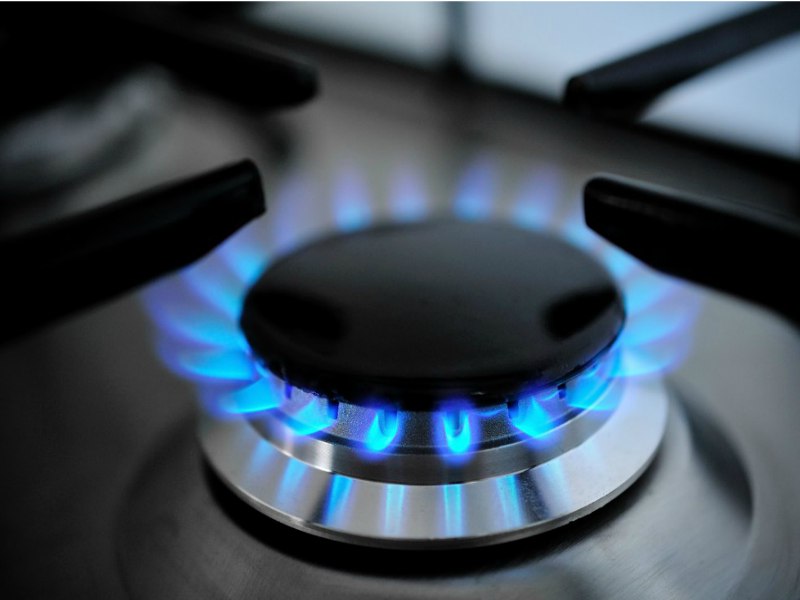
If one chart from the briefing deserves a second look, it is LPG. Consumption climbed 17.7% year on year, from 105,326 metric tonnes in Q1 2025 to 123,974 metric tonnes in Q1 2026, extending a run of growth that stretches back through 2024 and 2025.
| Month | Q1 2025 (MT) | Q1 2026 (MT) | Change |
|---|---|---|---|
| January | 38,095 | 43,720 | +14.8% |
| February | 34,148 | 36,476 | +6.8% |
| March | 33,082 | 43,778 | +32.3% |
| Quarterly total | 105,326 | 123,974 | +17.7% |
March stands out, with LPG uptake jumping more than 32% on the same month last year. PIEA credits government policy for much of the push, pointing to the zero rating of LPG and the National LPG Growth Strategy as the levers behind the shift away from biomass and kerosene toward cylinder gas. Every tonne of LPG that replaces kerosene or charcoal also chips away at indoor air pollution, a public health win that tends to get less attention than the trade figures.
Petrol Stations Still Move Most of the Fuel
Retail outlets, the petrol stations Kenyans drive into every day, accounted for 53.1% of total domestic petroleum sales in Q1 2026. Resellers took 16.5%, and civil aviation held 13.8%. Together, these three groups consumed more than 83% of everything sold.
| Consumer segment | Share of consumption |
|---|---|
| Retail Outlets | 53.1% |
| Resellers | 16.5% |
| Civil Aviation | 13.8% |
| Other Commercial Sectors | 7.1% |
| Transport & Communications | 6.4% |
Manufacturing, agriculture, government services and construction each used less than 1% of total volumes, while mining, the military and tourism stayed minor players.
Big Three Marketers Hold Their Ground
Vivo Energy, RUBiS Energy and TotalEnergies kept their grip on the top three spots in both overall and domestic market share, though the chasing pack closed in.
Overall market share (including exports)
| Oil Marketing Company | Q1 2025 | Q1 2026 |
|---|---|---|
| Vivo Energy | 14.32% | 14.24% |
| RUBiS Energy | 12.08% | 11.93% |
| TotalEnergies | 11.42% | 11.79% |
| Stabex International | 4.74% | 5.39% |
| Hass Petroleum | 3.78% | 3.76% |
Domestic market share
| Oil Marketing Company | Q1 2025 | Q1 2026 |
|---|---|---|
| Vivo Energy | 19.07% | 19.14% |
| RUBiS Energy | 15.05% | 14.72% |
| TotalEnergies | 14.61% | 14.25% |
| OLA Energy | 4.05% | 3.89% |
| One Petroleum | 3.67% | 3.40% |
Stabex International was the standout, lifting its overall share from 4.74% to 5.39% and cementing a place among the leading marketers. PIEA named Stabex, One Petroleum and Zacosia as the fastest movers in the export inclusive rankings, with Be Energy, Galana and OLA Energy flagged as emerging challengers worth watching. Domestically, though, One Petroleum’s share actually slipped slightly, a reminder that export volumes and local pump sales do not always move in the same direction. The gap separating second tier marketers keeps narrowing too, as retail expansion, new commercial customers and tighter supply chains sharpen the competition beneath the leaders.

Banks Step Into the Energy Security Conversation
Peter Ng’eno, KCB’s Director of Corporate Banking, argued that fuel supply cannot be separated from the financing that keeps it flowing. He told the room that recent shocks, from Middle East shipping disruptions to currency swings, have raised freight costs, insurance premiums and working capital needs for any country that imports its fuel.
Ng’eno pointed to KCB’s role in Kenya’s Government to Government fuel importation programme, launched in 2022 when pressure on fuel imports and foreign exchange reserves reached a breaking point. The bank, he said, has issued Letters of Credit worth over KShs. 1.074 trillion under the programme, financing imports that continue to reach households, businesses and industries nationwide.
His perspective was that supply chains run on credit as much as on pipelines. As he put it, energy resilience depends as much on financial resilience as it does on physical infrastructure. He framed the sector’s future as a shared responsibility, noting that the future of East Africa’s energy sector will not be shaped by any one institution acting alone, but by governments, industry and financiers pulling in the same direction.
What the Quarter Tells Us
Diesel, petrol and kerosene demand grew on the back of steady transport and household activity. LPG kept extending Kenya’s shift toward cleaner cooking fuel. Aviation and industrial fuel use cooled, a soft spot worth watching if it persists into Q2. And among the marketers, the leaders held their lead while a faster, more competitive second tier started to close the gap.
The macro backdrop, low inflation, a stable shilling and falling interest rates, gave the sector room to operate without added strain. Whether that holds once official GDP numbers finally land will be the question PIEA’s next briefing has to answer.
