



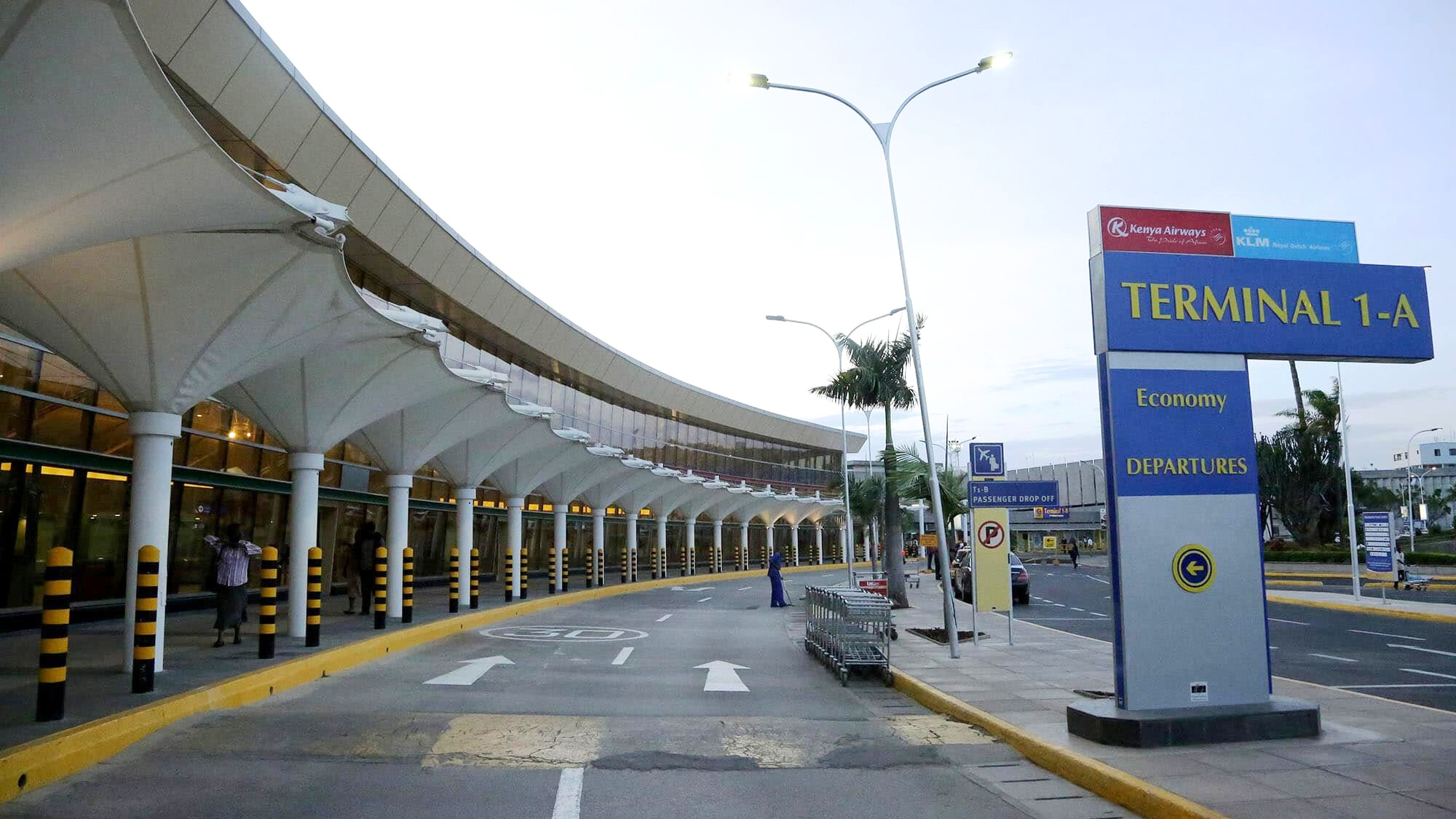
Kenya has laid out how it intends to pay for the long delayed overhaul of Jomo Kenyatta International Airport, blending debt, airport revenue and a new state fund to cover a project the government caps at 154.2 billion shillings.
The Ministry of Roads and Transport says roughly 70 percent of that figure, about 107 billion shillings, will come from debt financing. The remaining 30 percent will be raised through airport generated revenue and equity contributions, including a likely stake from the recently created National Infrastructure Fund. The government has appointed the Trade Development Bank and the Africa Finance Corporation as lead arrangers, tasking them with structuring the deal and pulling in commercial lenders and institutional investors. Officials say the Fund’s equity contribution is meant to lower financing costs and reduce risk, part of a wider push to finance big projects without leaning on public debt. Background on the announcement is available here.
Why JKIA cannot wait
The airport was built for a different era of travel. It handled close to 8.9 million passengers in 2025, well past its designed capacity of 7.5 million, and the ministry expects that number to climb past 13 million by 2030 and reach 22.3 million by 2045. Cargo volumes are set to follow a similar curve, more than doubling over the same period. Transport Cabinet Secretary Davis Chirchir has described the spending as overdue, pointing out that JKIA’s core infrastructure dates back decades and has absorbed only piecemeal upgrades despite years of rising traffic.
Three phases, one target
The expansion splits into three components. The first resurfaces the existing airfield, a 15 month build followed by a 24 month defects window. The second renovates the current terminals, lifting their capacity from 7.5 million to 12 million passengers over 18 months of construction. The third, and largest, adds an entirely new terminal built to connect with existing taxiways, aprons and access roads, contributing another 10 million passengers of capacity over a 36 month build. Together the three phases are designed to push total capacity to 22 million passengers a year. The plan grew out of a year long master plan and feasibility study, presented to airport staff and unions before bidding opened in March and closed in May.
A cost dispute resurfaces
The financing details arrive after weeks of confusion over what the project actually costs. Earlier reports tied JKIA’s expansion to a 375.4 billion shilling, roughly 2.9 billion dollar, contract awarded to China Communications Construction Company under the National Infrastructure Fund, with funding partly drawn from the privatization of the Kenya Pipeline Company.
Treasury Cabinet Secretary John Mbadi has since told the Senate that the true figure is 155.3 billion shillings, dismissing the larger number and warning against what he called unreliable reporting in the press. Separately, the ministry rejected newspaper claims linking the tender to IMC Construction Kenya, a firm owned by Zimbabwean businessman Wicknell Chivayo, saying the company neither bid for the contract nor holds any role in it.
The back and forth echoes Kenya’s last attempt to modernize JKIA. In 2024 the government struck a 30 year build operate transfer deal with India’s Adani Group, valued at roughly 238 billion shillings. Civil society groups and the Law Society of Kenya challenged the process in court over a lack of public participation, and President Ruto scrapped the arrangement after United States prosecutors indicted Gautam Adani on fraud charges. The High Court later confirmed the deal was dead. Kenyans are now being asked to trust a second attempt at the same project, this time financed through a different structure entirely.
Where JKIA stands regionally
The government’s case rests on staying ahead of competing hubs, but the numbers tell a mixed story. Addis Ababa’s Bole International Airport already operates near a 25 million passenger ceiling, reached years ago through phased expansion. Ethiopia is not stopping there: construction began in January on Bishoftu International Airport, a 12.5 billion dollar project built to handle 60 million passengers in its first phase and 110 million once complete. JKIA’s planned ceiling of 22 million passengers, a target Kenya does not expect to hit until 2045, would still trail what Bole handles today.
What comes next
President Ruto has indicated construction will begin in July, with completion targeted for 2029. Cabinet Secretary Chirchir says the tender followed open international competitive bidding under the Public Procurement and Asset Disposal Act. Once a contract is signed, work on the airfield and terminal renovations is expected to start within months, with the new terminal following on a longer schedule.
What it could mean for markets
According to Cytonn Investments, the expansion is expected to strengthen Kenya’s position as a regional transport and logistics hub while supporting tourism, trade and investment inflows. Better airport infrastructure could improve connectivity and lift passenger and cargo volumes, with knock on effects across the economy. For real estate, the firm expects stronger demand for hospitality, office space, logistics facilities, warehousing and mixed use developments in Nairobi and its surrounding growth corridors. Cytonn also points to the blended financing model, combining the National Infrastructure Fund with development finance institutions, as a sign of the government’s growing shift toward alternative infrastructure financing that could speed up delivery of strategic projects while protecting fiscal sustainability.
For travelers and airlines, the real test will not be the figures in a ministry report. It will be whether queues actually shorten and flight options actually grow once contractors break ground. Kenya has promised that outcome before.
