


The world’s largest electric two-wheeler manufacturer just entered one of Africa’s most contested transport markets.
Yadea Group Holdings (HKEX: 1585) unveiled its KIFA electric motorcycle at Autoexpo Kenya 2026 in Nairobi on June 4, marking its official entry into Kenya and its second named East African market after Ethiopia.
A business generating record revenue
Yadea recorded revenue of RMB 37,008.2 million in 2025, a 31.1 per cent increase from RMB 28,236.2 million in 2024. Profit attributable to shareholders more than doubled to RMB 2,911.6 million from RMB 1,272.4 million. Total unit sales rose from approximately 13 million in 2024 to 16.3 million in 2025.
The gross profit margin expanded from 15.2 per cent to 19.1 per cent over the same period, a result the company attributed to product mix improvements and deeper vertical integration of its supply chain.
| Metric | 2024 | 2025 | Change |
|---|---|---|---|
| Revenue (RMB million) | 28,236.2 | 37,008.2 | +31.1% |
| Gross profit (RMB million) | 4,289.0 | 7,071.4 | +64.9% |
| Gross profit margin | 15.2% | 19.1% | +3.9 ppts |
| Net profit (RMB million) | 1,272.4 | 2,911.6 | +128.8% |
| Total units sold (million) | 13.0 | 16.3 | +25.4% |
Those numbers come almost entirely from China. The group’s domestic network covered nearly every administrative region of the country, with 5,122 distributors and over 40,000 points of sale as at December 31, 2025. Africa does not appear as a named revenue geography in the annual report. The Kenya entry sits at an early stage of a continent-level strategy, not at its centre.
Why Kenya, why now
Chairman Dong Jinggui signalled where the next growth chapter needs to be written.
“The Group also accelerated its international expansion,” he wrote in his March 2026 statement, though his focus was Southeast Asia, not Africa.
In early 2026, Yadea inaugurated a USD 100 million manufacturing plant in Bắc Ninh, Vietnam, with an initial annual production capacity of one million units. Africa received no equivalent capital commitment in the published results.
Kenya registered over 35,000 EVs by the end of 2025, up from approximately 5,300 in 2024, with electric motorcycles capturing 15.3 per cent of new motorcycle registrations. Kenya Power reported cumulative revenue of KES 382 million from EV charging over 34 months, as electricity sales to the e-mobility sector grew more than 113-fold between July 2023 and early 2026. Approximately 90 per cent of Kenya’s electricity generation comes from renewable sources, predominantly geothermal and hydroelectric, making EV charging both cheap and clean.
For boda boda riders, the financial case is personal. A rider in Kisumu who previously spent more than KES 500 daily on petrol now spends about KES 290 on battery swapping, freeing up money for rent, school fees, and food. Multiply that across an estimated two million boda boda operators nationwide and the market opportunity becomes clear.
Yadea’s track record in Ethiopia reinforces the rationale.
“Following our success in Ethiopia, where we have sold more than 48,000 units in the last three years, we are confident that our electric mobility solutions will meet the growing demand for sustainable transportation in Kenya and across East Africa,” Yadea East Africa Market Director John Zhang said at the launch.
What the KIFA offers
The KIFA is built to handle both passenger and delivery use cases. It carries a payload of up to 250 kilograms and runs on dual removable 72V 30Ah lithium iron phosphate batteries, delivering a range of up to 150 kilometres on a single charge. The battery swap feature addresses one of the most practical barriers to adoption. Riders can replace depleted batteries in roughly 30 seconds, minimising downtime for operators whose earnings depend on continuous movement.
Yadea is working with Kenyan battery-swapping company ARC Ride to build out charging and swap infrastructure across the country. ARC Ride already operates 170 stations, predominantly in Nairobi, giving Yadea an immediate logistics backbone rather than having to build one from scratch.
The KIFA runs on lithium iron phosphate chemistry rather than the sodium-ion batteries Yadea put into mass production in January 2025. That distinction matters for pricing and supply chain considerations as the company scales on the continent. Sodium-ion technology offers lighter weight and longer range compared with traditional lead-acid models, and draws on more readily available raw materials. Whether that technology eventually reaches the African market will depend on volume and cost thresholds Yadea has not yet disclosed publicly.
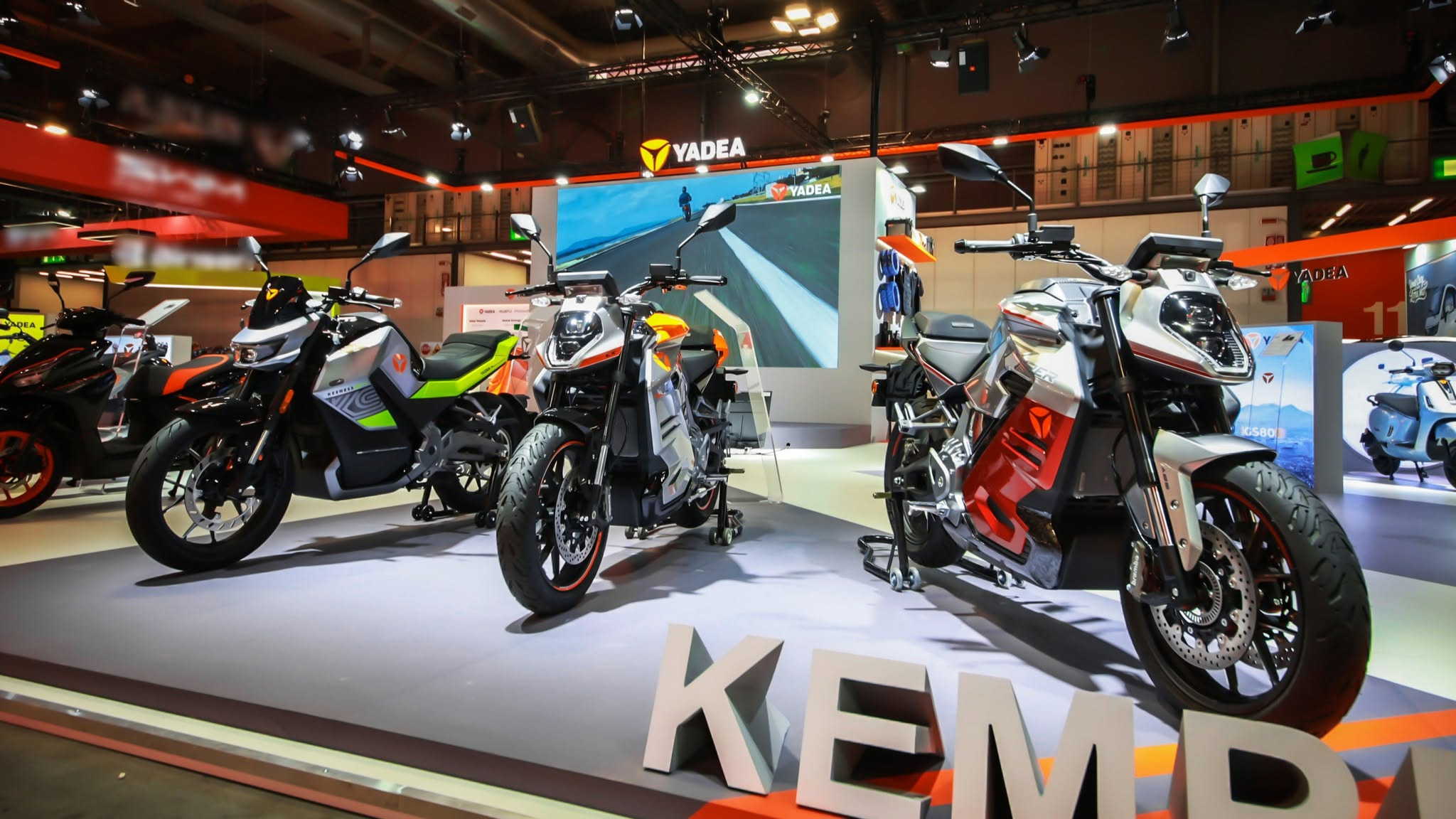
Beyond the KIFA, Yadea showcased a broader lineup at Autoexpo including the Keeness performance motorcycle and the GT25, GT60, and GT70 models, targeting commuters and last-mile logistics operators. The range signals that the company intends to serve multiple segments, not just the entry-level market.
The R&D engine behind the products
Yadea holds over 2,000 patents, operates six technology research and development centres, and employs more than 1,000 research and development specialists. Research and development costs rose 22.5 per cent from RMB 1,146.8 million in 2024 to RMB 1,404.5 million in 2025, directed at intelligent platforms, battery development, and connected riding systems. Annual production capacity across its eight self-operated plants exceeded 20 million units as at December 31, 2025. Total assets reached RMB 29,996.7 million by end-2025, with equity attributable to shareholders at RMB 10,461.9 million.
That balance sheet answers a question that matters when choosing between competing manufacturers: will the company still be here in three years to service the bike and swap the battery?
A market that is real, but far from settled
Yadea enters a market with established, well-funded rivals. Spiro operates more than 200 battery-swap stations across Kenya and is scaling its local assembly plant from 50,000 to 100,000 motorcycles annually. ARC Ride maintains 170 stations. Ampersand operates 16. Roam assembles locally with 36 per cent of components sourced from Kenya. Uber announced plans to double its electric boda fleet in Kenya just a day before Yadea’s launch.
Yadea’s scale gives it advantages that younger African startups cannot match: global supply chains, established manufacturing, and the pricing power that comes from selling 16.3 million units worldwide in 2025 alone. What it lacks, for now, is the local trust and grassroots networks that companies like Spiro and Roam have spent years building. The company spent the full remaining balance of RMB 123.3 million from its 2022 placing on overseas expansion, closing that allocation at zero by December 31, 2025. The next round of overseas investment will require fresh capital allocation, and the annual report makes no specific commitment to Africa.
