




The Retirement Benefits Authority (RBA) has pledged to help the Kenya Union of Journalists (KUJ) set up a Press Pension Scheme for freelancers, correspondents and contributors. The pledge followed a survey in which 65% of 120 journalists scored in the moderate to severe range for depressive symptoms.
KUJ and the Media Council of Kenya (MCK) presented The Pain Behind the Byline: State of Welfare and Social Protection for Journalists in Kenya, on Friday at the Emara Ole-Sereni Hotel in Nairobi.
The event was the KUJ Conference on Journalists’ Welfare and the National Day of Journalists’ Welfare, which RBA co-organised. KUJ Secretary General Erick Oduor and Vice Chairman Silas Kiragu attended.
Key facts
| Finding | Figure |
|---|---|
| Journalists with moderate to severe depressive symptoms | 65% |
| Journalists in the severe range | 25% |
| Average monthly pay | KES 63,000 |
| Journalists earning under KES 50,000 a month | 52% |
| Journalists without permanent contracts | 55% |
| Average working day | 8.5 hours |
| Journalists who sought professional help in two years | 25% |
| Journalists who want a job outside journalism | 30% |
Source: KUJ and MCK survey of 120 journalists, margin of error 8.8%.
The survey used the nine item Patient Health Questionnaire (PHQ-9), a screening tool. It measures symptoms and does not diagnose depression. The symptoms include thoughts of self harm and suicidal ideation. The report text gives no figure for this.
Pension scheme targets journalists without employer plans
Retirement Benefits Authority CEO Charles Machira said journalists should start saving before they earn high salaries.
“The greatest advantage a young journalist has is not a big income. It is time,” he said. “The earlier you begin, the more opportunity your savings have to grow.”
RBA said the Press Pension Scheme would cover journalists who lack the retirement benefits that permanent employees receive. The survey shows the size of that gap. Employers contribute to pensions for 76% of permanent journalists and 11% of the rest. Overall, 54.2% of respondents contribute to a pension scheme, against a national rate of 26%.
KUJ and RBA have not published a start date, a contribution rate or a provider for the scheme.
How to Save for Retirement in Kenya: What the 2026 SanlamAllianz Report Shows
How the survey was run
KUJ targeted a population of 5,197 journalists, including editors, reporters, correspondents, camera operators, producers and photojournalists. It received 120 responses. Men made up 77.5% of respondents, and 45% held permanent jobs. The report also draws on interviews with newsroom leaders, human resource officers, mental health practitioners and journalists.
Pay sits below the private sector average
Journalists in the sample earn an average of KES 63,000 a month. The Kenya National Bureau of Statistics puts the private sector average at KES 86,872, so journalists earn about 27% less. Half of respondents (52%) earn under KES 50,000, and 74% earn under KES 100,000.
| Comparison | Average monthly pay (KES) | Share of journalists’ pay |
|---|---|---|
| Kenya, journalists (survey) | 63,000 | 100% |
| Kenya, private sector average | 86,872 | 73% |
| Uganda | 78,542 | 80% |
| South Africa | 244,985 | 26% |
| Singapore | 476,501 | 13% |
| United States | 674,299 | 9% |
Source: KUJ survey, KNBS Economic Survey 2026. Shares calculated from report figures.
Pay has not kept pace with prices. Thirty six percent said their pay has fallen since 2021, and 38% said it has not changed. Forty eight percent have not had a pay review in more than three years, and 82% receive no allowances or bonuses.
Contract type divides the newsroom
Forty five percent of respondents hold permanent jobs. The rest work as freelancers (21%), correspondents (15%), contributors (12%) or interns (8%). Among those without permanent contracts, 82% earn under KES 50,000 and 4% earn above KES 100,000. Among permanent staff, 53% earn above KES 100,000.
Employers provide health insurance to 93% of permanent staff and 17% of the rest. Union members also earn more: 23% of unionised journalists earn under KES 50,000, against 69% of non-members. Interviews found that some journalists without permanent contracts fear joining the union.
The survey follows MCK’s Assessment of the Media Environment in Kenya 2025. As Khusoko reported, that study of 242 journalists found 52% without medical cover and 80% of freelancers without written agreements.
Hours and workload rise while pay stays flat
The average journalist works 8.5 hours a day, and 18% work more than 10 hours. Two thirds report heavier workloads over five years, and fewer than a third report higher pay over the same period. Fifty three percent say their newsroom is understaffed. Most are not paid overtime.
Hours track with symptom severity.
| Daily hours | Share with moderately severe or severe symptoms |
|---|---|
| 6 to 8 | 25% |
| 8 to 10 | 50% |
| More than 10 | 71.4% |
Depressive symptoms track pay and contract type
On the PHQ-9, 83% of respondents showed some level of depressive symptoms. Of those in the severe range, 71.4% earn under KES 50,000 a month. Eighty percent said the symptoms make daily work somewhat, very or extremely difficult.
| Employment status | Moderately severe | Severe | Combined |
|---|---|---|---|
| Freelancer | 40.0% | 32.0% | 72.0% |
| Correspondent | 16.7% | 38.9% | 55.6% |
| Contributor | 21.4% | 14.3% | 35.7% |
| Permanent | 13.0% | 20.4% | 33.4% |
| Intern | 11.1% | 22.2% | 33.3% |
The report says the data show association and not cause. It found similar links between symptom severity and four other factors:
- Dissatisfaction with supervisors.
- Dissatisfaction with newsroom culture.
- Heavy workload.
- Poor work life balance.
Support exists but few journalists use it
Forty five percent of respondents have employer provided mental health support, 40% have none and 15% do not know whether their employer offers it. Only 25% sought professional help in the past two years.
Interviews cited four barriers: doubts about confidentiality, little faith in therapy, stigma and lack of time. Journalists who sought help were as likely to report severe symptoms as those who did not. The report says this raises questions about access, uptake and continuity of care, and does not show that counselling fails.
Many journalists want to leave
Only 10.8% said they were content and not looking for another job. Another 42.5% would move to another journalism job, and 16.7% would take any job elsewhere.
Thirty percent want work outside journalism. Respondents ranked salary (58%) and benefits (46%) above newsroom culture (39%) as reasons to stay or go.
What the speakers said
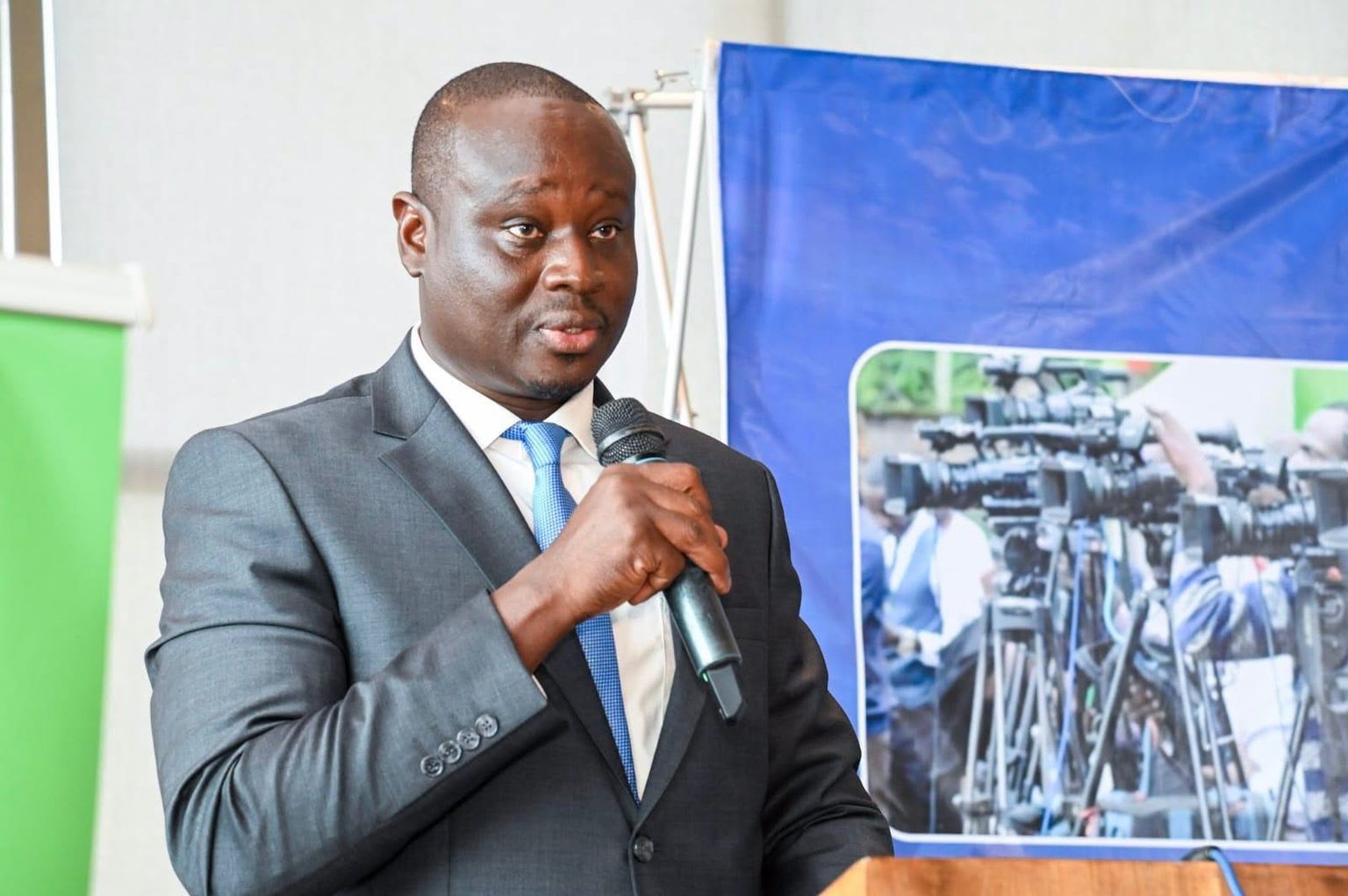
Oduor said the findings show the state of the industry’s labour environment. “We cannot expect a journalist who is not properly remunerated to play the watchdog role, speak truth to power and serve the common good of the society,” he said.
MCK CEO David Omwoyo called the survey a base for industry wide talks. “The value of the survey will ultimately be measured by the changes it helps to bring about in newsrooms and across the profession,” he said. At the 2025 World Press Freedom Day event, he said: “The dignity of workers is non negotiable.”
Susan Mang’eni, Principal Secretary in the State Department for MSMEs Development, linked journalists’ finances to the economy. “The welfare of journalists is always tied to a healthy economy,” she said. “The government is not an enemy.”

What comes next
Medical cover is the nearest deadline. MCK’s election coverage guidelines require journalists to hold medical insurance before accreditation to cover next year’s elections, and 36.7% of respondents have none.
MCK has also agreed with the Kenya Editors’ Guild to work on a welfare plan covering retirement, insurance and financial literacy.
Pay disputes have a history in the sector. Khusoko covered the Standard Group strike threat over unpaid wages in 2024, and the group named a new chief executive today.
