


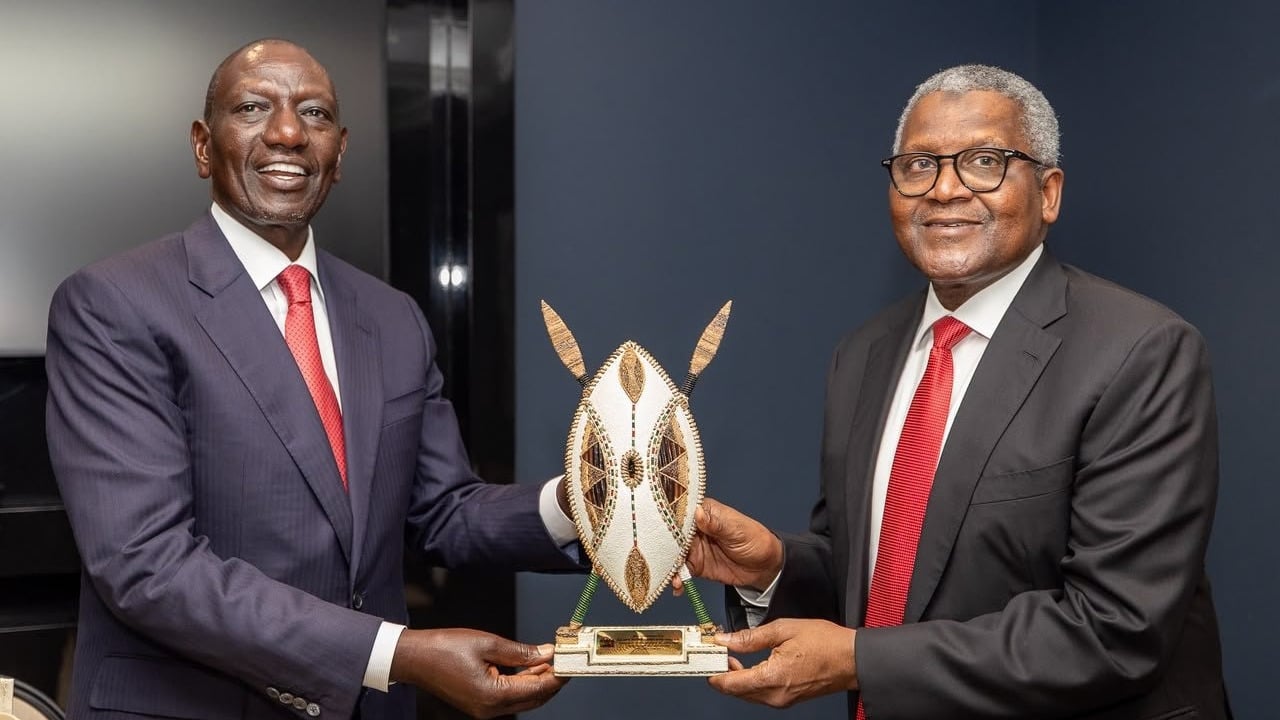
A group of 133 residents of Chandavai in Lamu County has asked a court to stop construction on land earmarked for the East Africa Refinery. The petition arrives two days before President William Ruto and Nigerian businessman Aliko Dangote are due to break ground.
The residents want the court to bar excavation, construction and related work on land they say forms part of LR No. 13061. They ask that the order stay in place until their community and customary interests are identified and determined.
The groundbreaking is set for Wednesday, September 30.
What the residents claim
The plaintiffs say their families have lived on, farmed and built on the land for generations, though none holds a title deed. They say the land supports crops and livestock and holds homes, mosques and shrines. Some say ancestral graves lie on the property.
They argue that the lack of a registered title does not erase their interests or their right to compensation if the state acquires the land for public use.
According to the court papers, government and LAPSSET agents entered the area with heavy machinery on August 7, 2024, and destroyed crops, trees and other property. The residents say they received no notice, consultation or payment. They say they were later told the land had been acquired for LAPSSET infrastructure around Manda Bay, including works linked to the Kenya Navy base, US Camp Simba and Magogoni Airfield.
They allege that refinery preparations began in July 2026 with soil testing. On September 10, they say, police officers, chiefs and other officials cleared one of the disputed parcels and told residents it would host the groundbreaking ceremony. The plaintiffs say they later learnt that a compulsory acquisition process covering land in Lamu had started.
Who is being sued
The defendants are the Office of the President, the Ministry of Defence, the State Department for Lands and Physical Planning, the Attorney General, the National Land Commission, the LAPSSET Corridor Development Authority and the Lamu County Government. The residents have also named Dangote Industries and two firms described as contractors.
The legal grounds
The residents say the acquisition process failed on several counts. They accuse the authorities of not issuing statutory notices, not carrying out surveys and valuations, not identifying affected interests, not holding inquiries and not paying compensation before taking possession.
They also allege breaches of their constitutional rights to property, fair administrative action and access to information. They say the developers did not meet environmental assessment requirements.
Some families have moved into rented housing after earlier works damaged their property, the residents say. They argue that ancestral homes, graves, trees and community structures cannot be replaced with money, and they want the court to prevent further damage while the case proceeds.
How Lamu was chosen
Dangote Industries named Lamu as the site on July 7. Vice President for Oil and Gas Edwin Devakumar announced the choice, ending speculation that the plant would go to Mombasa or Tanga in Tanzania. Devakumar said soil testing and engineering design had begun.
Lamu offers a deep water port that can receive very large crude carriers, and land for an industrial hub.
The government’s case for the refinery
Ruto says the refinery will draw about Sh2 trillion in investment, create about 60,000 jobs and supply eight countries. He spoke while issuing title deeds in Lunga Lunga, Kwale County.
“On Wednesday this week, we will do the historic groundbreaking in Lamu,” Ruto said. He described the project as proof that the Coast region will not be left behind.
The plant, to be built at Kililana in Lamu West, is designed to process 700,000 barrels of crude a day. The government says it will supply Kenya, Uganda, Tanzania, Rwanda, Burundi, South Sudan, Ethiopia and the Democratic Republic of Congo. Ruto toured Dangote’s refinery in Lagos on September 25. That plant has a capacity of 650,000 barrels a day, and Dangote plans to double it to 1.4 million barrels.
Officials say the project will anchor storage, logistics and manufacturing along the Lamu Port, South Sudan and Ethiopia Transport corridor. Plans also include a special economic zone. Speaking in Lagos, Dangote said the Lamu site would generate 1,000 megawatts from petroleum coke, with 500 megawatts offered for sale to Kenya. No supply contract has been announced.
Equipment is already on site. The vessel MV Da Yang Bai He berthed at Lamu Port on September 26 with about 2,930 metric tonnes of construction materials and heavy machinery.
Cost, financing and ownership
The cost figures differ by source. Dangote has put the cost at $15 billion to $16 billion, while Kenyan officials cite Sh2.2 trillion. The company plans to pay through internal cash flow, bonds and a share sale. The Africa Finance Corporation is involved in the project. Ruto met Dangote and AFC Chief Executive Samaila Zubairu in New York last week to discuss financing and preparations.
Dangote has offered East African countries a combined 30 percent stake, including 10 percent for Kenya valued at about $500 million. Rwanda and Ethiopia have shown interest. No stake deal has been announced.
Open questions
The jobs figure varies by official. Deputy President Kithure Kindiki has put it above 50,000, while Ruto cites about 60,000. Neither figure has been independently verified.
Crude supply also remains unsettled. The refinery is expected to process oil from Kenya’s Turkana fields and from other regional sources, but the availability and transport of enough crude has not been resolved.
Lamu residents and local leaders expect direct benefits, including jobs, supply contracts and skills training.
