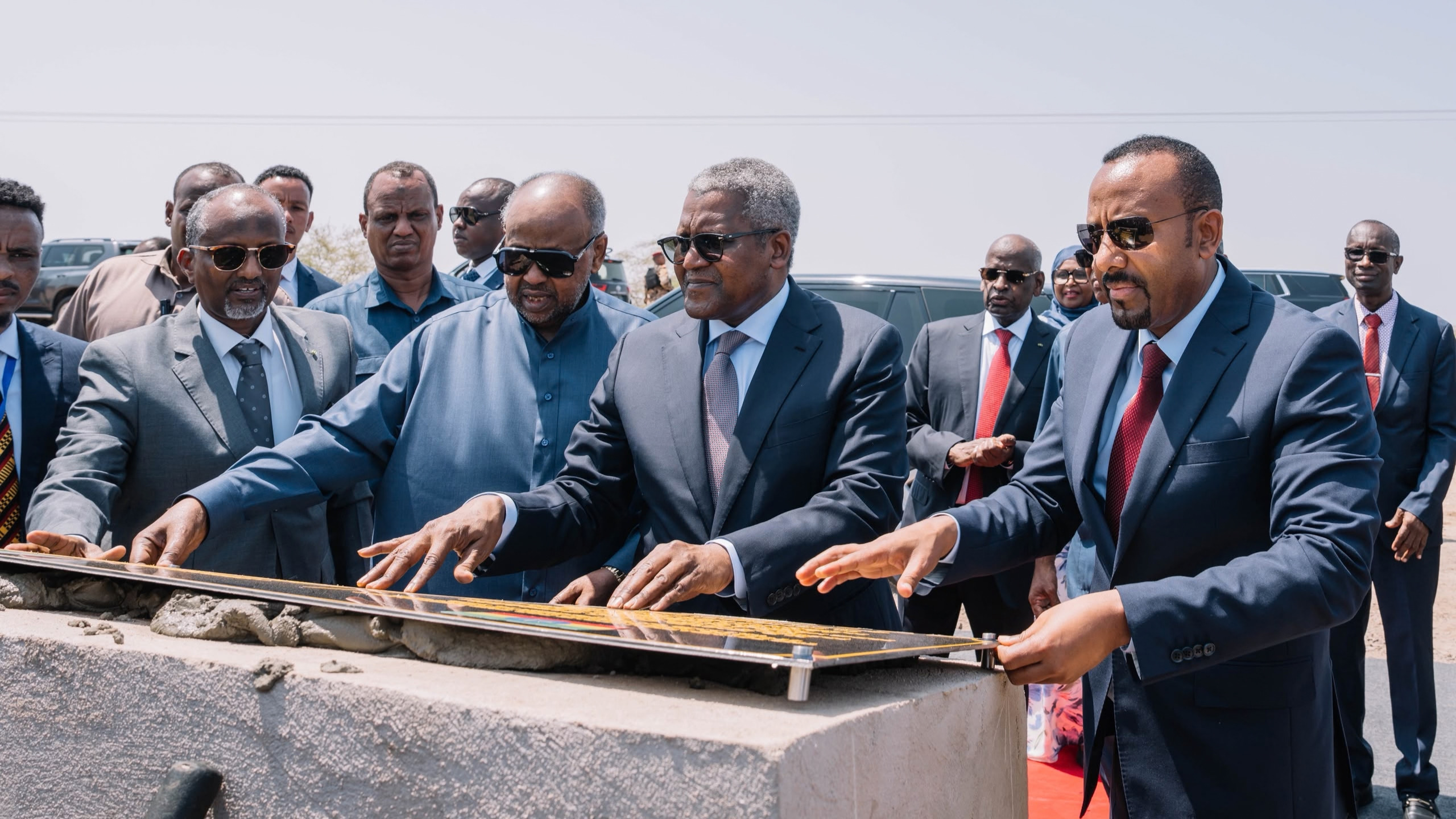
Ethiopia and Djibouti have broken ground on a pipeline that could finally end the country’s costly reliance on fuel trucks, backing a $660 million project with Africa’s richest man.
A 120 Kilometre Link Between Two Coasts
Workers began construction this week on a pipeline stretching 120 kilometres between Damerjog on Djibouti’s coast and Dewele in eastern Ethiopia.
The pipeline connects marine and coastal storage facilities at Damerjog in Djibouti with inland storage and distribution facilities at Dewele in Ethiopia. Once both terminals are running, they will hold over one million cubic metres of fuel between them: roughly 375,000 cubic metres at Damerjog and about 800,000 cubic metres at Dewele.
Ethiopian Prime Minister Abiy Ahmed and Djibouti President Ismail Omar Guelleh attended the ceremony at the Damerjog Industrial Development Free Trade Zone alongside Aliko Dangote, the Nigerian billionaire whose conglomerate is funding the build.
The groundbreaking took place on September 24, and the project is expected to become operational within 18 months.
Abiy summed up the ambition in a post on X:
“This landmark infrastructure will reduce logistics costs and delays, strengthen energy security, and enhance the efficiency and resilience of the Ethiopia–Djibouti corridor.”
Africa’s Trade Corridors: Rewiring the Continent for Growth
Why Landlocked Ethiopia Needs This
Ethiopia has no coastline. Nearly all its fuel, including jet fuel, diesel and petrol, currently arrives by truck along the same overcrowded highway from Djibouti’s port. That system is slow, expensive and increasingly unable to keep pace with demand.
The pipeline is part of Ethiopian Investment Holdings and the Dangote Group’s push to strengthen regional integration, improve energy security, create jobs and accelerate economic growth across the Horn of Africa. Dangote himself pointed out that the Djibouti corridor already handles most of Ethiopia’s imports and exports, making it one of the continent’s most strategic trade routes. Moving fuel through steel pipe instead of tanker convoys should cut congestion, lower the risk of spills and free up the road network for other freight.
President Guelleh framed the project in broader terms.
“The Damarjog-Dewele Pipeline Project is not merely infrastructure; it is an investment in the future prosperity of our region,” he said, adding that it would expand port operations and draw fresh investment into Djibouti.
Jobs, Trade and a Few Caveats
Beyond fuel, the leaders pitched the pipeline as a jobs engine. Construction alone should employ thousands, with contractors, transporters and local suppliers picking up work as the project moves through its 18 month build.
This is not Dangote’s only Ethiopian bet. The Group is separately building a fertiliser plant in Gode worth roughly $4 billion, and it is set to break ground on a 700,000 barrel per day refinery in Lamu, Kenya, in the coming days. Together, the moves suggest a company betting heavily on East African infrastructure regardless of the region’s occasional turbulence.
Ethiopia continues to grapple with pockets of internal conflict in parts of the country, a factor that could complicate construction timelines even on a well funded project like this one.