



Quickmart, Kenya’s second largest modern grocery retailer, has announced plans to list on the Main Investment Market Segment of the Nairobi Securities Exchange, subject to regulatory approval.
The move would make it the first major grocery chain to newly join the bourse as a going concern in years, at a time when Kenya’s retail sector has a thin and troubled history on the exchange.
What the Offer Involves
The listing will take the form of an offer for sale rather than a fresh capital raise. Sokoni Retail Kenya Limited (“SRKL”), which currently holds all of Quickmart’s issued share capital, plans to sell 2 billion existing ordinary shares at a nominal value of KES 0.2 each.
That represents 50 percent of the company. An over allotment option of up to 15 percent of the offer shares is also expected — if exercised in full, SRKL’s remaining stake would fall to approximately 42.5 percent; if not exercised, SRKL retains roughly 50 percent.
Quickmart describes the offer as the company’s next developmental phase, designed to “broaden the Company’s ownership base, create a meaningful public free float and provide the Selling Shareholder with an opportunity to realise part of its investment” after years of growth. Quickmart will not issue new shares and will not receive any proceeds from the sale. The expenses of the offer will be borne by the Selling Shareholder. The retailer says it will keep funding store expansion through cash generated internally rather than through the offer. Full terms, including pricing and the subscription timetable, will appear in an Information Memorandum once regulators clear the deal. The company expects the offer to open around September 30, 2026.
The offer will be made to Kenyan retail and institutional investors, investors in other East African Community Partner States, and foreign investors in jurisdictions where participation is lawful.
There will be no public offer of shares in the United States, United Kingdom, Canada, Australia or Japan. SRKL will also be subject to a lock-up on its remaining shareholding immediately following completion of the offer.
Where Quickmart Came From
Quickmart’s history is one of consolidation. The brand traces back to two separate founder-led Nairobi retailers: Quickmart itself, founded in Nakuru in 2006 by the late John Kinuthia and his son Duncan Kinuthia, and Tumaini, founded the same year in Nairobi’s Eastlands by Moses Nditika, Joram Ngeruro and Elijah Okello. Private equity firm Adenia Partners invested in Tumaini in 2018 and in Quickmart in 2019; the two businesses merged in 2019, and the combined chain was rebranded under the single “Quickmart” name from January 1, 2020.
SRKL, the vehicle through which Adenia Partners’ funds are managed, is owned by Adenia Partners, the founders of both Quickmart and Tumaini, and the Group Chief Executive Officer, who together hold their respective interests through SRKL.
Martha Osier, Partner at Adenia Partners, framed the listing as the natural next step for that investment:
“When Adenia invested in Quickmart, our objective was to partner with its founders and management to build a stronger, more scalable and more institutional business. Over the course of our investment, Quickmart has expanded significantly, strengthened its leadership and governance, and developed into one of Kenya’s most recognised home-grown platforms. The proposed Listing represents a natural next step in that journey.”
Growth Numbers
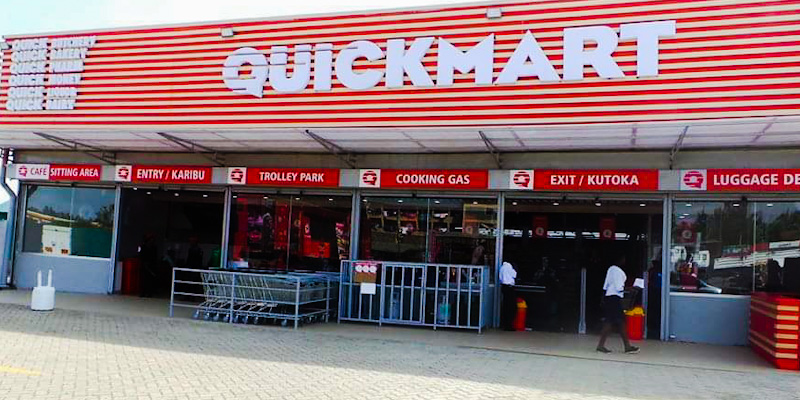
Quickmart has since grown into a national chain with 72 stores across 16 counties, spanning hypermarket, supermarket and express formats, and the company estimates it holds roughly 15 percent of Kenya’s modern grocery retail market.
As of June 30, 2026, the 68-store network comprised 26 hypermarkets (averaging about 24,600 sq ft of net selling area), 28 supermarkets (about 15,600 sq ft) and 14 express stores (about 7,600 sq ft); four more stores had opened by the date of the announcement, bringing the total to 72. Thirty five stores run around the clock. Across the network, the company stocks roughly 40,000 SKUs organised into eight principal product categories, with Food and Fresh together accounting for 65 percent of H1 2026 revenue.
Quickmart operates an asset-light model: all stores are leased rather than owned, and merchandise is delivered direct-to-store by suppliers, supplemented by an in-house fleet of 48 vehicles (as at December 31, 2025) used to redistribute inventory between stores from a central warehouse. Digitally, the Q-Points loyalty programme — roughly 2.5 million members as at June 30, 2026, up from about 300,000 in 2021 — accounted for approximately 74 percent of sales in FY2025 and H1 2026, with loyalty members’ average basket values running about 2.5 times higher than non-registered customers. The e-commerce platform Q-Soko launched in 2024, complemented by WhatsApp ordering and delivery partnerships with Glovo, Uber Eats and Bolt.
Business has scaled with the store count. Quickmart recorded revenue of KES 50.4 billion for the year ended December 2025, with adjusted profit after tax of KES 1.7 billion. Revenue grew at a compound annual rate of 18.4 percent between 2021 and 2025, and the company posted a return on invested capital of 42.8 percent in FY2025. The first six months of 2026 alone brought in KES 27.3 billion. The company processes about 5 million customer transactions a month.
Financial Highlights (KES ‘000)
| H1 2026 (unaudited) | FY2025 | FY2024 | FY2023 | FY2022 | FY2021 | |
|---|---|---|---|---|---|---|
| Revenue | 27,266,942 | 50,427,637 | 46,707,717 | 41,215,775 | 34,781,302 | 25,680,587 |
| Gross profit | 6,146,145 | 11,078,279 | 10,275,492 | 8,638,202 | 7,396,215 | 5,406,177 |
| Operating income | 6,314,065 | 11,418,278 | 10,559,679 | 8,871,633 | 7,577,224 | 5,596,930 |
| Profit for the year | 872,793 | 1,508,574 | 1,134,807 | 449,611 | 274,958 | 182,637 |
| Adjusted net profit* | 976,121 | 1,708,562 | 1,312,183 | 602,900 | 541,559 | 448,137 |
*Adjusted net profit excludes non-recurring items such as management fees, consultancy costs, merger costs and COVID-related impacts. Source: Reporting Accountant’s Report.
As at June 30, 2026, the company held borrowings of KES 6.8 million against cash and cash equivalents of KES 700.2 million, giving it a net cash position (excluding lease liabilities) of KES 0.7 billion and net assets of KES 1.9 billion, despite a structurally negative net working capital position of KES 4.0 billion.

Growth Strategies and Outlook
Quickmart says its 2026–2030 growth plan rests on five pillars: continued new store expansion, targeting 10 to 15 new outlets a year in Kenya, funded primarily from internally generated cash flows; sustained like-for-like sales growththrough the Q-Points programme, customer analytics and targeted promotions; improved digital capabilities, with further investment in Q-Soko and the broader digital ecosystem; enhanced operational efficiency and category management, including growth of the Q-Choice private label; and capital discipline, maintaining an asset-light model, disciplined lease terms and minimal borrowing.
The company has projected its financial outlook through FY2027:
| (KES ‘000) | FY2026 (projected) | FY2027 (projected) |
|---|---|---|
| Revenue | 58,204,588 | 67,435,723 |
| Gross profit | 13,143,652 | 15,307,909 |
| Operating income | 13,491,861 | 15,679,644 |
| Profit for the year | 2,102,803 | 2,848,316 |
Growth Targets and Dividends
Quickmart is targeting more than 100 stores over the medium term. Once listed, the board intends to adopt a dividend policy targeting a payout ratio of at least 80 percent of annual profit after tax, declared and paid semi-annually. Quickmart has a track record of consistent distributions, having paid dividends of KES 1.65 billion in FY2025, KES 1.2 billion in FY2024, KES 782 million in FY2023 and KES 106 million in FY2022 — a cumulative KES 3.7 billion over FY2022–FY2025. The company expects to distribute approximately KES 2.0 billion and KES 2.5 billion in dividends in FY2026 and FY2027 respectively, implying payout ratios of roughly 95.1 percent and 90 percent.
Strengths and Risks
Quickmart cites several key strengths behind the listing: favourable market dynamics from low organised-retail penetration in Kenya; a differentiated multi-format store network; strong brand equity and customer loyalty anchored by Q-Points; a scalable, centrally procured distribution platform; a consistent track record of profitability and cash generation; and an experienced management team and governance framework, including Audit and Risk, Remuneration, and Strategy and Investment board committees.
The company also flags several risks for prospective investors: geographic concentration, since Quickmart operates exclusively in Kenya and is exposed to the country’s economic and political conditions; competitive dynamics in a crowded grocery retail market; dependency on lease arrangements for all its stores; execution risk tied to the pace of new store rollout; and supply chain risk given its reliance on a direct-to-store distribution model. A fuller discussion of risks and mitigants will appear in the Information Memorandum.
A Retail Sector With Few Listed Names
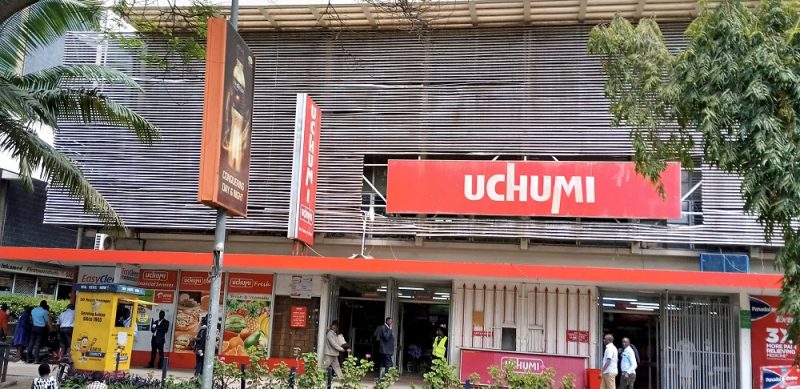
Kenya’s retail sector has a thin history on the exchange. Uchumi Supermarkets remains listed on the NSE under the ticker UCHM, but years of losses have reduced it to a single Nairobi store and a share price of around KSh 1.60 — a shadow of its former position as the country’s dominant listed retailer. Nakumatt, at one point Kenya’s largest chain, explored a Nairobi listing but never went public before collapsing under its debts. Tuskys also considered listing, joining the NSE’s Ibuka incubation programme in 2018 with stated ambitions to go public, but it too folded before any listing materialized.
Naivas, currently Kenya’s largest supermarket chain with more than 110 stores, currently has no plans to list on the NSE or any other public bourse. Management has repeatedly clarified that the company is firmly focused on its aggressive private expansion strategy. Rather than raising capital through an Initial Public Offering, Naivas relies on institutional funding from a strong group of private equity partners, including the IFC, Amethis and Proparco. Naivas reported revenue of about $751 million for the 2025 financial year, with net profit up 43.4 percent to $16.1 million, according to Food Business Africa. That leaves Quickmart on track to become the only major grocery chain trading publicly on the NSE, once the offer closes.
Listings Are Picking Up on the NSE
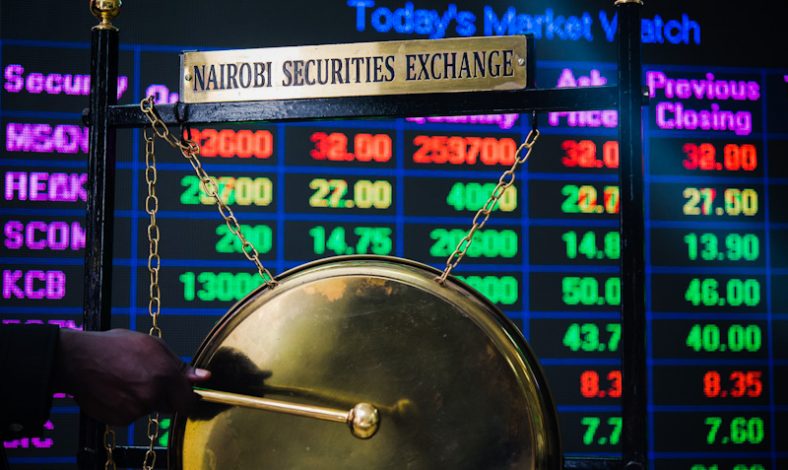
Quickmart’s announcement lands during a busier stretch for Kenya’s bourse. Shri Krishana Overseas listed in mid 2026, and Linzi FinCo 003, an asset backed security tied to financing Nairobi’s Talanta Stadium, joined shortly before it. Family Bank shareholders approved a planned 2026 listing through an introduction, meaning no new shares would be issued but existing ones would become tradable — the bank went on to debut on the NSE on June 23, 2026.
The state owned Kenya Pipeline Company is also working toward a listing as part of President William Ruto’s privatisation programme, approved by Cabinet in mid-2025, with the government planning to divest 65 percent of its stake while retaining the rest.
Market performance has supported the momentum. The NSE 20 Share Index closed at 4,306.00 on September 21, 2026, having climbed steadily through the year after touching a record low in October 2023. By mid April 2026, the index was already up 14.2 percent for the year and 64.6 percent over the previous twelve months, according to Sterling Capital’s daily market report.
Total market capitalisation on the exchange stood at KES 3.4 trillion in April, and the bourse operator itself, Nairobi Securities Exchange PLC, has seen its own share price rise more than 45 percent this year, per AFX Kwayisi market data.
Advisors on the Deal
| Role | Firm | |
|---|---|---|
| Lead Transaction Advisors | SBG Securities Limited / Stanbic Bank Kenya Limited | |
| Co-Placing Agent | Dyer and Blair Investment Bank Limited | |
| Media | Creide Limited | |
| Sponsoring Broker | SBG Securities Limited |
What Happens Next
The offer still needs clearance from Kenya’s Capital Markets Authority and other regulators. If it proceeds on schedule, subscription would open around September 30, 2026, with full pricing and timing details to follow in the Information Memorandum. For a market that has waited years for a credible retail listing, Quickmart’s move gives investors a rare chance to buy into a business many already shop in every week.
