



East Africa’s central bank governors used their latest gathering in Kampala to send a clear message: the region’s monetary union is moving, but not fast enough.
The East African Community’s Monetary Affairs Committee wrapped up its 29th ordinary meeting on 24 July with a renewed pledge to speed up the East African Monetary Union roadmap, even as it acknowledged that no single Partner State has yet met all four criteria required to get there.
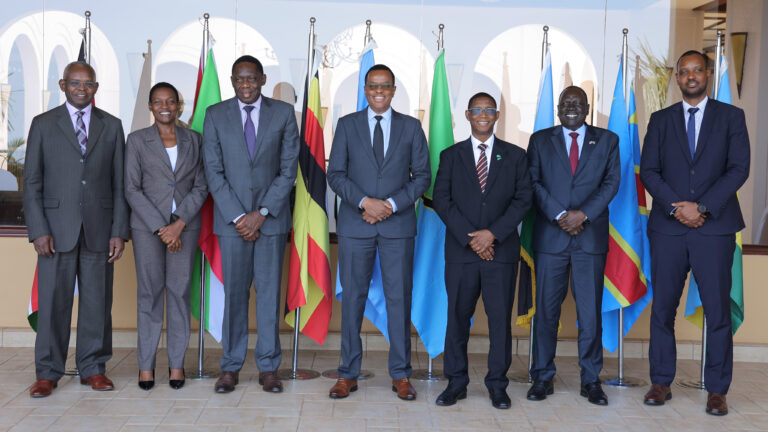
Dr. Michael Atingi-Ego, Governor of the Bank of Uganda and current Chairperson of the Committee, chaired the session, bringing together governors and senior officials from central banks across the bloc alongside the EAC Secretariat.
Who Showed Up in Kampala
The meeting drew a full house of the region’s monetary leadership. Dr. Kamau Thugge represented the Central Bank of Kenya, Emmanuel M. Tutuba attended for the Bank of Tanzania, and Abdirahman Mohamed Abdullahi represented the Central Bank of Somalia. Burundi sent Deputy Governor Irene Kabura Murihano, while South Sudan was represented by Deputy Governor Weituy Luony Babouth. Rwanda’s National Bank sent its Chief Economist, Dr. Thierry Mihigo Kalisa, standing in for the Governor. The Central Bank of Congo’s Governor, Andre Wanes Nkualoloki, sent apologies and did not attend.
Table: Attendance at the 29th EAC MAC Meeting
| Partner State | Representative | Title |
|---|---|---|
| Uganda | Michael Atingi-Ego | Governor, Bank of Uganda (Chair) |
| Kenya | Dr. Kamau Thugge | Governor, Central Bank of Kenya |
| Tanzania | Emmanuel M. Tutuba | Governor, Bank of Tanzania |
| Somalia | Abdirahman Mohamed Abdullahi | Governor, Central Bank of Somalia |
| Rwanda | Dr. Thierry Mihigo Kalisa | Chief Economist, representing the Governor |
| Burundi | Irene Kabura Murihano | Deputy Governor, Bank of the Republic of Burundi |
| South Sudan | Weituy Luony Babouth | Deputy Governor, Bank of South Sudan |
| DR Congo | Andre Wanes Nkualoloki | Governor, Central Bank of Congo (absent, sent apologies) |
| EAC Secretariat | Annette Ssemuwemba | Deputy Secretary General, Customs, Trade and Monetary Affairs |
Women Lead More Banks, But the Boardroom Gap Widens in Africa
A Region Outpacing Global Growth
The Committee met against a backdrop of global strain. High international oil prices and rising shipping costs, both linked to conflict in the Middle East, are expected to slow worldwide growth to 3.0% in 2026, down from 3.5% in 2025, even as continued investment in AI related technologies keeps some momentum in the global economy.
East Africa is bucking that trend. The Committee projects regional growth of 5.2% in 2026, well ahead of the 4.3% average forecast for Sub-Saharan Africa as a whole. Inflation across the bloc has eased sharply too, falling to an average of 6.7% in the 2025/26 fiscal year from 9.6% the year before, a decline the Committee credits to disciplined macroeconomic policy and improving conditions on the ground.
Regional currencies are expected to hold broadly steady, supported by diversified foreign exchange inflows and ongoing reforms to deepen domestic currency markets, though the Committee cautioned that its inflation outlook assumes a gradual de-escalation of the Middle East conflict.
Table: Key Economic Indicators, EAC vs Global and Sub-Saharan Africa
| Indicator | EAC Region | Sub-Saharan Africa | Global |
|---|---|---|---|
| Projected GDP growth, 2026 | 5.2% | 4.3% | 3.0% (down from 3.5% in 2025) |
| Headline inflation, FY2025/26 | 6.7% | — | — |
| Headline inflation, FY2024/25 | 9.6% | — | — |
East Africa’s Inflation Story Splits Between Calm and Concern
The Single Currency Push Hits a Familiar Wall
Progress toward the East African Monetary Union has not been uniform. The Committee credited Partner States with real gains, harmonising monetary policy frameworks, strengthening data and risk management systems, expanding use of the East African Payment System, and building institutional capacity across central banks. Yet when it came to the four primary convergence criteria, the benchmarks each country must hit before a shared currency becomes workable, not one Partner State had met all four.
That gap matters because monetary union without convergence risks locking together economies moving at different speeds. Members called for renewed effort on several fronts: strengthening macroeconomic stability, reinforcing peer review among Partner States, and speeding up the agreed convergence programmes, all while continuing to fund critical infrastructure and build resilience against global shocks. The Committee also flagged a more specific defence: encouraging central banks to diversify their international reserves through domestic gold purchases and by attracting more remittance inflows.
Dr. Atingi-Ego framed the stakes plainly. The Monetary Union, he said, remains a strategic objective that demands sustained commitment, policy harmonisation and strong regional institutions. He added that the Committee must accelerate implementation, strengthen peer review mechanisms and reinforce national action plans to stay on course for a single currency by 2031.
Annette Ssemuwemba, the EAC’s Deputy Secretary General for Customs, Trade and Monetary Affairs, tied the Committee’s work to the bloc’s newly adopted long term strategy. The Seventh EAC Development Strategy, she noted, places fresh emphasis on completing the legal and technical groundwork for the Monetary Union while helping Partner States deliver on their convergence commitments. She called for continued partnership, consensus and shared responsibility as the region works to deepen integration.
Cross-Border Payments Move From Plan to Practice
Beyond the currency debate, the Committee reported real movement on a parallel priority: modernising how money crosses borders within the bloc. Implementation of the EAC Cross-Border Payment System Masterplan, approved at the Committee’s previous meeting, has now begun, with annual work plans drafted, priority initiatives identified, and financial and technical resources mobilised to support execution.
The Masterplan targets the frictions that have long slowed regional commerce: high transaction costs, slow settlement times, weak interoperability between national payment systems, and fragmented infrastructure. Fixing those problems, the Committee said, should make cross-border payments faster and cheaper, deepen financial inclusion, and give intra-EAC trade room to grow.
Financial Stability Holds, But Cyber Risk Looms
The Committee described the region’s financial sector as stable and resilient, backed by adequate capital and liquidity buffers across its banking systems. That stability comes with a caveat. Members flagged cybersecurity threats as a growing risk to financial stability across the bloc and agreed to deepen regional cooperation on measures to guard against them.
What This Means for the Region’s Path Forward
The Kampala communique captures a region that is, by most economic measures, performing well relative to its global peers, but one still grappling with the harder political and technical work of monetary integration. Growth is strong, inflation is falling, and payment systems are modernising. Getting every Partner State to the same convergence line by 2031, and keeping the region’s financial systems secure as digital payments expand, will likely determine whether the East African Monetary Union arrives on schedule or slips further behind it.
