




The Kenya Revenue Authority closed the 2025/2026 financial year with KES 2.844 trillion in total collections, a jump of KES 272.953 billion over the KES 2.572 trillion it raised the year before.
Revenue grew 10.6 percent, nearly double the 6.8 percent recorded in FY 2024/2025, marking the taxman’s best performance in recent years despite what officials describe as a difficult operating environment.
Key Numbers at a Glance
Overall Revenue Performance
| Metric | FY 2025/26 | FY 2024/25 | Growth |
|---|---|---|---|
| Total Revenue | KES 2.844 trillion | KES 2.572 trillion | 10.6% |
| Exchequer Revenue | KES 2.568 trillion | KES 2.323 trillion | 10.5% |
| Agency Revenue | KES 276.139 billion | KES 248.276 billion | 11.2% |
| Customs Revenue | KES 988.780 billion | — | 12.4% |
| Domestic Revenue | KES 1.851 trillion | — | 9.7% |
Performance Against Target
| Revenue Stream | Collection | Target | Performance Rate |
|---|---|---|---|
| Exchequer Revenue | KES 2.568 trillion | KES 2.698 trillion | 95.2% |
| Agency Revenue | KES 276.139 billion | — | 99.1% |
| Customs Revenue | KES 988.780 billion | KES 980.794 billion | 100.8% |
| Oil Revenue (Customs) | KES 370.383 billion | — | 102.6% |
| Non-Oil Revenue (Customs) | KES 618.397 billion | — | 99.8% |
| Domestic Revenue | KES 1.851 trillion | KES 1.991 trillion | 93.0% |
| Corporation Tax | KES 347.066 billion | KES 365.249 billion | — |
| Betting Taxes | KES 16.527 billion | KES 14.261 billion | 115.9% |
Five Key Sectors
| Sector | FY 2025/26 Collection | FY 2024/25 Collection | Growth | Share of Total Revenue |
|---|---|---|---|---|
| Manufacturing | KES 462 billion | KES 423 billion | 9.2% | 16.2% |
| Energy | KES 445 billion | — | 9.1% | 15.6% |
| Financial & Insurance | KES 320 billion | KES 311 billion | — | 11.3% |
| ICT | KES 248 billion | KES 230 billion | 7.9% | 8.7% |
| Wholesale & Retail Trade | KES 288 billion | KES 261 billion | 10.3% | 10.1% |
| Combined (5 sectors) | — | — | 8.0% | 62.0% |
These five sectors account for just 27.4 percent of nominal GDP.
Key Tax Heads
| Tax Head | FY 2025/26 Collection | Growth | Performance Rate | Prior Year Growth |
|---|---|---|---|---|
| PAYE | KES 598.807 billion | 6.7% | 91.8% | 3.3% (FY24/25) |
| Domestic VAT | KES 355.255 billion | 8.5% | — | — |
| Corporation Tax | KES 347.066 billion | 14.0% | — | 9.8% (FY24/25), 4.6% (FY23/24) |
| Betting Taxes | KES 16.527 billion | 24.9% | 115.9% | — |
| Domestic Excise | KES 61.845 billion | — | — | — |
| SEPT/DST | KES 1.609 billion | — | — | KES 0.807bn prior year |
Compliance and Enforcement Programmes
| Initiative | Revenue Impact | Detail |
|---|---|---|
| Tax Base Expansion | KES 9.1 billion | Landlord recruitment, nil filer conversion |
| Debt Collection | KES 144.824 billion | Demand notices, instalment plans |
| Alternative Dispute Resolution | KES 35.062 billion released | 993 cases concluded |
| iWhistle (anonymous reporting) | KES 3.2 billion | 908 cases reported |
| eTIMS onboarding | 750,915 taxpayers | As at June 2026 |
| Ushuru Mashinani agents | 1,261 agents | As at June 30, 2026 |
| Betting/gaming integration | 143 companies | Real-time access |
| Cargo clearance time | 42.30 hours | vs 43.15 hour target |

Five Sectors Anchor Two Thirds of Collections
Manufacturing, energy, financial and insurance, information and communication, and wholesale and retail trade combined to deliver 62.0 percent of total revenue. Together these sectors generate just 27.4 percent of nominal GDP, yet they posted aggregate revenue growth of 8.0 percent, underscoring their outsized role in funding government operations.
Energy led the pack with a 9.1 percent rise in collections to KES 445 billion, up from previous levels and now accounting for 15.6 percent of overall revenue. Customs oil taxes drove most of this gain.
Manufacturing followed closely, growing 9.2 percent to KES 462 billion from KES 423 billion the previous year. VAT, PAYE, excise, and corporation tax made up 74.6 percent of the sector’s contribution, while raw material imports, spanning food, beverages, and industrial supplies, accounted for 49.0 percent of total import value during the year. Manufacturing’s 16.2 percent share of total revenue made it the single largest sectoral contributor.
Financial and insurance services collected KES 320 billion, up from KES 311 billion, contributing 11.3 percent of total revenue. Corporation tax made up 34.8 percent of the sector’s remittance, while withholding income tax and PAYE together accounted for 47.1 percent.
Information and communication technology grew 7.9 percent, with collections rising to KES 248 billion from KES 230 billion. The sector contributed 8.7 percent of total revenue, drawing mainly from excise on airtime and financial services, corporation tax, domestic VAT, and PAYE.
Wholesale and retail trade rounded out the group, growing 10.3 percent to KES 288 billion from KES 261 billion and contributing 10.1 percent of total collections.
Exchequer and Agency Revenue Both Beat Prior Year
Exchequer revenue climbed 10.5 percent to KES 2.568 trillion, up from KES 2.323 trillion, though this fell short of the KES 2.698 trillion target, landing at a 95.2 percent performance rate.
Agency revenue, the levies and charges KRA collects on behalf of other government bodies, rose 11.2 percent to KES 276.139 billion from KES 248.276 billion, hitting 99.1 percent of target. KRA points to this as evidence of its growing capacity to manage agency collections efficiently.
Customs Outperforms Target as Domestic Revenue Lags
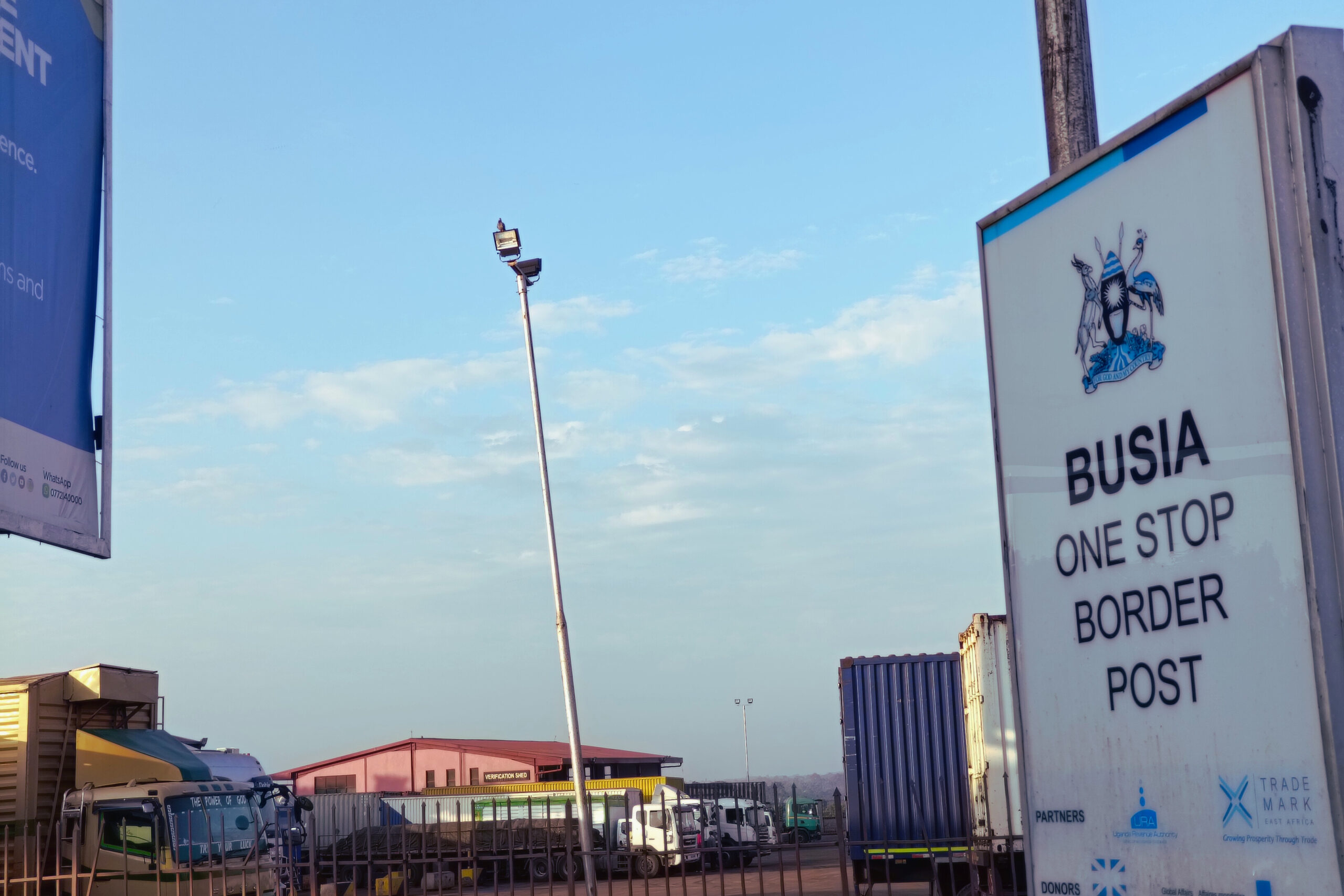
Customs revenue reached KES 988.780 billion against a target of KES 980.794 billion, a performance rate of 100.8 percent and growth of 12.4 percent compared to the same period last year. Oil revenue hit KES 370.383 billion, surpassing its target at a 102.6 percent rate, while non-oil revenue brought in KES 618.397 billion at 99.8 percent of target.
Domestic revenue told a different story. Collections reached KES 1.851 trillion, short of the KES 1.991 trillion target and landing at a 93 percent performance rate, even as growth held at 9.7 percent.
Tax Heads Show Mixed Results
PAYE brought in KES 598.807 billion, growing 6.7 percent and reaching 91.8 percent of target. That marks an improvement over the 3.3 percent growth recorded in FY 2024/25, but it still trails the 8.5 percent average growth posted between FY 2022/23 and FY 2023/24. KRA attributes the slowdown to shrinking formal employment, which fell from 15.7 percent of total employment in 2022 to 15.5 percent in 2024 and 15.3 percent in 2025, according to the Economic Survey 2026.
Domestic VAT collections rose 8.5 percent to KES 355.255 billion. Performance improved sharply in the second half of the year: between January and April 2026, VAT growth averaged 15.5 percent against a 98.0 percent performance rate, well above the 8.5 percent growth and 92.4 percent performance rate recorded in the first half. A policy shift cutting the VAT rate on oil products from 16 percent to 8 percent triggered substantial refund claims from oil sub-sector taxpayers between May and June 2026.
Corporation tax extended its multi-year climb, growing 14.0 percent compared to 9.8 percent in FY 2024/25 and 4.6 percent in FY 2023/24. Collections reached KES 347.066 billion against a target of KES 365.249 billion. Five sectors, ICT, manufacturing, transportation, energy, and wholesale, supplied nearly half of this total at 49.4 percent, with instalment remittance from these sectors growing 25.0 percent on average. Banks alone contributed 26.1 percent of total corporation tax collections, growing 11.1 percent year on year.
Betting taxes beat their target outright. KRA collected KES 16.527 billion against a target of KES 14.261 billion, a surplus of KES 2.267 billion and a performance rate of 115.9 percent. Growth came in at 24.9 percent, while betting tax and withholding tax on betting and gaming grew 20.3 percent and 59.2 percent respectively.
Domestic excise generated KES 61.845 billion, with alcoholic beverages contributing 69.3 percent of the total and tobacco products adding a further 14.9 percent.
Collections from the Significant Economic Presence Tax, also known as the Digital Service Tax, doubled to KES 1.609 billion from KES 0.807 billion. The Finance Act 2025 widened the tax’s reach to cover any income earned through the internet or electronic networks and scrapped the KES 5 million threshold that previously limited its application.

Technology and Enforcement Drive Compliance Gains
KRA leaned heavily on digital tools to widen its tax base and close revenue gaps. The Electronic Tax Invoice Management System had onboarded 750,915 taxpayers by June 2026, strengthening visibility into transactions and improving VAT compliance. Integration between iTax and the Integrated Customs Management System gave the authority a clearer view across both domestic and customs operations, while pre-populated tax returns, built from third-party data including electronic invoicing records, cut errors and made filing simpler for taxpayers. Non-intrusive cargo scanners paired with AI powered analytics helped seal leakages linked to illicit trade.
On the service side, KRA expanded access through a WhatsApp chatbot, a USSD code (*222#), and the eCustoms mobile application, while the Ushuru Mashinani programme grew its agent network to 1,261 partners countrywide by June 30, 2026. County based Citizen Assembly forums gave taxpayers a direct channel to raise concerns and shape future processes.
Several targeted programmes added measurable revenue. Tax Base Expansion, which recruits landlords and converts nil filers into active taxpayers, brought in KES 9.1 billion. Debt collection from non-compliant taxpayers, backed by demand notices and instalment plans, raised KES 144.824 billion. Integration with the Integrated Financial Management Information System, alongside a new 0.5 percent withholding tax on government supplies, sharpened visibility over public procurement. A parallel integration gave KRA real-time access to 143 betting and gaming companies, helping excise collections beat target.
Trade facilitation efforts cut average cargo clearance time to 42.30 hours, beating a 43.15 hour target, aided by pre-arrival processing using the Bill of Lading and the rollout of body-worn cameras for customs staff. Through its Alternative Dispute Resolution framework, KRA closed 993 cases and released KES 35.062 billion in disputed funds, avoiding lengthy litigation. The iWhistle platform, which lets the public report tax fraud anonymously, recovered KES 3.2 billion from 908 reported cases.
Looking Ahead to FY 2026/27
KRA plans to build on this year’s gains by expanding electronic invoicing and scaling up real-time monitoring through Electronic Tax Registers. Device identification, registration requirements, and a new information exchange system aimed at cross-border tax evasion sit among the coming year’s priorities, alongside a planned Data Analytics Centre of Excellence and wider use of artificial intelligence in revenue assurance.
Despite a mixed economic climate through the year, taxpayers kept meeting their obligations, and that compliance underpins KRA’s improved performance. The authority says it remains focused on simplifying payment processes and strengthening trust as it works toward its 2026/27 targets.
KRA Reopens Tax Amnesty, Waives Full Interest and Penalties Through December
