



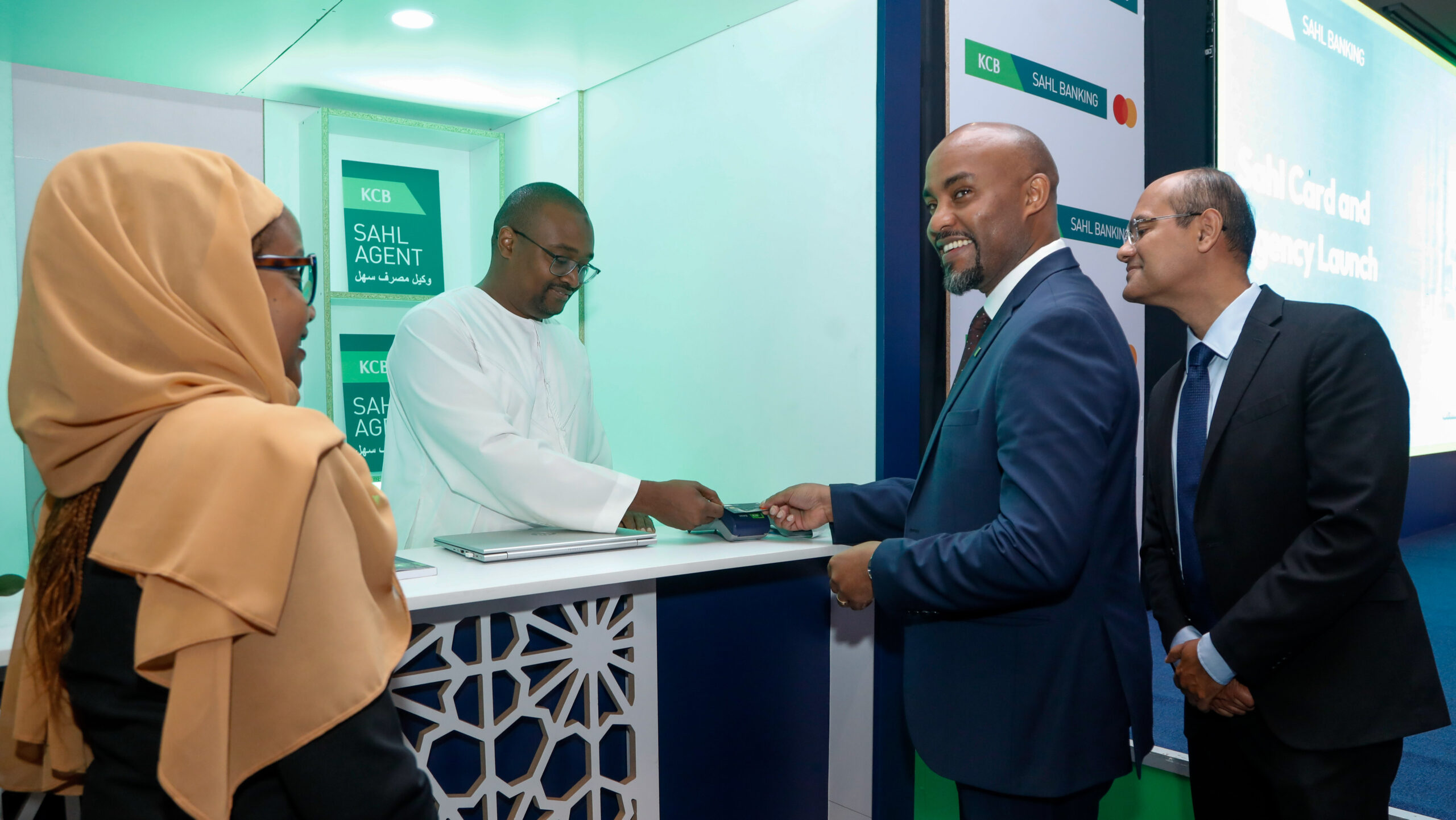
KCB Bank has teamed up with Mastercard to roll out a Shariah compliant payments solution for customers under its Sahl Banking brand, giving Islamic finance customers in Kenya a new card and a wider network of agents to bank through.
What Sahl Banking Actually Means
Sahl, which translates to easy in Arabic, is not a new name at KCB. The bank first tested an Islamic banking window in 2007, but the effort stalled and lost momentum within a few years. KCB tried again in 2015, this time with full approval from the National Treasury, launching what it called KCB Sahl Banking across a handful of branches in Nairobi, Mombasa, Garissa, Wajir and Lamu before expanding nationwide. Unlike some competitors, KCB opened the offering to both Muslims and non Muslims, positioning it as an ethical alternative to conventional banking rather than a faith restricted product.
Islamic finance in Kenya sits within a legal framework the Central Bank of Kenya built out gradually, including Section 16A(2) of the Banking Act, which lets institutions operating under Shariah principles earn a return instead of charging interest. KCB shares this space with several other lenders now offering similar windows, including Absa Bank through La Riba Banking, Standard Chartered through Saadiq, and National Bank of Kenya through Amana Banking, alongside fully fledged Islamic banks such as Gulf African Bank, Premier Bank and Dubai Islamic Bank Kenya. Sharia compliant assets still represent a small slice of Kenya’s banking market, but the sector has grown steadily as more banks compete for the same customer base.
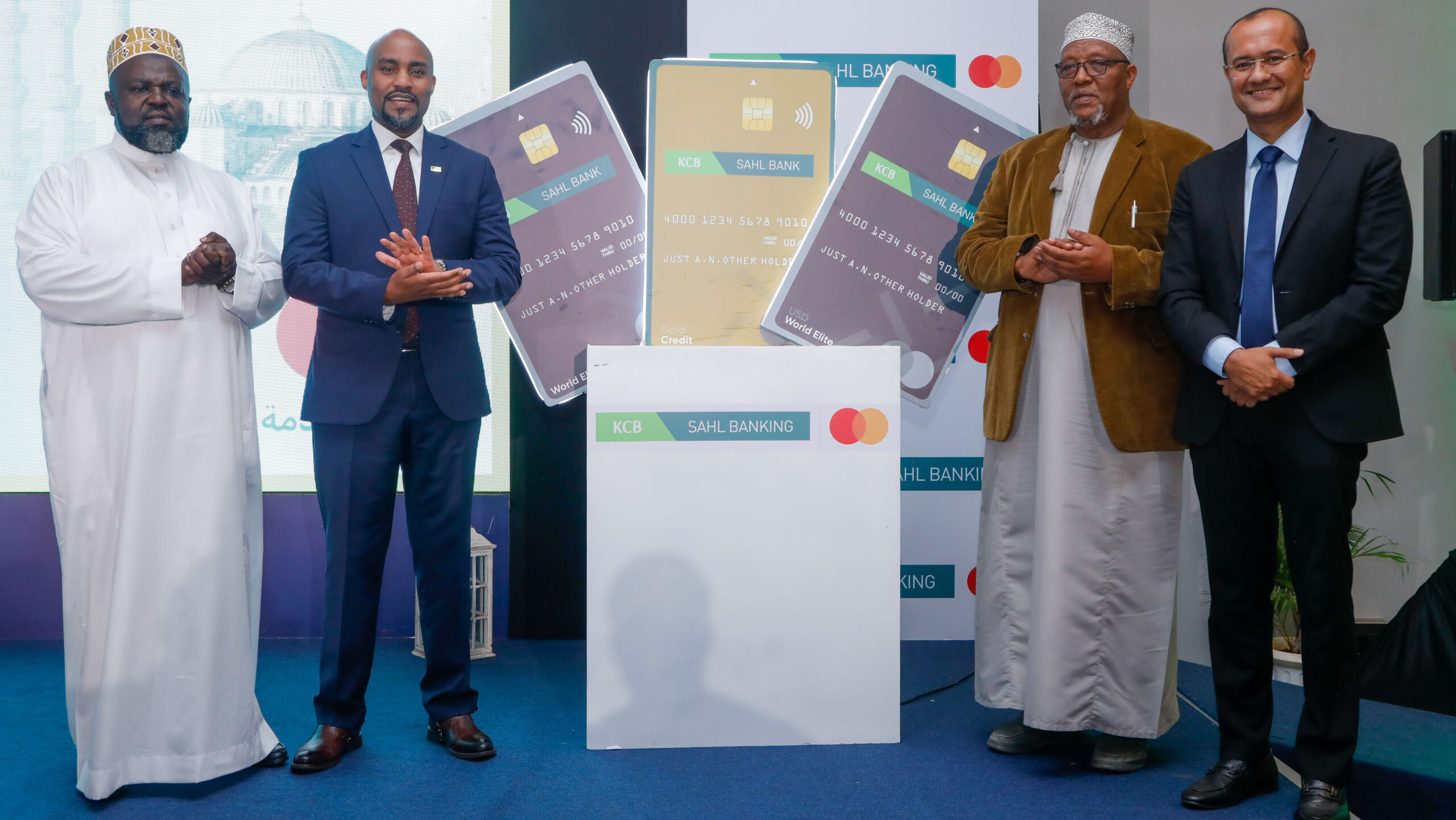
Strategy and Innovations Mark Mwongela, Shariah Advisory Council Chairman,
Sheikh Ibrahim Lethome and Mastercard Senior Vice President and Country Manager
for EA and Indian Ocean Islands, Shehryar Ali pose for a photo during the Kcb Sahl
Banking card & agency launch at Radisson Blu Hotel in Nairobi.
The New Card and What It Offers
The Sahl Card gives customers a way to manage everyday spending while staying aligned with Islamic finance principles, which prohibit interest and require that money move through ethical, asset backed transactions.
Mark Mwongela, KCB Group Director for Strategy and Innovation, described the launch as part of a broader effort to expand access to Shariah compliant banking, offering customers a secure and values driven option for their daily financial and lifestyle needs.
Cardholders on the Mastercard World Elite and Gold tiers gain access to Mastercard’s global network of travel and lifestyle benefits, including discounts on accommodation, dining, shopping and leisure experiences. Eligible cardholders also unlock The Mastercard Collection, a curated set of dining, travel and lifestyle experiences built for World Elite cardholders, alongside spend management controls, transaction alerts and concierge services. The card carries a design built around Islamic themes, a deliberate nod to the market it serves.
Shehryar Ali, Mastercard’s Senior Vice President and Country Manager for East Africa and the Indian Ocean Islands, said the partnership supports an inclusive digital economy where individuals and communities can pay with confidence. He described the collaboration as a way of connecting Kenya’s Islamic banking community to global experiences by combining Mastercard’s network with KCB’s local expertise.
Agents Bring Sahl Banking Closer to Customers
Alongside the card, KCB introduced the Sahl Agency banking network, which lets customers deposit funds, withdraw cash, make payments and reach other core banking services through local agents rather than a branch. That model mirrors a wider push across Kenyan banking to extend financial services into areas where branch networks remain thin, a strategy that has driven much of the country’s financial inclusion gains over the past decade.
A Bigger Bet on Values Driven Banking
Together, the card and the agency network mark one of KCB’s most visible pushes into Islamic finance since it relaunched Sahl Banking a decade ago. For a market still representing a small share of total banking assets in Kenya, the partnership with Mastercard signals that lenders see room to grow, not just among Muslim customers but among anyone drawn to a banking model built around ethics and transparency. Whether that bet pays off will depend on how quickly customers adopt the card and how far the agency network reaches beyond the cities where Islamic banking has traditionally found its strongest footing.
