


Airtel Africa closed its financial year ended March 31, 2026 with profit after tax tripling to $813 million from $328 million a year earlier, as revenue climbed 29.5% to $6.415 billion.
The results reflect the strongest customer additions in the company’s history and a mobile money business that is rapidly outgrowing its original remit.
Revenue Growth Runs Across Every Region
Group revenue grew 24% in constant currency, with reported currency growth running ahead of that figure as currencies appreciated across most markets. Nigeria led the charge, posting constant currency revenue growth of 47.5% following tariff adjustments introduced in the fourth quarter of the prior year. Francophone Africa accelerated from 9.5% to 17.1% growth, while East Africa expanded revenues by 18.9% in reported currency to $2.192 billion.
East Africa’s performance rested on two pillars. Voice revenue grew 12.5% in constant currency, supported by an 8.7% rise in the customer base. Data revenue grew 18% as data traffic surged 50.3% and smartphone penetration reached 46.6%. Data usage per customer climbed to 8 GB per month, up 28% year on year.
Airtel Money Processes $215bn, IPO Pushed to Late 2026
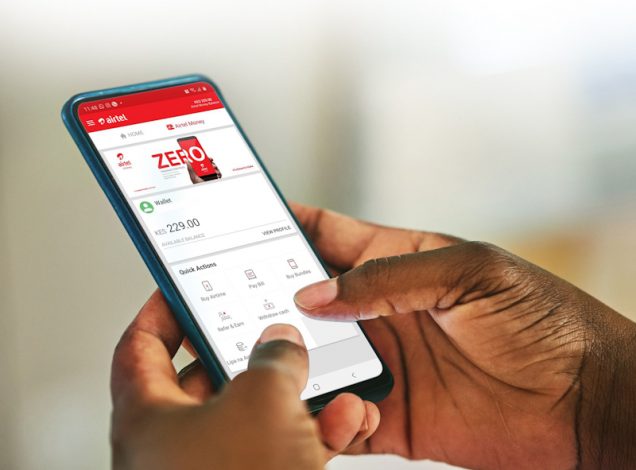
Airtel Money delivered the standout performance of the year. The mobile money customer base grew 21.3% to 54.1 million, while app transacting customers rose 74%. Annualised total processed value crossed $215 billion in the fourth quarter, up 49% on the prior period.
The planned Airtel Money IPO will not proceed on its original timeline. Geopolitical developments have shifted market conditions, and the company now targets the listing in the second half of 2026. CEO Sunil Taldar said the business has made good progress and remains committed to the listing once conditions allow.
Margins Hit Record Highs Despite Cost Pressures Ahead
Underlying EBITDA grew 37.2% in reported currency to $3.162 billion, pushing margins to 49.3% for the full year and an all-time high of 50.3% in the fourth quarter. A cost efficiency programme running alongside the revenue growth drove that margin expansion.
The outlook carries a note of caution. Rising energy costs linked to geopolitical events will add cost inflation in the near term, and the company expects some EBITDA margin pressure as a result. Management says it will work to contain the impact through continued efficiency gains.
The Company Is Spending More to Build More
Capital expenditure rose 31.9% to $884 million for the year, funding the rollout of more than 3,250 new sites and an extension of the fibre network by approximately 3,200 kilometres to 81,900 kilometres. Over 2,200 sites across five markets now carry 5G capability following the rollout in Malawi in the fourth quarter.
Guidance for the 2027 financial year puts capex at approximately $1.1 billion, with the additional spend directed at coverage expansion, home broadband, and data centres. The company is building infrastructure, not just running a network.
Net leverage improved from 2.3 times to 1.8 times, driven by the EBITDA growth. Lease-adjusted leverage fell to 0.5 times from 1.0 times in the prior year.
The board recommended a final dividend of 4.26 cents per share, bringing the full year total to 7.1 cents, a 9.2% increase on the previous year and in line with the company’s stated dividend policy.
Basic earnings per share reached 18.6 cents compared to 6.0 cents a year earlier, with operating free cash flow growing 39.4% to $2.278 billion.
FY2026 Financial Summary
| Metric | FY2026 | FY2025 | Change |
|---|---|---|---|
| Revenue | $6,415m | $4,955m | +29.5% |
| Underlying EBITDA | $3,162m | $2,304m | +37.2% |
| EBITDA Margin | 49.3% | 46.5% | +280bps |
| Operating Profit | $2,115m | $1,457m | +45.1% |
| Profit After Tax | $813m | $328m | +147.4% |
| Basic EPS | 18.6¢ | 6.0¢ | +212.2% |
| Operating Free Cash Flow | $2,278m | $1,634m | +39.4% |
| Capex | $884m | $670m | +31.9% |
| Net Leverage | 1.8x | 2.3x | Improved |
| Full Year Dividend | 7.1¢ | 6.5¢ | +9.2% |
What the Numbers Signal
Airtel Africa enters its next financial year with a stronger balance sheet, a larger customer base, and a mobile money platform that has outpaced expectations. The capex step-up to $1.1 billion signals that management sees the current growth as a foundation to build on rather than a peak to protect. The Airtel Money IPO remains the single largest catalyst on the horizon, and the second half of 2026 target gives investors a clearer window than the company has offered before.
