


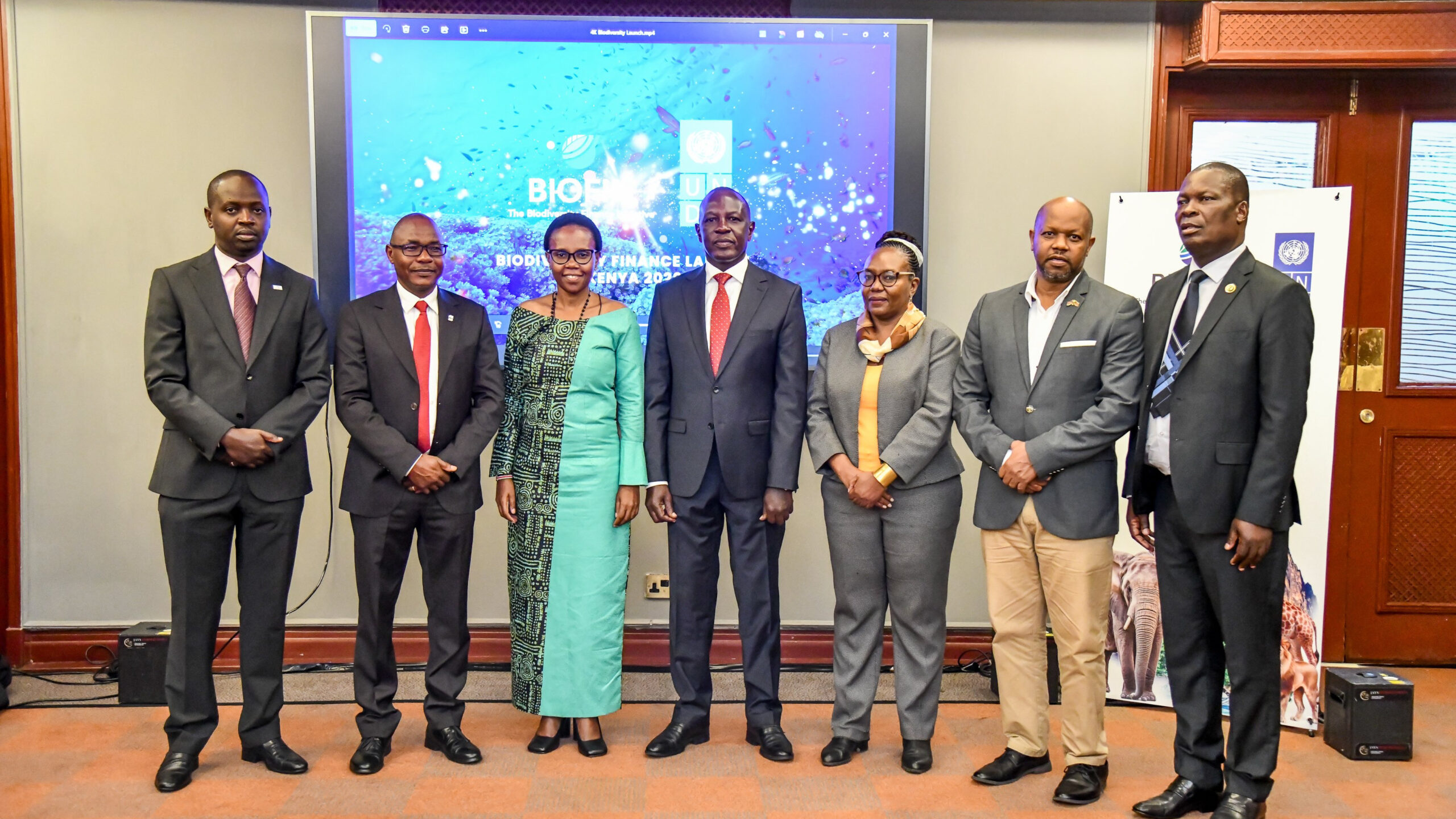
Kenya has launched the Biodiversity Finance Initiative (BIOFIN), committing the country to a structured approach to funding conservation and building a nature-positive economy.
The launch, held in Nairobi and attended by senior government officials, development partners, financial sector representatives, and civil society, marks the formal establishment of the BIOFIN Kenya Chapter.
Principal Secretary for Environment and Climate Change Dr. Festus Ng’eno described the initiative as an evidence-based response to a persistent financing gap that has long undermined Kenya’s biodiversity conservation efforts.
Why Biodiversity Finance Is an Economic Priority
Kenya’s ecosystems are not peripheral to its economy. They sit at the centre of it. Agriculture, tourism, fisheries, forestry, and water resources all depend on functioning natural systems, collectively accounting for approximately 48% of the country’s GDP. Yet these assets continue to absorb growing pressure from climate change, land degradation, pollution, and unsustainable resource use.
“Biodiversity conservation is not merely an environmental concern but a critical economic and development priority,” Dr. Ng’eno said during the launch.
Treasury officials reinforced this framing, describing ecosystems as productive capital rather than environmental liabilities, and positioning nature-based investing as central to Kenya’s fiscal strategy. The government is now moving to integrate natural capital accounting into national economic planning, ensuring ecosystems register in public accounts and inform investment decisions.
What BIOFIN Will Deliver
Implemented with support from the United Nations Development Programme (UNDP), BIOFIN will produce Kenya’s first comprehensive Biodiversity Finance Plan. The plan will map current biodiversity expenditures, quantify financing gaps, and identify scalable investment opportunities across public and private channels.
UNDP Resident Representative Dr. Jean-Luc Stalon said the initiative targets between $100 billion and $150 billion in nature financing over the next decade. He framed the stakes plainly: “Biodiversity finance is no longer a niche conservation issue. It is central to economic stability, investment planning, and long-term growth.”
Big moment for 🇰🇪 🌿
Proud to see the #BIOFINKenya Chapter launched today – unlocking up to $100–150B for nature financing over the next decade.
The opportunity is huge. Protecting biodiversity isn’t optional, it’s critical to our future. #FinanceNature@alexanderdecroo pic.twitter.com/GiLrCa0A3O
— stalon jean-luc (@JLStalon) April 21, 2026
The initiative also strengthens biodiversity finance tracking and accountability, improves policy coherence, and embeds biodiversity considerations into national planning and budgeting processes.
Unlocking Private Capital Through Green Finance
Public resources alone cannot close Kenya’s biodiversity financing gap. Officials acknowledged this plainly, placing emphasis on private sector participation and blended finance instruments. Green and blue bonds, biodiversity credits, and sustainability-linked lending are among the mechanisms expected to attract institutional investors with exposure to environmental, social, and governance (ESG) assets.
The Kenya Bankers Association signalled readiness to support the transition, particularly through risk-pricing frameworks that incorporate nature-related financial disclosures. Kenya’s renewable energy profile strengthens this case: more than 91% of the country’s electricity comes from geothermal, wind, solar, and hydro sources, positioning it as a competitive destination for climate and biodiversity finance amid tightening global sustainability standards.
Globally, over 41 countries implementing BIOFIN have mobilised more than $2.7 billion for biodiversity-related investments, demonstrating growing appetite among investors for nature-linked assets.
Connecting National Policy to Global Commitments
BIOFIN aligns Kenya’s domestic agenda with its commitments under the Convention on Biological Diversity and the Kunming-Montreal Global Biodiversity Framework, particularly targets focused on integrating biodiversity into policy, aligning financial flows, and mobilising resources.
The framework also complements the Financing Locally-Led Climate Action (FLLoCA) initiative, which directs funding to counties for climate resilience and nature-based solutions.
Dr. Ng’eno called for a coordinated, whole-of-government approach, urging stakeholders to move from planning to implementation. “It offers a clear pathway to integrate biodiversity into planning, budgeting, and investment decisions while mobilising new sources of finance,” he said.
The Cost of Inaction
Stakeholders at the launch were direct about what continued underinvestment means in practice. Biodiversity loss already translates into reduced agricultural productivity, higher public spending on climate adaptation, and greater exposure to environmental shocks. Sustained investment in ecosystems, officials argued, would stabilise the energy, agriculture, and water systems on which macroeconomic stability depends.
“Financing biodiversity should not be viewed as a cost,” Dr. Ng’eno said. “It is a strategic investment in economic resilience, climate adaptation, and sustainable development.”
Kenya is now repositioning biodiversity as a core economic asset. The work of funding it has formally begun.
