


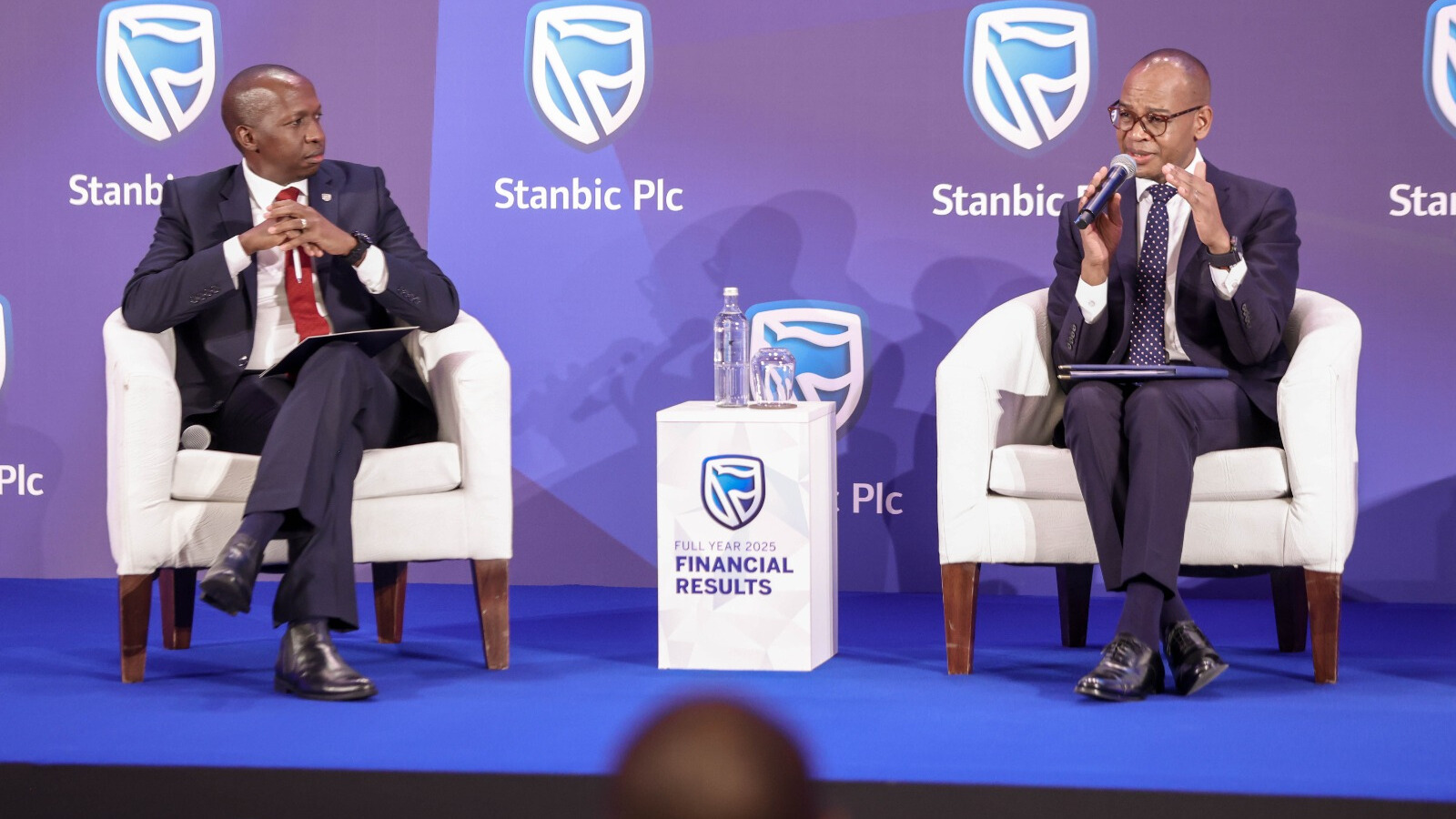
Stanbic Holdings Plc closed 2025 with a net profit of KES 13.7 billion, matching its 2024 earnings while aggressively expanding its balance sheet through a year of significant Central Bank Rate cuts and global economic turbulence.
Total assets climbed 18.9% to KES 541.3 billion, a signal that the Group’s three-year growth strategy is taking hold. Loans and advances to customers rose 18.5% to KES 272.9 billion, fuelled by a resurgent private sector, while customer deposits grew 17.5% to KES 373.7 billion.
Holding the Line on Revenue Despite Rate Cuts
The Central Bank of Kenya cut rates by a cumulative 225 basis points during the year, a headwind that trimmed net interest income by 1.2%. The Group absorbed the impact through a deliberate shift toward non-funded income. Fees and commission income expanded sharply, offsetting both the rate compression and negative fair value adjustments.
Chairman Joseph Muganda described 2025 as a year of repositioning rather than retreat:
“As the operating environment shifted from high interest rates toward greater currency and inflation stability, we saw a clear renewal in private sector credit demand. We proactively weathered this shift by providing a stronger foundation for disciplined growth and predictable earnings.”
Diaspora, Eurobonds, and Energy: Where Growth Was Won
Three deals defined the Group’s strategic ambition in 2025.
Through its parent, Standard Bank, Stanbic arranged a US$1.5 billion Eurobond for the Government of Kenya to support liquidity management — one of the largest sovereign capital market transactions of the year. The Bank also deployed US$450 million into the energy sector to finance fuel imports.
On the retail side, Stanbic’s share of diaspora remittance flows doubled — from 7% to 13% — cementing its position as the go-to bank for Kenyans sending money home.
Chief Executive Dr. Joshua Oigara credited the result to relationship-building rather than product alone:
“Our performance, defined by strategic adaptation and deepened partnerships, underscores the strength of our reset strategy.”
Assets Under Management more than doubled, rising from KES 2.45 billion to KES 5.3 billion, a reflection of growing customer trust in the Group’s wealth proposition.
Asset Quality: Outperforming the Industry
The Non-Performing Loan ratio fell to 8% — roughly half the industry average — marking a meaningful improvement from FY 2024. Chief Financial and Value Officer Dennis Musau attributed the result to both tighter credit management and a healthier operating environment for borrowers:
“Our financial architecture is now more efficient. Our asset quality improved markedly, reflecting our prudent risk management and a healthier economic environment for our customers.”
System uptime held at 99.8% through the year, sustaining uninterrupted digital service delivery.
Green Finance, Agriculture, and Women-Led Enterprise
Stanbic disbursed over KES 4.5 billion in green building loans and KES 273 million in solar financing — tangible outputs from its sustainable finance commitments. The Bank directed 9.9% of its lending to agriculture, with tailored products targeting the tea and dairy sectors, and channelled KES 133 billion into trade finance.
Since its inception, the DADA programme — focused on women-led businesses — has disbursed over KES 49.5 billion, making financial inclusion a measurable line item rather than a footnote.
On the environmental side, the Group restored 100 hectares of Mt. Kenya Forest and 7.5 hectares of mangroves, and planted over 200,000 trees.
Dividend
The Board recommended a dividend of KES 22.35 per share, up from KES 20.83 in 2024 — a 7.3% increase.
