



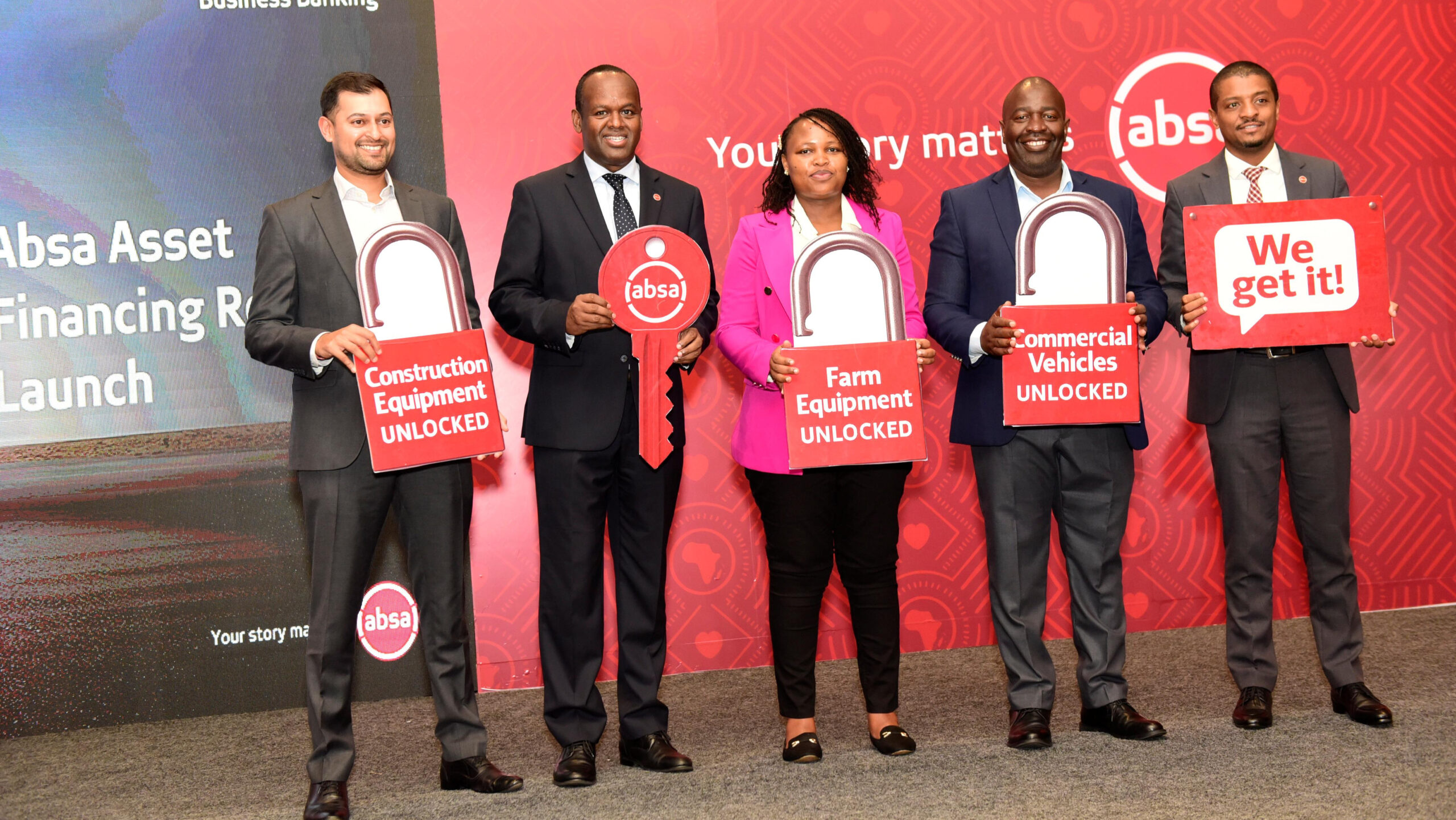
Absa Bank Kenya has overhauled its asset financing offering, setting its sights on deploying KES 100 billion to businesses and individuals over the next three years.
The bank says the move responds directly to what customers have described as the biggest barrier to growth: slow, bureaucratic lending.
Faster Approvals, Fewer Steps
The most immediate change is speed. Onboarding to approval now takes 48 hours, down from 10 days. Approval to disbursement follows within 72 hours. The bank also trimmed the number of pre-approval steps from 13 to six, removing the procedural drag that has long frustrated borrowers.
These are not cosmetic adjustments. Businesses waiting weeks for capital to clear miss procurement windows, lose competitive bids, and delay expansion. Closing that gap matters.
Longer Tenors, Broader Coverage
Under the new structure, loan tenors extend to 84 months for select asset classes, with financing available at up to 100 percent of asset value. The bank targets a wide range of productive assets including school buses, personal and grey market vehicles, medical equipment for hospitals and clinics, agricultural machinery, and solar installations.
The inclusion of grey market vehicles, which are imported used cars that sit outside standard dealership channels, signals a deliberate push into segments that mainstream bank financing has traditionally sidestepped.
A Dedicated Centre to Back It Up
Absa has also established a dedicated Asset Financing Centre, bringing together credit assessment teams, sector specialists, and relationship managers under one roof. The intention is to reduce handoffs, improve consistency, and give customers a single point of accountability from application to disbursement.
Speaking at the launch in Nairobi, Managing Director and CEO Abdi Mohamed said the bank’s goal is to ensure capital moves efficiently to where it creates the most value. “We are enabling individuals and businesses to invest, expand capacity, and compete with greater certainty,” he said. “This is how we translate financing into real and measurable economic impact.”
Business Banking Director Renato D’souza, who described the revamped proposition as ABF 2.0, framed it in practical terms. “We are making asset acquisition easier to navigate and faster to execute across key value chains,” he said.
Airtel Money and Absa Bank Kenya Open a Faster Payment Route for SMEs
What Is Driving the Shift
The overhaul arrives as Kenyan businesses grow more vocal about the cost of slow credit. Lending experts who spoke at the launch event pointed to three converging pressures: demand for faster turnaround times, frustration with documentation-heavy processes, and growing interest in financing that accounts for environmental and sustainability factors.
Solar equipment and clean transport featured prominently in Absa’s revised asset list, a nod to the ESG considerations increasingly shaping how businesses plan capital expenditure.
The bank also announced a growing network of local and international asset partners, enabling financing to align more closely with how customers actually acquire assets, rather than treating procurement and credit as separate conversations.
The Bigger Picture
Kenya’s economy runs increasingly on physical assets. Trucks move goods. Buses move children to school. Medical equipment keeps clinics functional. Agricultural machinery determines whether smallholders scale or stagnate. Access to financing for these assets, at reasonable terms and without punishing delays, shapes economic outcomes at ground level.
ABF 2.0 does not reinvent banking. What it does, if it delivers on its stated parameters, is remove friction that has long made productive borrowing harder than it needs to be.
