


Safaricom solar sites rose 41.6% to 2,028 in FY26 and the company raised KES 20 billion in green notes, while its Scope 1 and 2 emissions climbed 9.1% to 56,354 tonnes of carbon dioxide equivalent.
From 1 January 2027, Kenyan listed companies, banks and insurers must report climate data under IFRS S1 and S2, so investors and lenders can test these figures against audit standards.
Safaricom published its 15th Sustainable Business Report on 27 October. Khusoko covered the media briefing on the report on 24 October. The report adds four years of emissions data, solar figures, financing terms and statements from the Chairman, the Group CEO and the Sustainability Executive.
Safaricom solar sites need 972 more additions
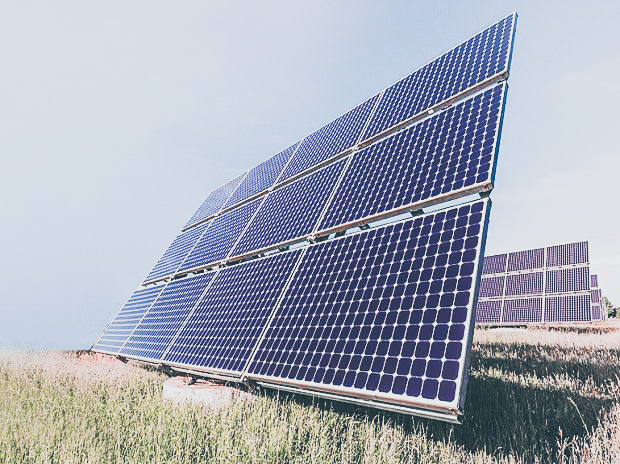
The 596 sites added in FY26 lifted the total from 1,432 to 2,028. Safaricom also completed about 800 battery and rectifier upgrades and put 35.7% of its network on green energy, against a 95% target for 2030. Solar installations cut energy costs by about KES 16.42 million a month.
At sites with solar, solar supplied 20.1% of energy, the grid 70% and diesel 9.9%. During the nationwide blackout on 5 December 2025, the report says solar, larger batteries and extra grid connections kept sites running and cut generator use. Kenya’s record power demand shows the load on the grid.
Group CEO Dr Peter Ndegwa said in the report that the rollout “progressed more slowly than planned in FY26 owing to contracting delays.”
He said deployment has since gained pace and that Safaricom expects to reach 3,000 sites by the end of the current year. That target needs 972 additions, 63% more than FY26.
Emissions rose for a second year as intensity fell
| Metric | FY23 | FY24 | FY25 | FY26 |
|---|---|---|---|---|
| Scope 1 and 2 combined (tCO2e) | 54,970.71 | 47,849.41 | 51,638.19 | 56,354.12 |
| Revenue intensity (tCO2e per KES million) | 0.166 | 0.148 | 0.144 | 0.140 |
Combined emissions fell 13.0% in FY24, then rose 7.9% in FY25 and 9.1% in FY26. The FY26 total sits 2.5% above FY23. Emissions per KES million of revenue dropped 15.7% over the same period, so revenue grew faster than emissions. The 2030 target does not use intensity. It requires a 43% absolute cut in Scope 1 and 2 emissions from a 2017 base year.
Chairman Adil Arshed Khawaja tied the rise to growth. He said “network expansion continues to place pressure on emissions performance, and some interventions have progressed more slowly than anticipated.” The report names the expansion of 5G as one driver.
Scope 1 emissions rose 12.2% even as fuel use fell 3.7% to 10,083,138 litres. The report sections Khusoko reviewed do not break Scope 1 down by source.
Karen Basiye, the Sustainability Executive, said Safaricom is making progress but “we know we need to move faster.”

Green notes drew bids of about KES 41.6 billion
Proceeds from the Green Notes will finance or refinance renewable energy, energy efficiency and power management. The Board Risk and ESG Committee oversaw the issue under a Sustainable Finance Framework. Basiye said the raise “showed investors’ trust in our sustainability plans.”
Safaricom’s climate assessment estimates more than KES 500 million in savings from displacing diesel by 2030, and states that results depend on deployment rates, grid reliability, technology costs and energy prices.
In FY26 Safaricom met two of the three targets in its KES 30 billion loan, on gender diversity in senior management and digital inclusion. It missed the Scope 1 and 2 target for a second year and the report does not state what the miss costs.
“These are areas where we must do better,” Ndegwa told guests at the launch, referring to emissions and safety. His Vision 2030 priorities include cutting diesel use to fewer than 10% of Safaricom’s sites.
IFRS S1 and S2 reporting starts on 1 January 2027
Public interest entities, which include listed companies, banks and insurers, report under IFRS S1 and S2 from 1 January 2027. Large companies follow in 2028 and smaller enterprises in 2029, under the roadmap of the Institute of Certified Public Accountants of Kenya.
“Climate disclosures will now be held to the same standards of governance and assurance as financial statements,” Principal Secretary Dr. Eng. Festus Ng’eno said.
The report places Kenya among 14 markets that have fully adopted the ISSB standards. It also states that the Capital Markets Authority, the Nairobi Securities Exchange and the IFC are reviewing the corporate governance code for issuers to add ESG principles.
How Safaricom prepares for audited climate data
The report calls FY26 “an important transition year.” Safaricom states that it is strengthening governance, systems, controls and data, and plans to link sustainability disclosures to the financial statements, develop financial effects analysis and prepare for assurance.
It completed its first double materiality assessment, which produced five material matters, and a climate risk assessment covering physical and transition risks.
“People want proof alongside ambition,” Basiye said. Khawaja committed the Board to continuity, “We will continue to build on our IFRS S1 and S2 disclosures in the years ahead.” Ndegwa said in his message that “trust is earned through how we behave.”
An auditor will ask management to explain movements, and the gap between Scope 1 emissions and fuel use is one an assurance provider would query.
Khusoko tracked the plan from the start in its report on Safaricom’s net zero plan as a benchmark for Kenya’s corporate sector. An earlier analysis of FY26 results cited 2,002 solar sites. The report figure of 2,028 replaces it.
