


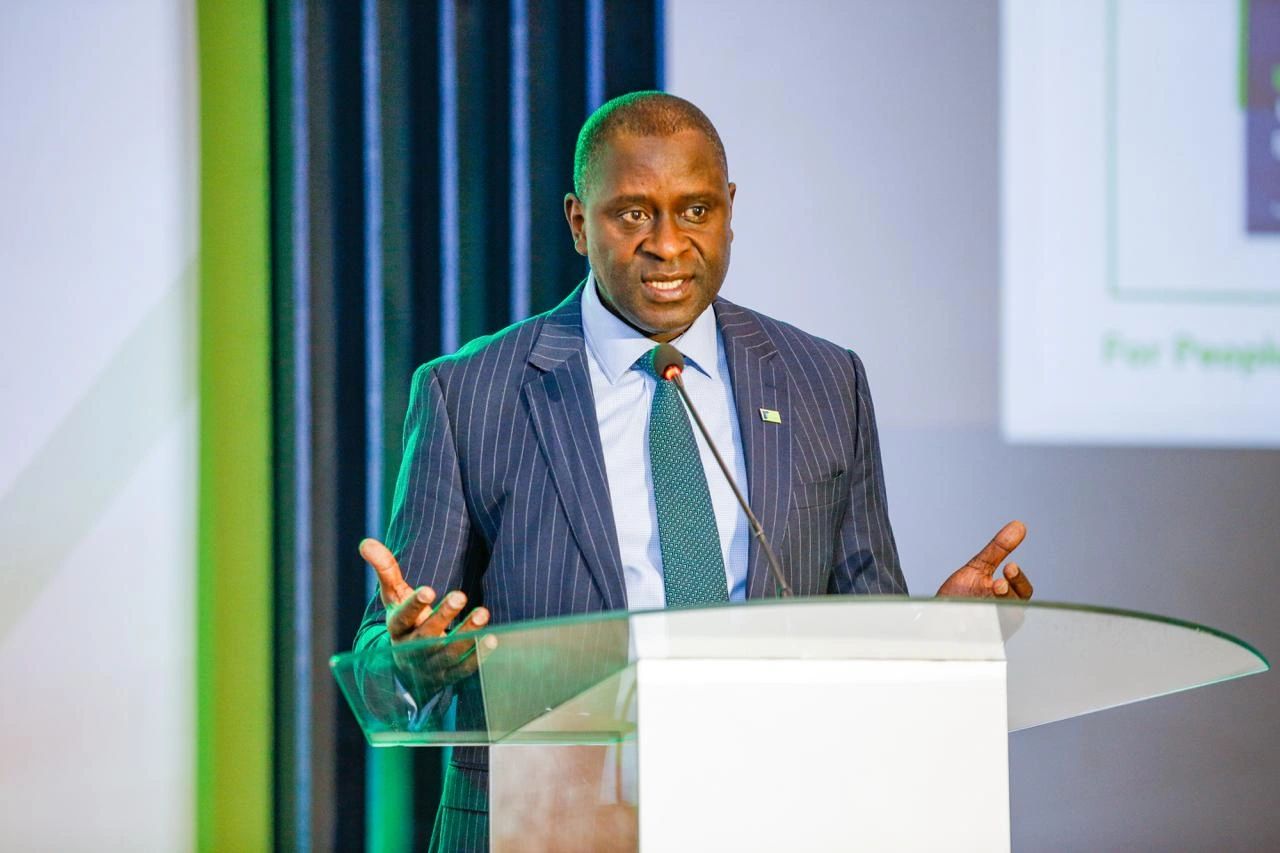
KCB Group Treasurer Antony Mulisa told corporate clients that fuel prices and El Niño rains are the main risks to Kenya’s growth into 2027, after the economy expanded 5.3 percent in the first quarter.
Mulisa presented the bank’s economic outlook at the KCB Powertalk Roundtable Series at the Radisson Blu Hotel in Upperhill on October 13. The theme was “Economic Outlook: Unlocking Opportunities in an Evolving Global Economy”. Cabinet Secretary for Investments, Trade and Industry Lee Kinyanjui was chief guest.
Growth Picked Up Before the Fuel Shock
Kenya’s real GDP grew 5.3 percent in the first quarter, against 4.9 percent a year earlier, driven by industry and construction. The financial and insurance sector grew 6.3 percent on higher credit uptake. Agriculture grew 4.9 percent and held 19.0 percent of GDP.
Mulisa said the US and Israel struck Iran on February 28, and that higher domestic fuel prices and weak sentiment will have dented growth in the second quarter and into the third. He cited IMF projections of 4.5 percent growth for Kenya in 2026 and 4.7 percent in 2027. Cytonn Investments projects 4.4 to 5.3 percent for 2026.
For the region, railways, the East African Crude Oil Pipeline, ports, coffee, tea and mineral exports, and financial and digital services as growth drivers for 2026 and 2027.
Inflation Above Target Midpoint, Rate on Hold
Headline inflation is above the 5 percent midpoint of the Central Bank of Kenya’s target, the slides showed, because of fuel prices. Core inflation is rising, which the presentation called a concern for monetary policy.
The Kenya National Bureau of Statistics put inflation at 6.8 percent in September, up from 6.6 percent in August. Core inflation rose to 4.0 percent from 3.4 percent. The Monetary Policy Committee held the Central Bank Rate at 8.75 percent on October 7.
Mulisa said short term rates should stay in single digits into 2027. The slides listed fuel subsidies, a VAT reduction on fuel and a stable shilling as support for inflation staying within the target range. The 91-day Treasury bill averaged 8.748 percent on October 26. Government domestic borrowing continues against ample market liquidity.
Oil Scenarios
The presentation set out two cases for the Iran conflict. A preliminary agreement to reopen the Strait of Hormuz by the first quarter of 2027 would lower fuel to between US$70 and US$80 a barrel and reverse inflation pressure. A return to high intensity conflict would hold prices above US$90 and prompt more monetary tightening, with regional inflation threatening to pass the upper target limit.
The IMF’s base case assumes the strait reopens in March 2027, with oil averaging US$96 a barrel this year and US$87 in 2027. Global inflation is projected at 4.7 percent this year. Mulisa’s slides put it at 8.7 percent in 2022 and 4.1 percent in 2025.
El Niño Adds Pressure on Food and Transport
El Niño will disrupt farming, transport and essential services, and that agriculture contributes more than 20 percent of regional GDP. In the 1997 and 1998 episode, Kenya’s growth fell to 1.8 percent in 1998 from 4.6 percent in 1996. The presentation said commodity and transport costs could push inflation to double digits and test food security buffers.
The Kenya Meteorological Service Authority forecasts above average rainfall across about 80 percent of the country in the October to December short rains.
A third risk is global interest rates. Mulisa said tighter policy in the US, euro area, Japan and the UK could draw capital out of developing markets, weaken currencies and raise the cost of servicing foreign debt.
KCB Calls for Action Before Shocks Arrive
KCB Group CEO Paul Russo told the forum that resilience must include anticipating change and building new sources of competitiveness. He cited letters of credit worth more than KShs 1.074 trillion that KCB issued under the Government to Government fuel import arrangement. The bank reported 2025 profit before tax of KShs 90.9 billion, up 11 percent.
“The world may be evolving beyond our control, but our response to that evolution remains firmly within our hands,” Russo said.
