



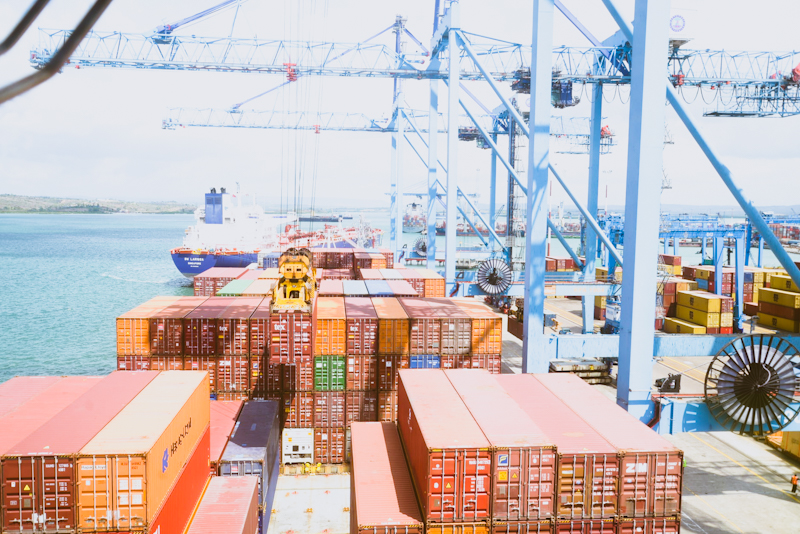
The Kenyan government and traders in the consolidated cargo sector signed a communique on September 2, 2026, setting the customs valuation benchmark at Sh2 million, a figure below the Sh2.5 million level that applied before the Kenya Revenue Authority (KRA) raised it to Sh3.2 million on August 21.
President William Ruto had already ordered KRA to reverse the Sh3.2 million benchmark and restore the Sh2.5 million cap on Wednesday, five days after the increase triggered a traders’ boycott and a tear gas response from police in Nairobi’s central business district.
The communique, issued by the Ministry of Investments, Trade and Industry and the MSME Alliance of Kenya, goes further than that public statement, setting the benchmark a further half million shillings lower.
“Accordingly, KRA will reduce the applicable benchmark for general consolidated cargo from Ksh 2.5 million to Ksh 2 million,” the document states. Rates for ready made garments, footwear and fabrics remain unchanged, as do the air cargo rates negotiated separately.

Charity. Apr 8, 2020
What the Communique Adds
The nine point communique, titled “Communique on Consolidated Cargo and Support for Kenyan Traders,” lays out commitments not covered in earlier reporting on the dispute.
KRA will publish an exclusion list of goods that will not qualify for the consolidated cargo framework, based on value, tax rates and whether goods are excisable. This is the mechanism behind the high value goods carve out Ruto ordered KRA to draw up at State House on Wednesday.
Cargo consolidators face fresh vetting. “All cargo consolidators will be vetted and registered afresh by KRA and will be required to submit a comprehensive list of the individual traders and importers whose goods they consolidate,” the communique states, setting October 15, 2026 as the deadline for registration, vetting and trader disclosures.
The government will also remove the Advance Cargo Declaration requirement “to streamline cargo clearance and facilitate legitimate trade,” and will set up de-consolidation centres in both Nairobi and Mombasa to separate consolidated cargo for individual traders.
On freight costs, Kenya Railways will cut the charge for moving cargo from the Inland Container Depot to the Bomaline De-consolidation Centre from Sh58,000 to Sh10,000, with immediate effect, a steeper cut than the Sh10,000 figure Ruto referenced publicly without disclosing the starting point.

Oversight and Compliance
A multi stakeholder committee chaired by the Cabinet Secretary for Investments, Trade and Industry will oversee implementation. It brings together KRA, government agencies, traders and consolidators, and reports quarterly to the President.
The communique frames compliance as a two way commitment. “Traders and consolidators will comply with customs and tax requirements and operate within the agreed framework,” it states, while the government commits to “simplifying trade procedures, lowering unnecessary costs, improving infrastructure and creating an enabling environment for legitimate businesses to grow.”
The government also commits to expanding legislation reserving retail trade and specified lower level jobs for Kenyans, while continuing to encourage foreign investment that brings capital, technology and quality jobs, and to protecting traders from “unnecessary harassment, intimidation and disruption” as county governments enforce trade rules.
The Constitutional Question
The dispute traces back to KRA’s move on August 21 to raise the benchmark to Sh3.2 million, a level the authority defended as a risk management reference rather than a flat tax, citing under-declaration of high value goods. Traders shut shops in Gikomba, Kamukunji and Nyamakima on August 28 and marched on KRA headquarters; police dispersed the protest with tear gas.
How that benchmark gets set matters constitutionally. Article 210(1) of the Constitution of Kenya states that no tax or licensing fee may be imposed, waived or varied except as provided by legislation. The High Court applied that provision in 2023, ruling that a Cabinet Secretary’s gazette notice waiving income tax for Japanese companies was unconstitutional because tax variation requires an Act of Parliament, not an executive directive. Article 209 separately gives the national government power to impose income tax, VAT, excise duty and customs duties, exercised through KRA under statute.
The communique does not cite the legislative instrument under which the new Sh2 million benchmark and the exclusion list will take legal effect, leaving open the question of whether the change will require gazettement or an amendment to existing customs regulations before it can be enforced. Khusoko has reported that markets are now watching for the formal notice implementing the cap and the published high value goods list.
What Happens Next
The committee is due to report quarterly to the President on implementation. The first test will be whether KRA meets the October 15 deadline for vetting and registering consolidators, and whether the exclusion list, once published, narrows the benchmark’s benefit to the same extent the high value goods carve out did in Wednesday’s announcement.
