



The 2026 FIFA World Cup ended on 19 July with Spain beating Argentina 1-0 in New Jersey, Rodri taking the Golden Ball, and SuperSport closing out the most ambitious broadcast rollout in its history.
Here’s a look at how the coverage played out, and what Kenyan fans were most engaged with along the way.
The Coverage Bet
SuperSport carried all 104 matches of the expanded 48-team tournament, and for the first time made the entire slate available across every DStv tier — from the R99-a-month Access package up to Premium — rather than reserving marquee games for higher-priced bouquets. That marked a shift from the model MultiChoice had long relied on: using exclusive sports rights to push subscribers into pricier packages.
Canal+ Africa director of sports content Rendani Ramovha framed the approach as moving away from a South Africa-centric broadcast toward a hyper-localised experience across 26 sub-Saharan markets, with seven African-language commentary options and match highlights delivered digitally within 10 minutes of the final whistle. The company chose not to broadcast in 4K, directing that investment into localisation and regional production crews instead.
That pricing strategy played out visibly on the ground in Kenya. Billboards across Nairobi carried the “Sleep Can Wait” campaign, pitching all 104 matches on DStv Access for as little as KSh 1,450 — a deliberate push to make the World Cup’s marquee, late-night kickoffs feel affordable even on the entry-level tier.
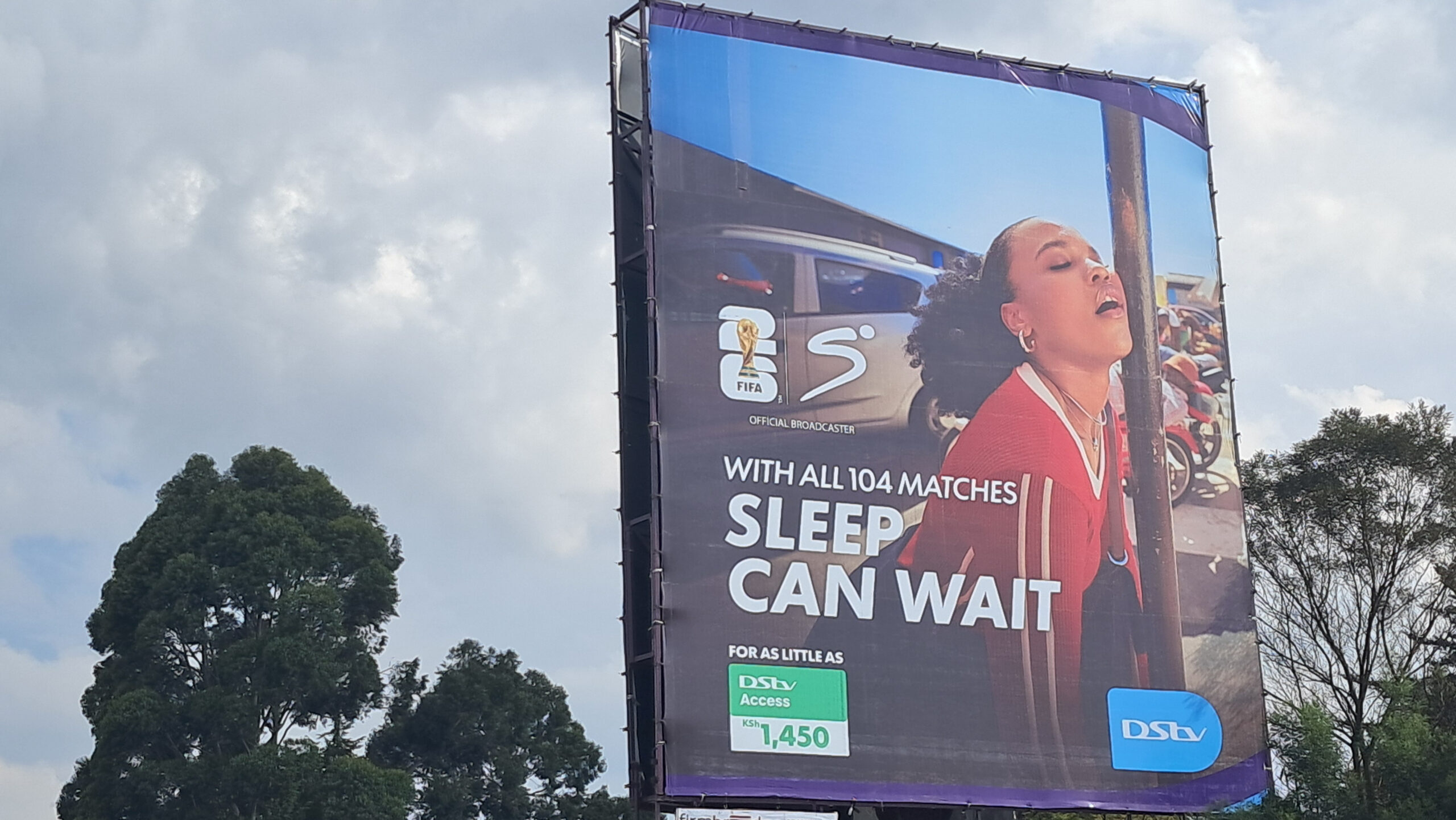
A DStv billboard in Nairobi promotes its FIFA World Cup 2026 coverage with the tagline “Sleep Can Wait,” offering all 104 matches on DStv Access from KSh 1,450.
The Sports Rights Pipeline Beyond Football
Independent of the World Cup, SuperSport has been locking down its sports rights base for the next cycle:
- Broadcast rights secured for both the 2027 Men’s and 2029 Women’s Rugby World Cups across Sub-Saharan Africa
- A multi-year renewal keeping SuperSport the exclusive Sub-Saharan broadcaster of the United Rugby Championship
- An extended partnership to continue carrying South Africa’s Premier Soccer League
- Full live coverage of the 2025/26 AFCON tournament in Morocco, which ran into January 2026 ahead of the World Cup
Fan Interest: What Kenyans Were Searching For
Google Search data from the tournament shows just how deeply Kenyan fans engaged with the World Cup, well beyond the scoreline. Argentina’s dramatic late winner against Egypt set an all-time global record for Google Search queries per second — a sign of how much attention this tournament drew worldwide.
Google’s tournament data (11 June – 13 July 2026) shows the five most-searched matches in Kenya were France vs Morocco, Brazil vs Norway, Brazil vs Japan, Norway vs England, and Portugal vs Spain — a spread that leans toward attacking, high-profile fixtures rather than strictly the African contingent’s own games. Searches for public World Cup viewings surged 700% over the tournament’s final two weeks, pointing to a strong pull toward fan parks, restaurants, and other communal viewing spots across the country.
Kenyan curiosity extended to football culture and technology as much as results:
- Searches for “La Ola” (the Mexican wave) ran 130% higher than during the 2022 tournament
- Interest in the official match ball rose 290% during the opening week, and was up 10% overall versus 2022, with fans asking practical questions about what the ball is made of, how it’s charged, and what it costs
- Searches asking “Who is the GOAT of football?” climbed 200% since the tournament began, with Lionel Messi searched only about 10% more than Cristiano Ronaldo in Kenya — evidence the Messi–Ronaldo debate hasn’t lost any heat
On player interest, Mohamed Salah led the most-searched African footballers in Kenya, followed by Cape Verde’s Vozinha, South Africa’s Jayden Adams, and Morocco’s Achraf Hakimi and Ismael Saibari. Among global stars, Messi, Ronaldo, Kylian Mbappé, Lamine Yamal, Rodri, and Ferran Torres all ranked among Kenya’s most-searched footballers — a mix that shows established icons and the sport’s newer generation drawing comparable attention.
The Bottom Line
SuperSport delivered on the coverage promise — every match, every package tier, faster highlights, more local languages than any previous tournament — and Google’s search data confirms Kenyan fans were watching, debating, and showing up in numbers that go well beyond simply checking scores. Between the rugby, PSL, and AFCON rights already locked in for the next cycle, and a fanbase this engaged with football’s biggest stage, SuperSport heads into the post-World Cup period with a clear runway of major sporting content ahead.
