


Kenya’s supermarket sector is on the move, and two chains are pulling in opposite directions on scale while chasing the same prize: shoppers closer to home.
Uchumi Supermarkets has opened a new branch in Kitengela, growing its network to three outlets, while Naivas has pushed past 110 stores nationwide with a fresh opening in Ruiru. Both moves point to a retail market pivoting away from large regional malls toward neighbourhood shopping.
Uchumi Rebuilds With A Third Branch
Uchumi opened its Kitengela branch, at Shell Yukos, earlier this month, joining its Langata outlet on Carnivore Way and its Unicity branch near Kenyatta University. The three stores mark a modest but symbolic rebuild for a chain once considered a pioneer of Kenyan retail before it collapsed into years of financial distress.
Investors appear to be taking notice. Uchumi Supermarket Ltd now ranks as the 56th most valuable stock on the Nairobi Securities Exchange, with a market capitalisation of KSh 609 million, representing roughly 0.016 percent of the exchange’s total equity market. The stock closed Monday, July 20, 2026, at KSh 1.67 per share, up 2.5 percent from its previous close of KSh 1.63. That single day gain sits inside a much bigger run: Uchumi started the year at KSh 0.94 and has since climbed 77.7 percent, making it the third best performing stock on the NSE year to date.
Naivas Bets On The Suburbs
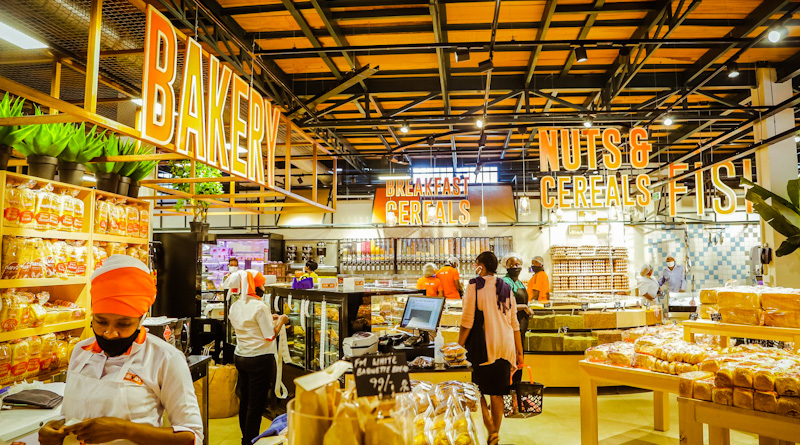
Across town, Naivas has opened a new outlet at Newgate Square in Kamakis, Ruiru, extending its network to more than 110 stores across the country. The opening deepens the retailer’s push into Nairobi’s eastern corridor, where fast paced residential development has created steady demand for shopping close to home rather than a drive to a regional mall.
Naivas Chief Executive Officer Andreas von Paleske said the timing carries extra weight, landing in the company’s 36th year of operation in Kenya. He described Kamakis as one of the country’s fastest growing residential and commercial corridors and said the retailer wants to be part of daily life there. As Kenya grows, he added, Naivas intends to keep investing in communities so more families have a store nearby.
The country’s largest retailer is increasingly favouring these fast growing residential suburbs over the traditional destination malls that once anchored its expansion plans.
Why Neighbourhood Retail Is Winning
The shift underway at Naivas reflects a broader change across Kenya’s retail property market. Knight Frank’s latest Africa property report finds that demand is tilting toward convenience led formats, including neighbourhood malls, fuel station retail, and mixed use developments, as shoppers seek shorter trips and retailers chase population growth into the suburbs.
Prime regional malls are nearing saturation, according to the property consultancy, while neighbourhood centres keep pulling in new investment. Footfall at retail centres climbed roughly 15 percent in 2025, though shoppers spent less per visit as household budgets stayed tight. Knight Frank also points to a retail pipeline increasingly concentrated in community shopping centres built for middle income neighbourhoods, with retailers recalibrating their expansion plans around that spending pattern.
Kamakis fits the pattern precisely. Housing development along the Eastern Bypass and its proximity to the Thika Superhighway have turned it into one of the fastest growing residential corridors on Nairobi’s outskirts, drawing mixed use developers who combine retail, office, and residential space in one location. For supermarket chains hunting catchment areas with rising populations, that combination is hard to pass up.
The result is an expansion race among Kenya’s leading chains for space in these emerging residential nodes, driven by shoppers who increasingly want a supermarket, pharmacy, restaurant, and other daily essentials within a single, short trip.

The Numbers Behind Naivas’ Growth
Naivas backed up its expansion with strong financial results. The retailer posted a 43.4 percent jump in net profit to KSh 2.45 billion in its 2025 financial year, on revenue that grew 21.6 percent to KSh 114.45 billion.
That performance came despite a difficult macroeconomic backdrop in Kenya, marked by inflation and fiscal pressure that Naivas’ parent company, IBL Ltd, flags explicitly in its own risk assessment. The retailer pushed through those headwinds by expanding its footprint to 108 stores by year end, deepening its presence in both urban centres and mid sized towns, and it is now rolling out a new enterprise resource planning system across its network to sharpen operations. The Kamakis store, opened after that reporting period closed, is part of the continued expansion that has since pushed the count past 110.
East Africa now accounts for 37 percent of IBL’s total group revenue, with Naivas serving as its main engine. The group’s retail cluster saw operating profit soar 79 percent over the period.
IBL Group Chief Executive Officer Arnaud Lagesse said the performance of the company’s international operations, particularly Naivas, shows that its Beyond Borders strategy is delivering results.
| Metric | Naivas FY2025 | Change |
|---|---|---|
| Net profit | KSh 2.45 billion | Up 43.4% |
| Revenue | KSh 114.45 billion | Up 21.6% |
| Store count | 108 (at year end) | Now 110+ after Kamakis |
| IBL retail cluster operating profit | — | Up 79% |
| East Africa share of IBL group revenue | 37% | Naivas primary driver |
| Metric | Uchumi (as of July 20, 2026) |
|---|---|
| NSE ranking by market value | 56th |
| Market capitalisation | KSh 609 million |
| Share price | KSh 1.67 |
| Daily gain | 2.5% |
| Year to date gain | 77.7% (3rd best on NSE) |
| Branch count | 3 (Langata, Unicity, Kitengela) |
Two Different Stories, One Direction
Uchumi and Naivas sit at opposite ends of Kenya’s retail spectrum, one rebuilding from near collapse, the other cementing its position as the country’s largest chain. Yet both are placing the same bet: that the next phase of growth lies not in sprawling malls but in the suburbs where Kenyans already live. How that bet plays out will shape where Kenyans do their shopping for years to come.
