


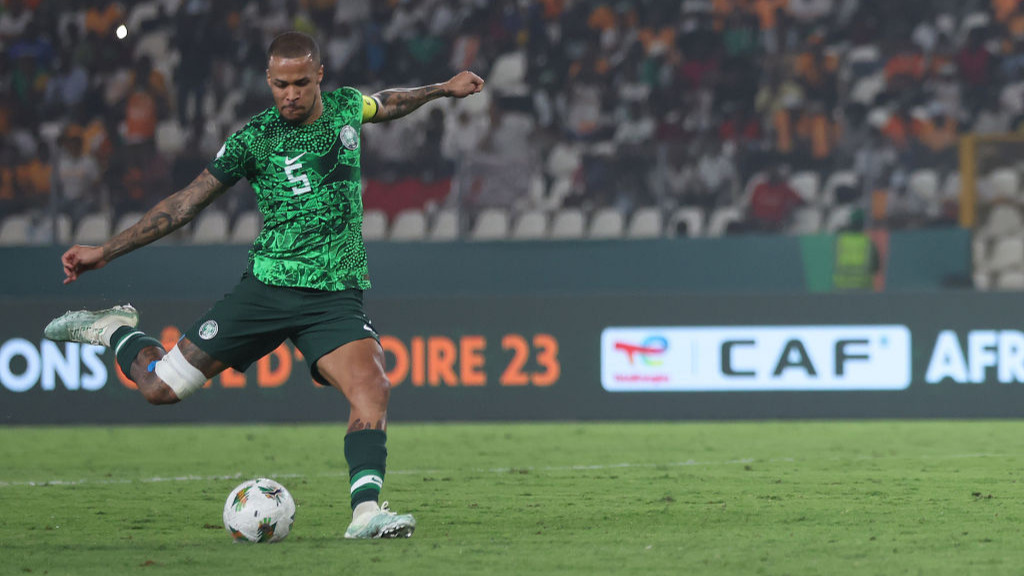
William Troost-Ekong cannot shake one question as he watches this World Cup unfold. What if Nigeria had made it?
The former Super Eagles captain has spent the tournament split between two emotions: pride in what African football continues to prove on the world stage, and frustration that his own country sits outside looking in.
“I think the motivation has always been there,” Troost-Ekong says. He believes Nigeria’s squad, many of whom gained experience at the 2018 World Cup, would have matched the level shown by the continent’s other representatives had they qualified.
A Painful Lesson, Not Bitterness
Troost-Ekong refuses to frame Nigeria’s absence as a grievance. Instead, he treats it as a turning point the country needs.
“It would have been wonderful to see them compete, but I also think this serves as an important lesson,” he says. He wants Nigerian football to examine its preparation honestly and fix what falls short before the next cycle begins. The players, he insists, were never short on effort or commitment. What needs to change sits elsewhere, in the structures and decisions around them.
Morocco Carries the Continent’s Hopes Forward
While Nigeria’s absence stings, Troost-Ekong takes real encouragement from what Morocco built at the last World Cup and what several African sides have shown at this one.
Asked whether this tournament marks a breakthrough moment for African football, his answer comes without hesitation. “I think so,” he says, pointing to Morocco’s run in Qatar as proof that the old barriers between continents no longer hold. He now hopes an African team can push past that achievement and reach a final for the first time.
Morocco face France in the quarterfinal on Thursday, July 9, at Gillette Stadium in Boston, a rematch of their 2022 semifinal meeting, which France won 2-0. Troost-Ekong names Morocco as his first pick to carry that flag forward, though he credits Senegal and Ivory Coast for pushing deep into the tournament before narrow exits.
Fans across the continent can watch the match live on SuperSport, which holds broadcast rights for the FIFA World Cup across sub Saharan Africa and is carrying all 104 matches of the expanded tournament across television, streaming, and digital platforms.
Life Beyond the Touchline
Away from matchdays, Troost-Ekong has used his time as a SuperSport analyst to see South Africa from a completely different angle.
“I have really enjoyed it,” he says of working alongside current and former players on the broadcast team. Visiting without the restrictions of a playing schedule, colder weather aside, has let him explore the country properly for the first time in years.
Food and music have featured heavily in that experience. “I have enjoyed some great food, listened to good music in all the right places, and had one or two drinks since it is my off season,” he says, aware that pre season training will soon pull his focus back to football.
For now, Troost-Ekong remains an analyst rather than a player, watching Nigeria’s absence weigh against Africa’s continued rise at this World Cup. If Morocco can beat France on Thursday, they keep alive not just their own ambitions, but a continent’s push toward its best World Cup finish yet.
