


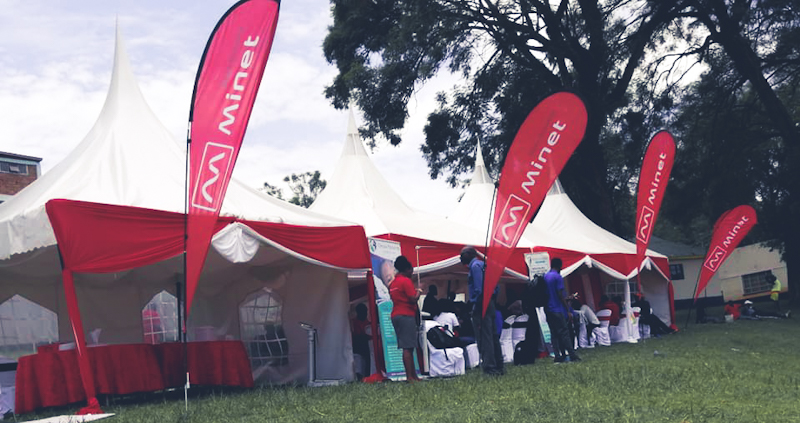
Private equity firm Adenia Partners has taken majority control of Minet Group, acquiring the insurance brokerage and risk advisory firm from Capitalworks in a deal that closed on 30 June 2026 after clearing regulatory approval across every market the business operates in.
Financial terms were not disclosed, but the transaction ranks among the more consequential private equity moves in African financial services this year, handing Adenia control of one of the continent’s largest independent insurance distribution platforms.
What Minet Actually Does
Minet operates across nine African countries, Botswana, Kenya, Lesotho, Malawi, Mozambique, Namibia, Tanzania, Uganda and Zambia, offering insurance brokerage, risk advisory and employee benefits services to corporates, small businesses and institutions. Kenya anchors the group. Nairobi’s position as East Africa’s financial hub makes it the natural centre of gravity for a business built on regulatory relationships and long standing corporate accounts across nine separate jurisdictions, a footprint that would take a new entrant years to replicate.
Minet’s roots trace back further than most people realise. The business began life inside Aon, the global insurance broker, before Capitalworks carved it out in 2017. That carve-out made Minet the largest correspondent in Aon’s African network, a relationship that has underpinned the firm’s ability to place large, cross-border risks for multinational clients ever since. The Johannesburg based announcement did not spell out how that relationship holds up under new ownership, a detail worth watching as the transition plays out.
Why Capitalworks Is Selling Now
Capitalworks held Minet for close to nine years, nearly double the four to six year holding period typical of a private equity investment. Garth Willis, the firm’s managing partner, framed the sale as the natural conclusion of that work rather than a forced exit. “Capitalworks has been proud to partner with the management team in building the Minet business into what it is today,” he said, describing the deal as proof that active ownership alongside experienced management can unlock growth and prepare a business for new shareholders.
The extended hold period leaves an open question that the undisclosed price cannot answer. Without visibility into valuation, it is difficult to judge whether Capitalworks secured a strong return on nine years of work or simply reached the natural end of a fund’s life and needed to exit. Either way, the buyer this time is another financial sponsor rather than a global insurance group, a sign that private capital still sees room to grow in African insurance distribution even after nearly a decade of prior investment.
Where Adenia Sees the Opportunity
For Adenia, the deal is a bet on distribution rather than underwriting risk, and it fits a thesis the firm has been building for years. Martha Osier, a partner at Adenia, called it a generational opportunity. “There’s a generational opportunity to build scalable, technology-driven insurance models that meet the needs of young and urbanising populations in many parts of Africa, which Minet is well positioned to capitalise on,” she said, adding that Adenia intends to back Minet’s management team through its next growth phase while introducing sustainability linked targets.
The acquisition runs through Adenia Capital V, the firm’s fifth and largest fund, which closed in 2024 at its $470 million hard cap after attracting more capital than it targeted. Minet marks the fourth investment from that vehicle, following prior deals in solar finance, parcel delivery and industrial gas, according to deal tracker DealMakers Africa. Founded in 2002, Adenia has now raised more than $1 billion across six funds and built a track record of over 35 platform investments and more than 20 completed exits, giving it real experience scaling African businesses toward eventual sale.
The bet rests on a straightforward growth case: insurance penetration across Adenia’s target markets remains low, and demand is likely to rise as corporate risk management matures, small businesses formalise, employee benefits programmes spread and digital distribution channels open up new customer segments that traditional brokers have struggled to reach.
Regulatory Clearance Across Nine Markets
Closing a deal spanning nine separate regulatory regimes is not trivial, and it explains part of why the transaction took time to finalise. In Kenya, the Competition Authority reviewed and cleared the local leg of the transaction, one approval among several the two firms needed before the deal could close on 30 June. Adenia worked with DLA Piper Africa’s Kenyan affiliate IKM Advocates and EY Parthenon on legal, financial and tax matters, while Capitalworks retained Bowmans, Rothschild, Webber Wentzel and PricewaterhouseCoopers across the same workstreams, a roster that reflects the cross-border complexity of unwinding a nine-country holding structure.
What This Signals for African Insurance
The Minet deal lands alongside a broader pattern of private capital moving into African financial services infrastructure, businesses that sit behind the scenes of everyday commerce rather than consumer facing brands. Investors are increasingly betting that urbanisation and a growing middle class will drive sustained demand for financial protection products across the continent, and insurance brokerage, unglamorous as it sounds, sits right at that intersection of corporate risk and expanding formal economies.
For Adenia, the real test now begins. Buying a scaled platform is one thing; modernising it, deepening its digital distribution and expanding its footprint across nine distinct regulatory environments is another challenge entirely. How Minet performs under its new owner will say a good deal about whether Africa’s insurance distribution sector is entering a genuine growth phase, or whether this is simply one more private equity firm passing a mature asset to the next set of hands.
