


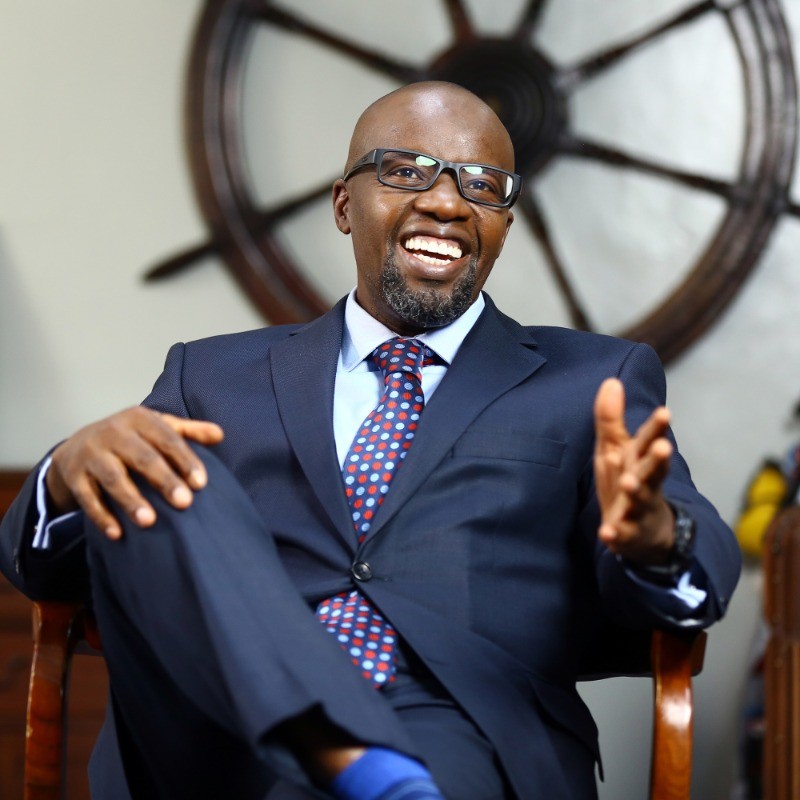
The Nairobi Securities Exchange has a new chairman. The bourse’s board confirmed on 2 July 2026 that Tom Mulwa will take over the top governance seat effective 13 July, succeeding Kiprono Kittony, whose six year tenure ends the day before.
The transition follows what the board called a routine process: the conclusion of Kittony’s term and a scheduled review of board composition, framed around the exchange’s commitment to strong governance, independence and long term oversight. Directors approved the appointment on 30 June, and the notice went out to shareholders and the public two days later.
Who Is Tom Mulwa
Mulwa brings more than three decades inside a single company to the role. He joined Liaison Group in 1991 and became its chief executive in 1999, steering the firm from a modest operation into a significant player in insurance, risk and financial services across Africa. He holds a Bachelor of Commerce from the University of Nairobi and a postgraduate MBA from the University of Leicester, and carries a Fellowship from the Global Risk Management Institute.
His public sector credentials run in parallel. President William Ruto appointed him to the National Investment Council in 2022, and he currently chairs the Kenya National REITs Association while serving as a council member of the Association of Pension Trustees and Administrators of Kenya.
Mulwa’s path to the chairmanship started less than a year ago. He joined the NSE board as an Independent Non-Executive Director in September 2025, filling a seat that had become a flashpoint the year before. In mid 2025, the Kenya Association of Stockbrokers and Investment Banks pushed publicly for Mulwa’s appointment to an independent director vacancy, arguing that trading participants needed stronger board representation amid a broader governance dispute at the exchange. His elevation to chairman just ten months after joining the board marks an unusually swift rise, one that reflects both his professional standing and the influence of the stockbroker lobby that championed him.

What Kittony Leaves Behind
Kittony’s exit closes out one of the more consequential stretches in the NSE’s recent history. He joined the board as a non executive director in May 2018 and took the chairmanship in July 2020, succeeding Samuel Kimani. Over six years, he steered the exchange through a stretch the board itself once measured in a different currency: the length of time since the last meaningful listing.
That drought broke in dramatic fashion. Kenya Pipeline Company listed on the NSE in March 2026, selling a 65% government stake and raising KES 106.3 billion in the country’s biggest IPO since Safaricom debuted in 2008. The offer was heavily oversubscribed despite early doubts about pricing. Family Bank followed in June, converting an over the counter listing history dating back to 2006 into a formal NSE debut, with shares jumping 44% on their first day of trading. Kittony called the listing a blueprint for Kenyan enterprises, saying it showed what becomes possible when vision meets discipline, proper governance and long term thinking.
Beyond the IPOs, Kittony’s board backed the rollout of single share trading and a fintech investment platform, the Ziidi Trader, aimed at pulling more retail investors into the market, alongside the launch of the exchange’s 2025 to 2029 strategic plan. The results showed up in the rankings: the NSE finished 2024 as Africa’s best performing exchange by dollar returns and followed that with the continent’s second best performance in 2025.
Kittony’s departure comes with a twist that briefly generated its own headlines. In March 2026, media reports suggested he had already stepped down from the NSE after Kenya Airways named him its new chairman. The exchange moved quickly to correct the record, stating that Kittony remained fully in his NSE role and would complete his term as scheduled in July. That is exactly what has now happened, with Kittony handing over a bourse in considerably stronger shape than the one he inherited, before turning his attention fully to steering Kenya Airways through its own leadership transition.

What Comes Next For The Exchange
The board’s language around Mulwa’s appointment leans heavily on continuity rather than change. It described him as inheriting a strong foundation, with a mandate to deepen Kenya’s capital markets, broaden investor participation and build long term value for shareholders and the wider economy, language that closely tracks the goals already laid out in the NSE’s 2025 to 2029 strategy.
That strategy centres on revitalising trading activity, growing the pipeline of equity and fixed income listings, deepening market liquidity and expanding the exchange’s product range. With the IPO drought broken and retail investor tools like Ziidi already live, Mulwa’s task looks less like rescuing a struggling institution and more like sustaining momentum a predecessor spent six years building. Whether he can keep that momentum going, particularly as the government’s privatisation agenda continues to feed new listings onto the exchange, will shape how Kenya’s capital markets perform well beyond his first year in the chair.
