



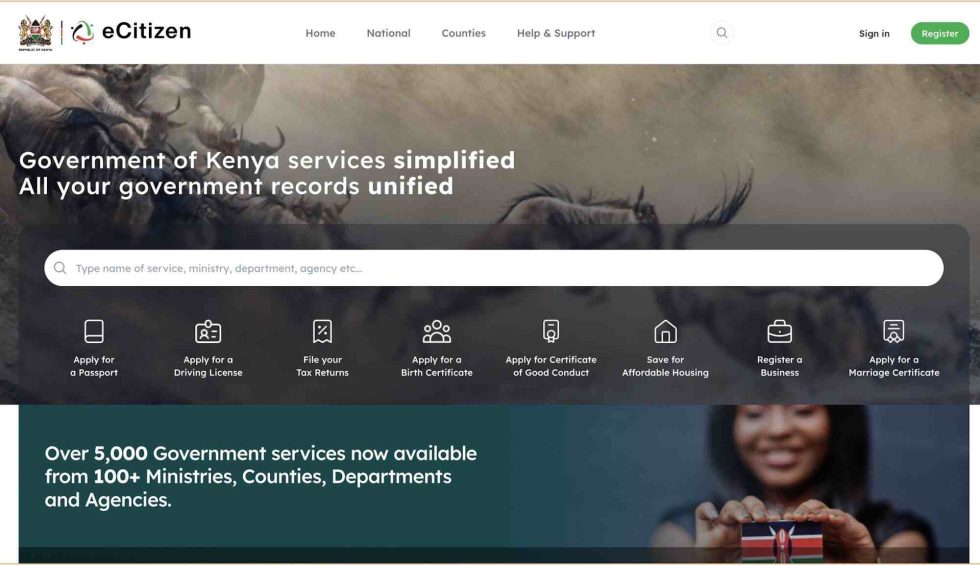
The National Treasury has replaced the KSh 50 flat fee charged on eCitizen transactions with a tiered structure that scales with the cost of each service, reaching up to KSh 100 for high-value government transactions. The change, proposed by Treasury Cabinet Secretary John Mbadi under the Public Finance Management (e-Citizen System Management) Regulations 2026, takes effect across all national and county government services on the platform.
“There shall be a convenience fee charged for services offered by national or county government entities onboarded on the system,” Mbadi stated.
The flat KSh 50 fee it replaces had been in place since the platform launched. The High Court ruled it unlawful in April 2025. The new structure ties the convenience fee to the transaction value rather than applying a single rate regardless of service cost.
The New Fee Tiers at a Glance
| Service cost | Convenience fee | Example services |
|---|---|---|
| Above KSh 100,000 | KSh 100 | Stamp duty, land rent, title transfers, lease extensions, premium payments for government land |
| KSh 10,000 to KSh 99,999 | KSh 70 | Company registration, consulting engineer registration, work permits, court filing fees for major civil and commercial disputes, land transfer charges, county business permits for medium and large businesses, construction approvals, some visa categories |
| KSh 500 to KSh 9,999 | KSh 50 | Passport applications and renewals, smart driving licence applications, Certificate of Good Conduct, business name registration, marriage certificates, land searches, late birth certificate applications, duplicate driving licences, driving test bookings, visa applications, various NTSA services |
| KSh 100 to KSh 499 | KSh 5 | Duplicate birth certificates, temporary permits, small county permits, civil registration document searches, motor vehicle searches, basic NTSA and Judiciary document requests |
| Below KSh 99 | Free | eCitizen account creation, login, profile access, government service searches, information lookups, government waivers including free ID replacement applications through Huduma Kenya |
Why the Fee Exists and Who Is Questioning It
Treasury has linked the convenience fee directly to the cost of running the platform. Without it, the ministry warned, maintaining the eCitizen system and its 30,000 services faces financial risk.
The Auditor General, Nancy Gathungu, has raised scrutiny over the fee increase. The concern sits alongside the legal history of the previous flat fee, which a court struck down as unlawful, giving the new tiered structure a legal question it will need to survive if challenged.
For most Kenyans, the practical impact concentrates in the KSh 50 tier. Passport renewals, driving licences, Certificates of Good Conduct and business name registrations all fall here. These are the services that ordinary citizens access most often, and the fee on each rises from the previous KSh 50 flat rate only where the service itself costs less than KSh 500.
For high-value transactions, stamp duty, title transfers and land rent payments, the KSh 100 fee represents a marginal addition to a transaction already running into hundreds of thousands of shillings.
The regulations are open for public comment before they take effect. Kenyans can submit feedback through the Kenya Gazette process or directly to the National Treasury.
