


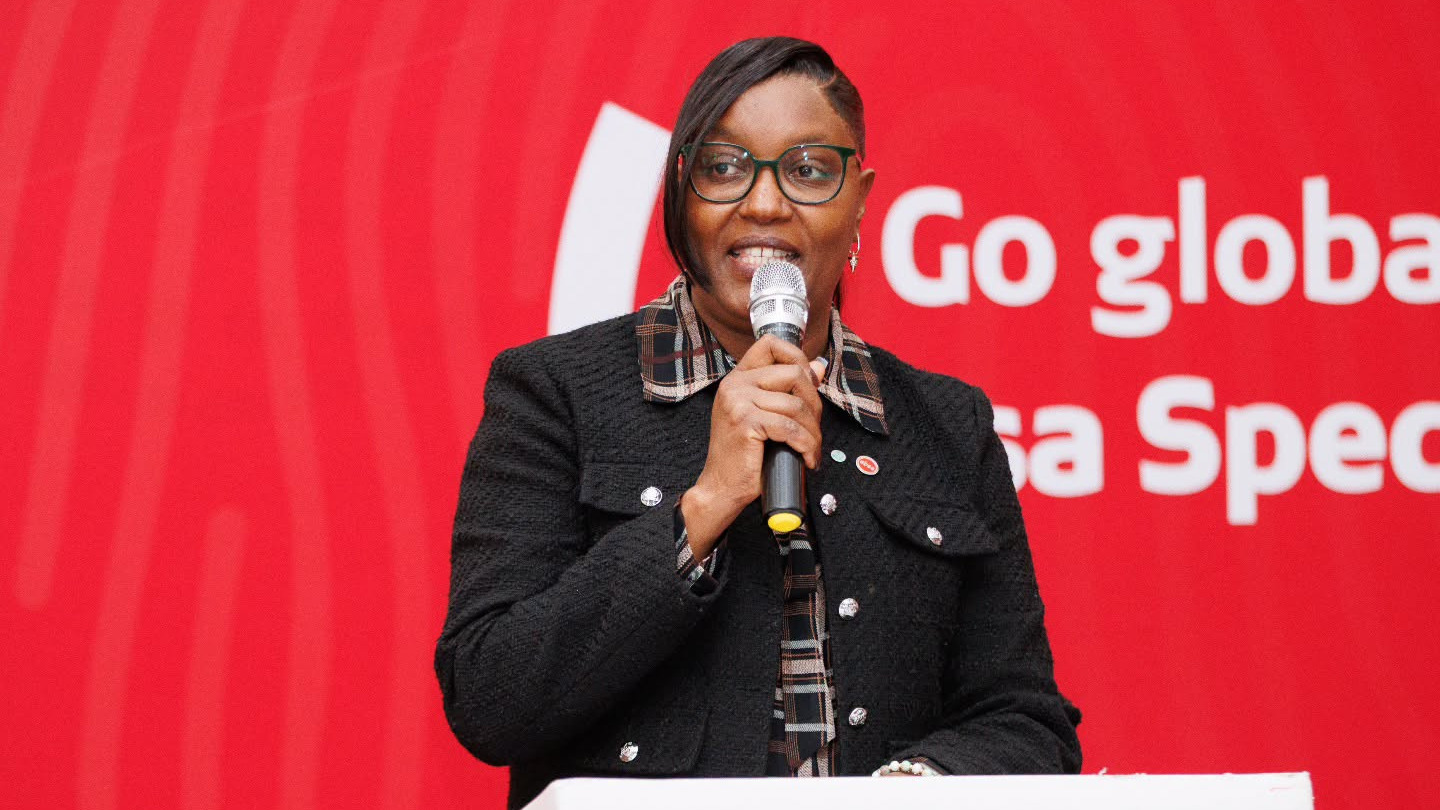
Absa Asset Management Limited will score each investor’s risk appetite on a scale of one to five before it sells the Absa Global Multi Asset Special Fund.
Chief executive Elizabeth Irungu said this in an interview on Business Daily’s Business Redefined programme. Investors who score low will be told the fund does not fit them and offered alternatives. They can proceed only after they sign that they understand the risk.
The fund launched on November 19, 2026, with KSh 230 million in seed capital from Absa. The Capital Markets Authority approved it in August as shilling and dollar sub-funds under the Absa Unit Trust Scheme.
Risk score decides who proceeds
Irungu said some investors moving into special funds are driven by returns and may lack the ability to take losses. The risk profiler is the control. An investor who scores one and asks for a special fund hears that the fund does not match the score, Irungu said, and is shown other products. The investor can still buy after signing off.
The fund is open to customers of Absa Bank Kenya and to people who bank elsewhere. Investors can ask questions at Absa branches, which Irungu said most special fund managers do not offer.
Minimum stays at KSh 250,000
The host said readers had written to call the minimum steep. Irungu said “we are not going lower than 250,000.” She argued that risk capacity depends on wealth.
An investor with KSh 250,000 who can lock it for six months usually has a buffer elsewhere, she said. Smaller investors should build capital first because the money may be their emergency savings. She said she does not expect any manager to lower special fund minimums given the risks they take.
The minimum is KSh 250,000 or USD 2,500, with a six month lock in. Irungu said the lock in protects portfolio construction from investors who enter and exit within weeks.
Portfolio mix and ETF structure
Irungu gave weights that the launch coverage did not report.
| Allocation | Share | Instruments |
|---|---|---|
| Global equities | At least 60% | Exchange traded funds across the United States, Europe and emerging markets |
| Precious metals | About 10% | Not specified |
| Fixed income | About 20% | Eurobonds and local bonds |
| Liquid assets | Balance, about 10% at the minimum equity weight (Khusoko calculation) | Held for redemptions and opportunities |
Absa will buy equities through exchange traded funds and will not pick stocks directly. Irungu said the manager lacks analysts in the Americas to research individual stocks and that ETFs reduce concentration risk.
She named BlackRock as a manager in the portfolio allocation. She cited a semiconductor ETF holding more than 100 producers as an example. Absa will analyse fixed income itself, because it can assess issuers’ credit quality.
The benchmark is a composite. Irungu said it combines the MSCI World index at 60% with a fixed income index, and it excludes the NSE 20 and the S&P 500 as single measures. She said special funds have no standard benchmark because the regulator allows each fund to set its own objective.
Shilling fund invests offshore
Irungu said the shilling fund does not buy shilling assets. It buys the same global securities as the dollar fund and reports returns in shillings, so investors do not wait for conversions. She said currency risk remains for dollar investors if the shilling strengthens.
She pointed to 2024, when the rate moved from about 165 to the 130s. She said Kenya’s deficits make a strong shilling unlikely over the long term, though she described currency gains as secondary to returns from the underlying markets.
No leverage, daily pricing and committee oversight
Absa will not borrow against the fund, Irungu said, because debt magnifies losses as well as returns and the fund is open ended. She listed these controls:
- The fund publishes a daily net asset value.
- Fact sheets disclose allocations and performance.
- An investment committee approves portfolio construction and rebalancing.
- Committee decisions rest on research.
On ESG, Absa has set no fixed percentage for ESG funds. The investment committee will review the ESG principles of each fund it buys. Irungu said the manager avoids “destructive sectors” and did not name them. She expects stricter sustainability guidelines over time.
Return expectation
Irungu said a ten year horizon should return an average in double digits if the past repeats. She cited gains above 300% over ten years across indices such as the S&P 500 and Nasdaq 100. These are her figures and are not guarantees. She advised against timing the market.
Market context
CMA data showed special funds held KSh 252.8 billion in the second quarter of 2026. That is 26.6% of the KSh 948.7 billion collective investment schemes market, and 24% above March’s KSh 203.5 billion.
The programme host said the collective investment schemes market has since passed KSh 1 trillion. NCBA Bank Kenya is trustee and Standard Chartered Bank Kenya is custodian.
Why Investing is not to Maximize but to Maximize Risk-adjusted Returns
