



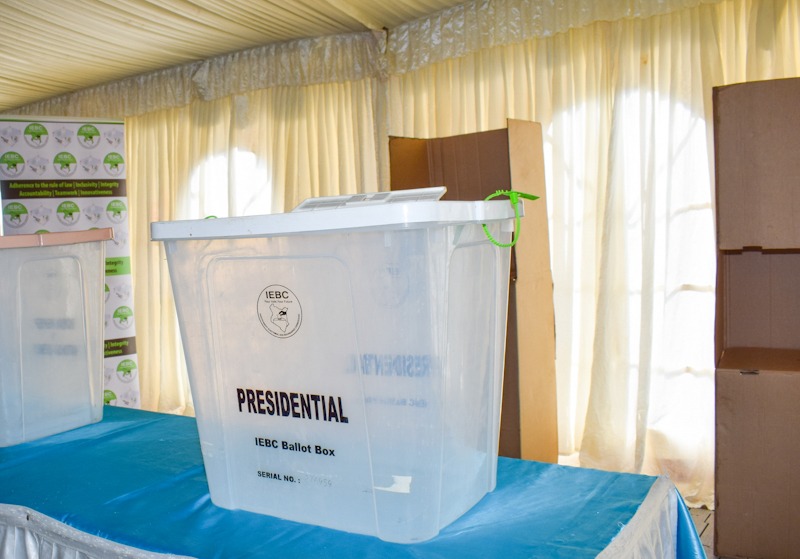
The Independent Electoral and Boundaries Commission has locked in the roadmap for Kenya’s next General Election, confirming that voters will cast ballots on Tuesday, August 10, 2027, under the same 290 constituencies and 1,450 wards used since 2013.
The commission published the timetable in a special issue of the Kenya Gazette on Thursday, August 20, carrying seven notices signed by IEBC Chairperson Erastus Edung Ethekon. Together, they cover elections for president, senators, National Assembly members, county women representatives, governors and members of county assemblies.
By retaining the existing boundaries, the IEBC has effectively carried forward the electoral map used in the 2013, 2017 and 2022 elections, sidestepping a full delimitation exercise that the law technically requires every eight to twelve years.
Why the boundaries stayed the same
Article 89 of the Constitution obliges the commission to review constituency and ward boundaries at set intervals, and to finish that review at least twelve months before a General Election. For the 2027 polls, that deadline fell on August 10, 2026, a date the IEBC has already missed.
Chairperson Ethekon has said a full review needs at least two years, time the commission simply did not have once it factored in court cases over disputed census data and the rest of its election preparations. The Supreme Court weighed in through an advisory opinion delivered in September 2025, which acknowledged the constraints while stressing that boundary delimitation still matters for fair representation. For now, the commission has opted to defer major boundary changes until after the 2027 vote.
The deadlines political parties cannot miss
Parties intending to field candidates face a dense calendar over the next ten months. As Khusoko reported when the commission first unveiled its Election Operations Plan, the roadmap gives every stakeholder, from party officials to individual aspirants, a fixed sequence of dates to work against.
| Milestone | Deadline |
|---|---|
| Parties submit names of authorised persons | October 15, 2026 |
| Nomination rules certified by Registrar of Political Parties | October 30, 2026 |
| Certified nomination rules submitted to IEBC | November 6, 2026 |
| Party membership lists certified by Registrar | March 23, 2027 |
| Certified membership lists submitted to IEBC | April 12, 2027 |
| Primary aspirants, dates and venues published | April 8, 2027 |
| IEBC gazettes party primary contestants | April 16, 2027 |
| Party primaries and disputes resolved | May 8, 2027 |
| Independent candidates quit their parties | May 8, 2027 |
| Independent candidates submit name and symbol | May 8, 2027 |
| IEBC gazettes independent candidates | May 14, 2027 |
| Public officers resign to contest | February 10, 2027 |
| Presidential aspirants submit 2,000 voter signatures per county majority | May 24, 2027 |
Public officers eyeing an elective seat carry a separate burden. Anyone still in a state job must resign at least six months before polling day, which pushes their exit date to February 10, 2027. Presidential hopefuls face an added hurdle: proof of grassroots support, in the form of signatures from at least 2,000 registered voters in a majority of Kenya’s 47 counties, due by May 24, 2027.
Nominations run on a staggered schedule
Not every seat opens for nomination on the same day. The commission has spread the process across roughly two weeks in late May and early June, giving Returning Officers time to handle each contest in turn.
| Position | Nomination window |
|---|---|
| President | May 29 to June 11, 2027 |
| National Assembly | May 29 to June 1, 2027 |
| Senate | May 29 to June 2, 2027 |
| Governor | June 3 to June 6, 2027 |
| County Woman Representative | June 7 to June 11, 2027 |
| Member of County Assembly | June 2 to June 11, 2027 |
Candidates must deliver their nomination papers in person to the relevant Returning Officer, or to the IEBC Chairperson in the case of the presidency, between 8am and 1pm and again between 2pm and 4pm.
Anyone unhappy with a nomination decision has a narrow window to act. Disputes must reach the commission within twenty four hours of the incident, and no later than June 12, 2027. The IEBC then has ten days to rule, with hearings expected to close by June 23, 2027.
Campaigns open in stages, close together
Campaigning does not start on a single date either. It begins as each nomination period opens and ends uniformly on August 7, 2027, 48 hours before voters head to the polls. Presidential, National Assembly and Senate campaigns start May 29, governor campaigns start June 3, county women representative campaigns start June 7, and MCA campaigns start June 2. Whatever the seat, campaign activity is confined to the hours of 7am to 6pm.
Fundraising by aspirants carries its own cutoff. Any candidate who takes part in a public harambee after December 9, 2026, eight months before the election, risks disqualification. Parties must also submit their party lists to the IEBC by June 25, 2027, and name their county and constituency chief election agents by July 27, 2027.
Kenya’s electoral commission finally sets campaign spending limits for 2027
Campaign money now comes with a paper trail
A separate gazette notice sets out timelines under the new Election Campaign Financing Regulations, 2026, which govern how parties and candidates raise, spend and report election money.
| Requirement | Deadline |
|---|---|
| Submit names of campaign finance account managers | May 29, 2027 |
| Open and register campaign finance account with IEBC | February 10, 2027 |
| Appoint expenditure committee members | May 29, 2027 |
| Submit preliminary nomination expenditure report | June 8, 2027 |
| Report on any surplus campaign funds | November 8, 2027 |
| Submit final expenditure report | November 22, 2027 |
Under the regulations, no candidate or party may accept cash or in kind contributions from the state, a state agency or any public resource. Anyone who breaches the spending or reporting rules, including a media house that violates the prescribed limits, commits an offence.
What it means for the 2027 race
With the timetable now gazetted, the contest for Kenya’s next government effectively has a start line. Parties have just under two months to register their authorised officials, and public officers weighing a run have less than six months left in their current jobs.
The unchanged constituency and ward map means voters will not need to relearn where they cast their ballot, even as the IEBC continues wrestling with the boundary question in the background. What remains is execution: whether the commission, the parties and the candidates can hold to a calendar that leaves little room for delay.
