


Stanbic Holdings has cut its interim dividend by 56.8 percent to Kshs 1.64 per share, down from Kshs 3.80 a year earlier, even as the bank posted broadly flat profit for the first half of 2026.
The board will pay the reduced dividend to shareholders on the register as of September 1, 2026, with payment expected on or about October 5. The cut lands despite profit after tax edging up 1 percent year on year to Kshs 6.61 billion, a result driven more by a sharp drop in credit impairment charges than by underlying business growth.
Why the board cut the payout
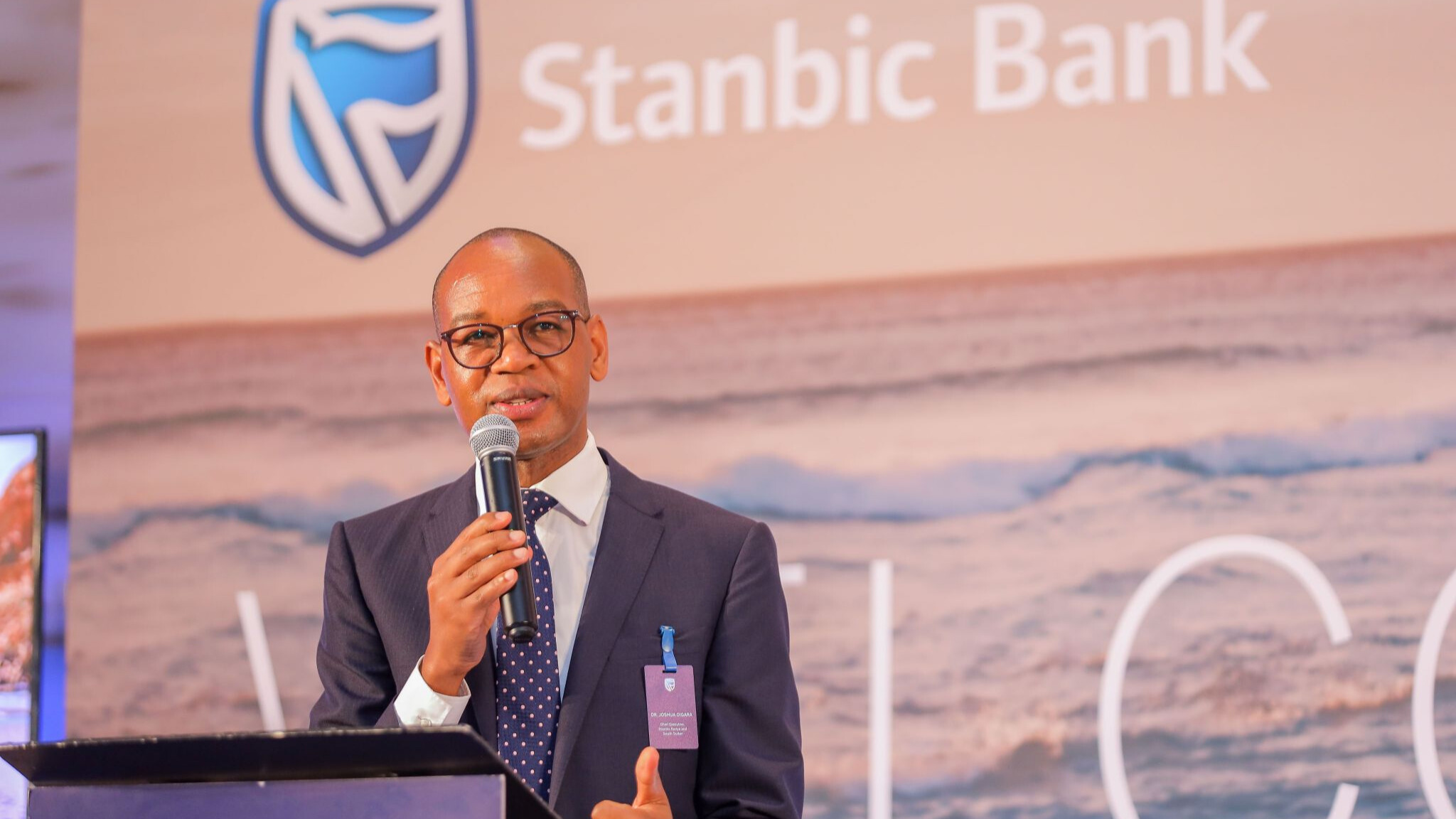
Stanbic chief executive Joshua Oigara said the reduced interim dividend reflects a deliberate decision to hold back capital for lending, not a shift in how the bank thinks about returning cash to shareholders. Oigara took over as CEO in March 2026, succeeding Patrick Mweheire, after leading KCB Group for nearly a decade.
The bank still expects to land a full year payout ratio of 50 to 60 percent, the range it has used in recent years. That framing suggests the final dividend, typically declared alongside full year results in March, will need to do more of the work this cycle.
Stanbic’s FY2025 payout came in at Kshs 22.35 per share, made up of a Kshs 3.80 interim dividend and an Kshs 18.55 final payout, itself a fourth straight annual increase even though full year profit stayed flat at Kshs 13.72 billion.
The numbers behind a flat profit
Net interest income rose 4.1 percent to Kshs 12.31 billion, while credit impairment charges fell by more than half, down 50.2 percent to Kshs 724.97 million. Together, those two moves absorbed a decline in non-interest income and a faster rise in operating costs, leaving total operating income up just 2.5 percent and profit before tax up 8.2 percent to Kshs 9.31 billion.
Earnings per share nudged up 0.9 percent to Kshs 16.71, a gain that barely registers next to the dividend cut and points to a board choosing to retain earnings rather than distribute them at the prior rate.
| Metric | H1 2026 | YoY change |
|---|---|---|
| Net interest income | Kshs 12.31B | +4.1% |
| Non-interest income | Kshs 7.61B | -0.1% |
| Total operating income | Kshs 19.93B | +2.5% |
| Credit impairment charges | Kshs 724.97M | -50.2% |
| Profit before tax | Kshs 9.31B | +8.2% |
| Profit after tax | Kshs 6.61B | +0.8% |
| Earnings per share | Kshs 16.71 | +0.9% |
| Total assets | Kshs 602.18B | +27.1% |
| Net loans and advances | Kshs 360.16B | +16.7% |
| Customer deposits and debt funding | Kshs 467.47B | +33.4% |
| Shareholders’ funds | Kshs 79.21B | +6.7% |
| Interim dividend per share | Kshs 1.64 | -56.8% |
Balance sheet growth is outrunning earnings
The gap between Stanbic’s balance sheet expansion and its profit growth stands out. Total assets grew 27.1 percent to Kshs 602.18 billion, net loans and advances rose 16.7 percent to Kshs 360.16 billion, and customer deposits and debt funding climbed 33.4 percent to Kshs 467.47 billion. Profit after tax, by contrast, grew barely 1 percent.
That pattern fits the story Oigara is telling. Stanbic ended 2025 with total assets of Kshs 541.3 billion after an 18.9 percent annual increase, itself built on a low base following a period of high interest rates that had squeezed credit demand. Growing the loan book by double digits again in just six months means funding that growth internally rather than paying it out as dividends, which is the direct tradeoff behind this quarter’s cut.
What it means for shareholders
Investors banking on Stanbic’s recent run of rising payouts will need to wait for the full year numbers to see whether the bank makes good on its 50 to 60 percent payout target. For now, the message from management is that this is a growth phase, not a retreat from returning cash to shareholders, and the final dividend due in the first quarter of 2027 will be the test of that claim.
