



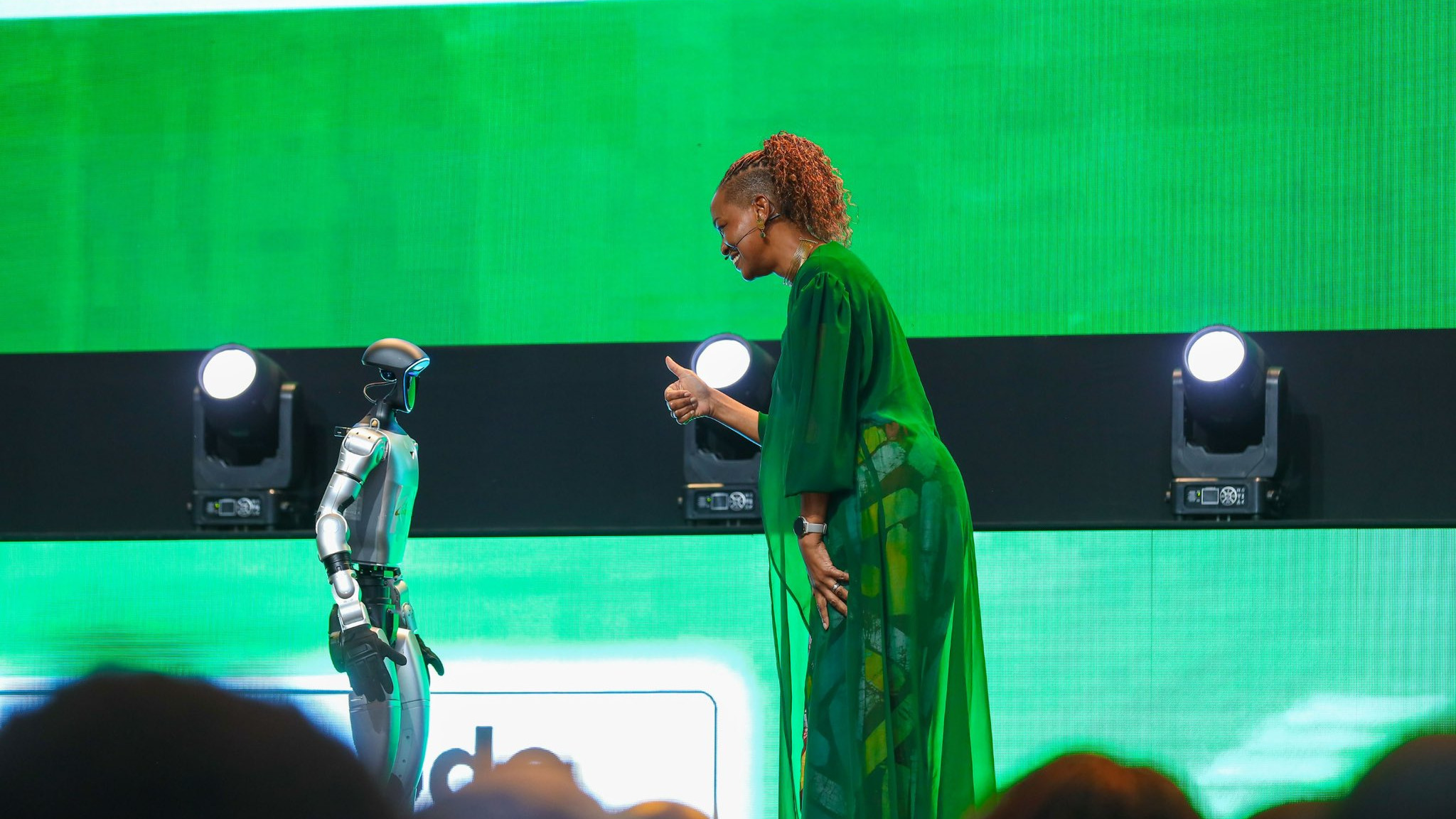
Safaricom Plc will lose one of its most influential executives at the end of this month.
Chief Financial Services Officer Esther Masese Waititu has resigned, with her exit taking effect on August 1, 2026, closing a tenure of just under three and a half years at the helm of M-Pesa’s financial services arm.
Why Waititu Is Leaving
Safaricom Chief Executive Peter Ndegwa confirmed the news to staff in an internal email, saying Waititu is leaving to pursue other opportunities. At her request, the company agreed that her last working day would fall on July 31, 2026.
Waititu joined Safaricom in February 2023 from KCB Bank Group, where she served as Director of Corporate Banking. Before that, she spent a decade at Stanbic Bank across several markets, including Zambia, and began her career at NCBA, formerly Commercial Bank of Africa.
Announcing her departure in a LinkedIn post, Waititu reflected on how far that starting point had taken her. She recalled beginning as an analyst at CBA Group more than two decades ago, and said a recent visit to speak with students at the Hope Care Centre’s Heart to Heart Mentorship Programme reminded her of once sitting where they now sit, unsure whether a career in finance was within reach. She said her younger self “could not have imagined” going on to lead M-Pesa as Safaricom’s Chief Financial Services Officer.
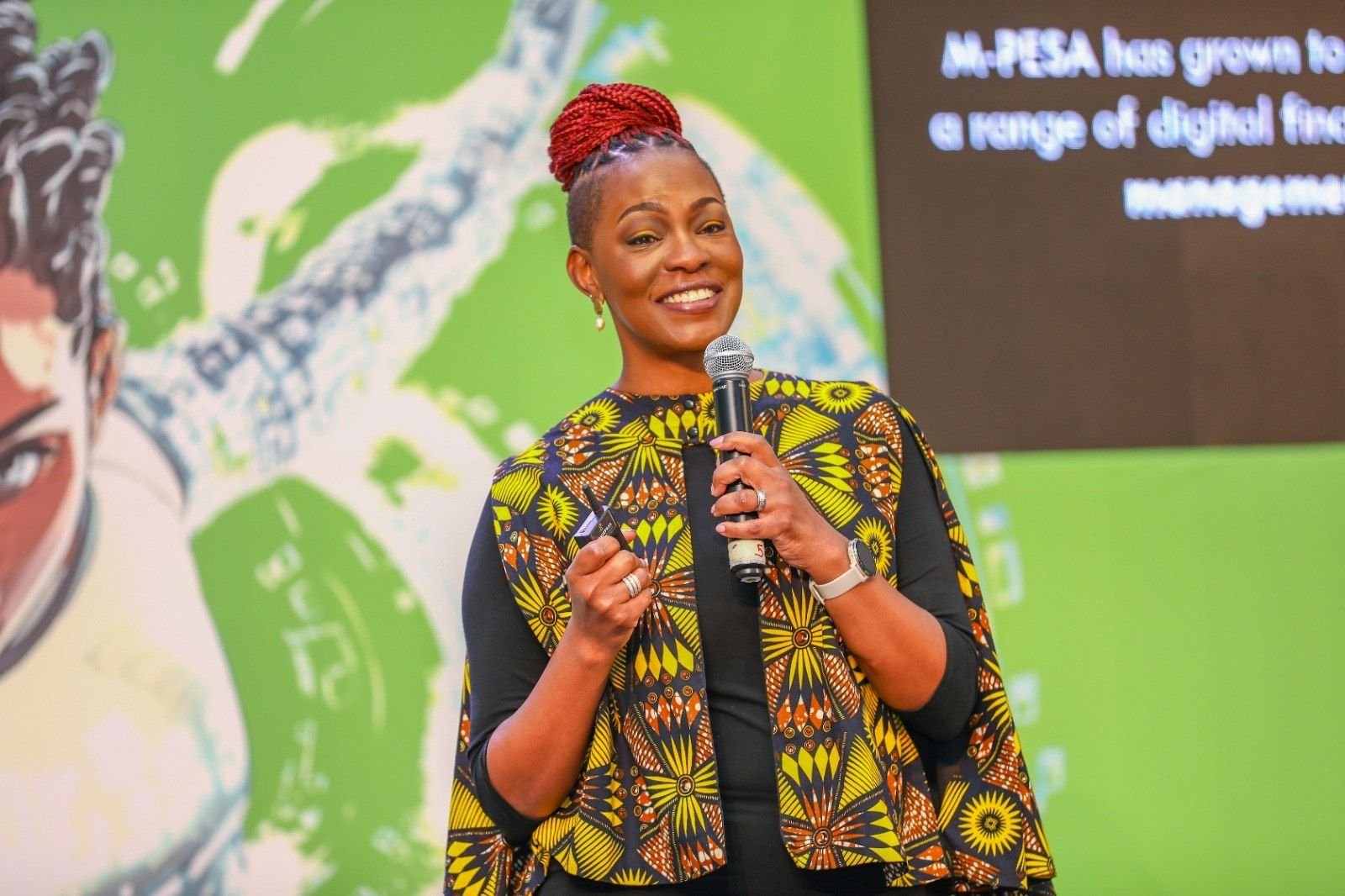
How She Describes Her Own Career
In her own words, Waititu positions herself as a transformational fintech and financial services leader who believes technology, trust, and partnerships can unlock inclusive economic growth at scale. She says her work at Safaricom centred on one question: how to translate access into real financial health, resilience, and opportunity for people and businesses.
She points to more than 19 years of experience across Sub Saharan Africa, leading teams across strategy, product, sales, operations, and channel management. Over that career, she says she has delivered more than $500 million in revenue across payments, collections, and trade finance, alongside growth of over $1 billion in loan assets and contingent liabilities spanning nine African markets. She also cites experience scaling platforms, running ISO certified operations, and building ecosystem partnerships with banks, fintechs, regulators, and global technology firms.
Her stated areas of expertise include trade finance and fund structuring, balance sheet growth and risk management on portfolios up to $770 million, digital innovation through agency banking and fintech partnerships, and governance work across Credit, Risk, Audit, and HR committees. She also describes herself as a qualified trustee and an advocate for financial literacy, framing her leadership style as collaborative, disciplined, and people centred.
What Changed Under Her Watch
Waititu inherited a payments platform and leaves behind something closer to a full financial ecosystem. Ndegwa credited her with evolving M-Pesa from a transfer and payments service into a platform spanning credit, savings, insurance, wealth management, and application programming interfaces for developers and merchants.
In her farewell post, Waititu described M-Pesa as already Africa’s leading digital payment platform when she arrived three years ago, and said she set out with her team to turn it into what she called a lifeline platform — one built to help people cover school fees, insure against risk, borrow to grow, and build wealth over time.
She walked through how several products fit that goal. Pochi la Biashara, she said, gave micro-entrepreneurs — food vendors, kiosk owners, boda-boda operators among them — a way to separate business from personal funds and grow with more confidence. Tuunza Mapato and device insurance, in her account, protect not just income but the tools that generate it, so a stolen phone or an accident doesn’t erase years of progress. And Ziidi, she said, has brought more than 5 million people into daily-interest savings and, for many, a first step into formal investing.
Her most cited technical achievement is the migration to Fintech 2.0, a cloud native architecture Ndegwa said future proofed the platform’s reliability and strengthened the Daraja developer ecosystem that lets third parties build on top of M-Pesa. Waititu described this rebuild as the foundation everything else depended on: Fintech 2.0 re-architected the core platform, while Daraja 3.0 opened those rails to Kenyan developers — some of whom, she noted, have since built products running on M-Pesa that she has never met, which she said was exactly the point.
That infrastructure work sat behind several product launches during her tenure, most notably Ziidi Trader, which went live on February 10, 2026. The mini app lets Kenyans buy and sell shares listed on the Nairobi Securities Exchange directly through M-Pesa, extending the platform into retail investing for the first time. Waititu called this the achievement she once thought would take a generation: putting the NSE in the pocket of every M-Pesa customer, with no brokerage account required and a single share as the only minimum. She said the product was built together with the NSE, the Capital Markets Authority, KASIB Kenya, and the Central Depository and Settlement Corporation, with investor protection and education designed in from the outset.
The numbers back up the momentum. M-Pesa revenue grew 14 percent in the first half of the 2025 financial year, rising from Sh77.2 billion to Sh88.1 billion, and finished the full year up 15.1 percent to reach Sh161.1 billion, making it Safaricom’s single largest revenue driver. Financial services revenue, the newer category covering credit, wealth, and insurance products that Waititu was tasked with building out, grew 5.2 percent year on year in the same period. Transaction volumes told a similar story: total M-Pesa transaction volume climbed 29.5 percent year on year to 37.2 billion transactions, with the platform now processing roughly 4,500 transactions per second at peak.
Waititu’s division also played a role in distributing government programs such as the Hustler Fund, which channels microloans to small borrowers through M-Pesa’s infrastructure, reinforcing the platform’s role in financial inclusion beyond Safaricom’s core telecom business.
| Metric | Figure | Period |
|---|---|---|
| M-Pesa revenue growth | 14% (Sh77.2bn to Sh88.1bn) | H1 FY2025 |
| M-Pesa revenue growth | 15.1% (to Sh161.1bn) | Full year FY2025 |
| Financial services revenue growth | 5.2% | FY2025 |
| M-Pesa transaction volume growth | 29.5% (to 37.2 billion transactions) | FY2025 |
| Peak transaction processing | Approx 4,500 per second | FY2025 |
| Ziidi Trader launch | February 10, 2026 | Under her tenure |
Her Reasons for Going
Waititu framed her exit as the natural next step rather than a break from a project in trouble. She said she has long held the view that inclusive finance and strong commercial performance reinforce each other rather than compete, and that watching this play out in everyday progress — particularly for women and girls — was the most rewarding part of the role. With what she called the ecosystem now firmly established, she said the moment felt right to begin a new chapter, and that she is leaving with pride in what the team built and with the same conviction that brought her to Safaricom: that finance should serve everyone.
She thanked Ndegwa for his trust and partnership throughout her tenure, and thanked Board Chairman Adil Khawaja and the wider Board, along with investors, her team, and M-Pesa’s customers. She said she looks forward to sharing details of her next move soon.
What Comes Next
Safaricom has not yet named a successor, and the company faces the task of replacing three senior executives within months of each other. For a business where M-Pesa now anchors both revenue growth and the group’s inclusion agenda, the choice of who leads that division next will shape how Safaricom builds on the platform Waititu leaves behind.
Safaricom AGM Set to Rewrite Governance Rules as Vodacom Takes Majority Control
