



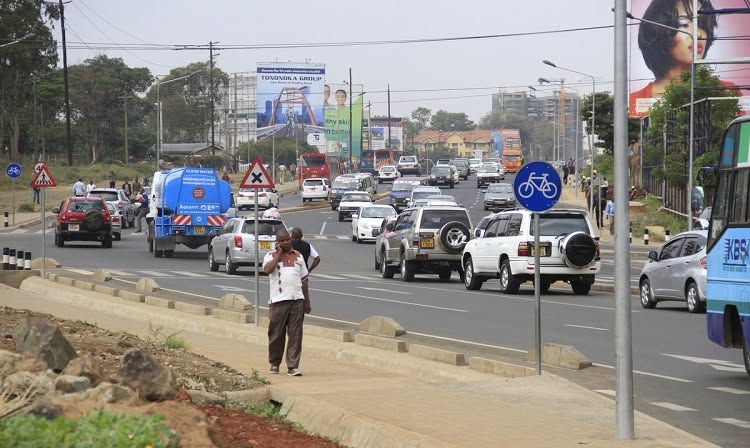
Motorists across Kenya will pay the same price at the pump for a third straight month.
The Energy and Petroleum Regulatory Authority confirmed on Tuesday that maximum retail prices for Super Petrol, Diesel and Kerosene stay unchanged for the period running July 15 to August 14, 2026, even as global oil markets swing on tension in the Middle East.
The Treasury extended a cut to Value Added Tax on petroleum products, keeping the rate at 8 percent instead of the standard 16 percent, for another three months through mid October. Energy and Petroleum Minister Opiyo Wandayi also confirmed a subsidy of 945 million shillings, about $7.31 million, drawn from the Petroleum Development Levy Fund to hold prices at current levels through the July and August cycle.
Why the Government Stepped In
Kenya buys nearly all its fuel from the Middle East through government to government deals. When the United States and Israel exchanged strikes with Iran earlier this year, crude prices jumped, and Nairobi cut VAT on fuel from 16 percent to 8 percent in April to soften the blow on households and businesses. Wandayi renewed that cut this week and said supply remains steady despite fresh hostilities between the United States and Iran.
Kenya’s transport sector went on strike in May over an earlier round of fuel price hikes, a walkout that lasted about a week before operators called it off. That history explains why the government reached for both a tax cut and a direct subsidy rather than letting global prices pass straight through to consumers.
Average landed cost for imported Super Petrol reached $886.92 per cubic metre in June. Diesel cost $984.37 and Kerosene $1,028.17 over the same month. “The situation in the Middle East remains uncertain, creating high price volatility,” the regulator said, pointing to that backdrop as the reason for extending both the VAT relief and the levy backed subsidy.
What Drivers Pay by Town
Under the review, a litre of Super Petrol in Nairobi holds at 214.03 shillings, Diesel at 222.86 shillings and Kerosene at 191.38 shillings. Prices shift by town based on transport distance from the coast, where Kenya’s fuel enters the country.
- Mombasa: Super Petrol 210.87, Diesel 219.58, Kerosene 188.09
- Kisumu: Super Petrol 213.69, Diesel 223.08, Kerosene 191.63
- Nakuru: Super Petrol 212.92, Diesel 222.27, Kerosene 190.81
- Eldoret: Super Petrol 213.69, Diesel 223.09, Kerosene 191.63
- Nyeri: Super Petrol 215.90, Diesel 224.87, Kerosene 193.38
- Embu: Super Petrol 215.46, Diesel 224.40, Kerosene 192.91
- Meru: Super Petrol 218.67, Diesel 227.85, Kerosene 196.35
- Kitui: Super Petrol 216.15, Diesel 225.14, Kerosene 193.65
- Mwingi: Super Petrol 216.78, Diesel 225.81, Kerosene 194.32
- Lamu: Super Petrol 215.84, Diesel 224.93, Kerosene 193.44
- Hola: Super Petrol 216.30, Diesel 225.41, Kerosene 193.93
- Taveta: Super Petrol 215.18, Diesel 224.21, Kerosene 192.72
Prices in Mombasa sit below the national average because the port sits closest to the import terminal. Northern towns such as Mandera and Moyale carry the steepest costs in the country, since fuel must travel furthest by road once it clears the coast.
The Math Behind the Sticker Price
EPRA’s cost breakdown for Nairobi shows why the pump price lands where it does. Landed cost for Super Petrol runs 122.64 shillings per litre before any tax. Storage, distribution and margins for importers and dealers add roughly 22 shillings.
Taxes and levies, including excise duty, the Road Maintenance Levy and VAT, add close to 74 shillings per litre. A price stabilisation deficit of 5.08 shillings per litre also factors into the Super Petrol figure, reflecting the gap the levy fund covered to keep the pump price from rising.
Where Inflation and Rates Head Next
NCBA’s half year 2026 market research report points to a softer inflation trend ahead as the shock from earlier oil price spikes fades. Under the bank’s base case, talks between Iran and the United States move toward a wider agreement, the ceasefire between Israel and Lebanon holds, and Gulf producers reroute more oil through pipelines, pulling Brent crude toward an average of $70 per barrel.
That outlook, combined with an expected drop in vegetable and fruit prices, leads NCBA to project headline inflation averaging between 6.0 and 6.5 percent in the third quarter, down from 6.4 percent in June. The bank expects the central bank’s policy rate to settle between 8.50 and 8.75 percent by December, with borrowing costs staying close to current levels as government borrowing needs and liquidity conditions offset any pull from softer inflation. The 91 day Treasury bill rate has already climbed near 9 percent.
East Africa’s Inflation Story Splits Between Calm and Concern
What This Means for Households
A frozen pump price buys breathing room, not a solution. The VAT cut and the subsidy both carry an end date, and the underlying cost pressure from Middle East supply risk has not gone away. For now, households and transport operators get a second straight month without a fresh hike, giving budgets a chance to catch up before the next review lands on August 15.
Kenya’s Economy Grows 5.3% in Q1 2026, Led by Tourism and Construction
