



Kenya’s Supreme Court has stopped the state from selling off a portfolio of Cytonn linked properties, buying the company’s investment partnerships more time to argue their case at the country’s highest judicial level.
A five judge bench delivered the ruling on 3 July 2026, halting the Official Receiver from enforcing vesting orders over nine properties tied to Cytonn Investments Partners entities. The ruling arrives after six years of litigation stretching back to 2020, when Cytonn’s high yield investment products first collapsed under the weight of pandemic era defaults.
What the Court Actually Decided
The bench, led by Deputy Chief Justice Philomena Mwilu, granted conservatory orders stopping the Official Receiver from implementing vesting orders the Court of Appeal had affirmed in November 2025. Those orders would have handed the state control over nine properties, including The Alma in Ruaka, Mystic Plains and Newtown, Riverrun in Ruiru, Taraji Heights, The Ridge, and three parcels in Kilimani.
The court did not rule on the merits of the underlying dispute. It simply preserved the properties in their current state while Cytonn’s appeal proceeds, preventing the Official Receiver from valuing, selling, or transferring them to third parties in the meantime.
Two other parties also won the right to join the case. The CHYS Creditors’ Committee, representing more than 3,000 creditors, and SBM Bank Kenya, a secured lender with a claim over The Alma property, will now participate directly in proceedings that could determine how far the state’s insolvency powers stretch over the constitutional right to property.
Why the Case Reached the Supreme Court at All
Getting to Kenya’s apex court required clearing a jurisdictional hurdle first. The Official Receiver argued the entire dispute was a commercial insolvency matter dressed up in constitutional language, and that the Supreme Court had no business hearing it under Article 163(4)(a) of the Constitution, which reserves automatic appeal rights for cases genuinely involving constitutional interpretation.
The court disagreed, pointing to its own earlier finding in the Bia Tosha case that a dispute’s commercial substance doesn’t automatically disqualify it from constitutional review. Cytonn’s core argument, that vesting orders under Sections 444 and 445 of the Insolvency Act cannot override the property rights of solvent legal entities under Article 40 of the Constitution, met the threshold the bench needed to take up the case.
That finding matters beyond Cytonn’s own properties. It confirms that Kenyan courts will weigh constitutional property protections against insolvency law even when the underlying dispute began as a straightforward debt recovery matter, a question with implications for how special purpose vehicles and related-party lending get treated in future liquidations.
A Long Road Through Kenya’s Courts
Khusoko has tracked this dispute since Cytonn first sought voluntary administration for its high yield products in October 2021, when the company insisted the move was meant to restructure and return value to investors rather than signal collapse. That optimism gave way to liquidation in January 2023, after the funds failed to meet financial obligations to more than 3,000 investors whose money had gone into unregulated products the Capital Markets Authority had already flagged.
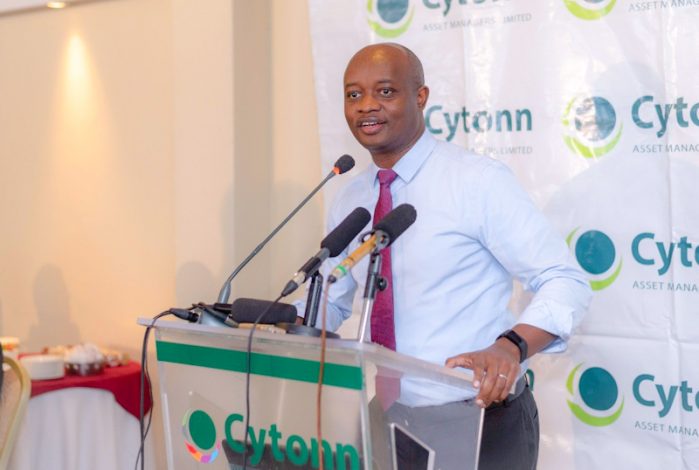
The Court of Appeal delivered a sweeping defeat for Cytonn in November 2025, dismissing all appeals across multiple consolidated cases and upholding the High Court’s finding that special purpose vehicles created to hold the disputed properties were not genuinely independent from Cytonn’s founder, Edwin Dande. The appellate court went further, describing the corporate structure connecting these entities as a scheme resembling fraud, language the Supreme Court’s own summary of the case reiterates was not itself a formal finding of fraud but reflected inter company lending and commingled funds.
By March 2026, the Business Registration Service had begun advertising the properties for disposal, aiming to recover an estimated Ksh 11 billion for investors. Cytonn pushed back publicly at the time, telling creditors that any sale remained subject to court oversight and would be challenged, a position that has now delivered at least a temporary reprieve at the Supreme Court.
What Happens Next
The properties stay off the market for now, but nothing about their ultimate fate has been settled. The Supreme Court’s ruling addresses only the preliminary questions: whether it has jurisdiction to hear the case, whether the properties should be preserved in the meantime, and who gets a seat at the table.
The underlying appeal, the one that will decide whether these properties return to Cytonn’s investment partnerships or proceed to sale under the Official Receiver’s control, still has to be argued and decided. Costs for this round of applications will follow whatever outcome that appeal eventually reaches.
For the more than 3,000 creditors who have waited years to see any return on money invested in CHYS and CPN, the ruling adds another chapter to a case that keeps circling back to the same fundamental tension: how much protection Kenya’s Constitution offers property held through corporate structures designed, at least in part, to keep that property one step removed from the entities that actually owe the money.
