



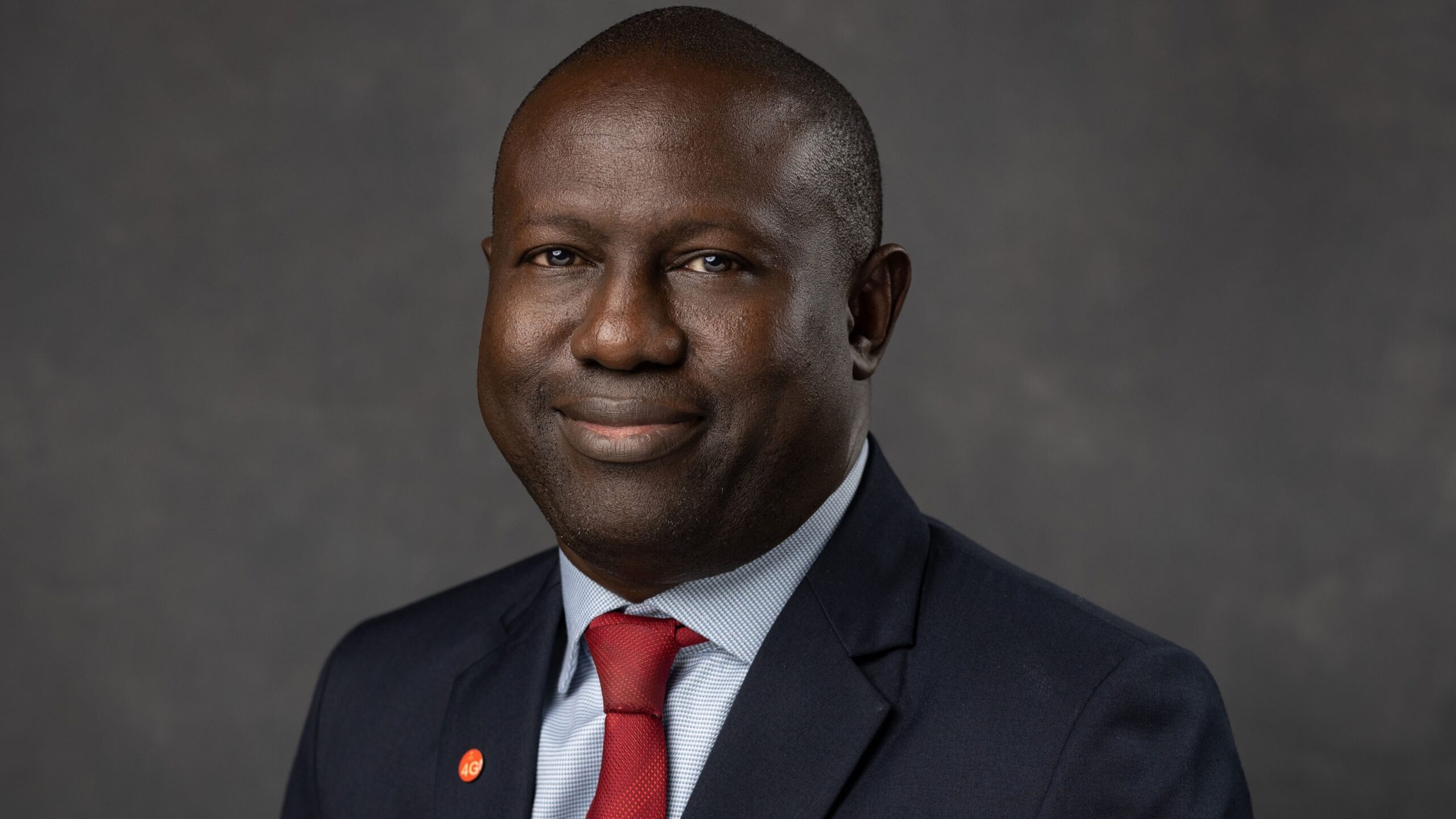
Airtel Kenya has a new Managing Director. The Board of Airtel Networks Kenya Limited has appointed Djibril Tobe to lead the telecom operator, taking over from Ashish Malhotra, who steps up to become Chief Executive Officer of Indus Towers Africa.
Under Malhotra, Airtel Kenya pushed through the largest network expansion in its history, rolled out 5G and eSIM technology, and turned Airtel Money from a minor player into a genuine challenger in mobile payments. Tobe inherits a company with real momentum, and the question now is whether he can keep it building.
A Telecom Veteran With Regional Range
Tobe brings more than two decades of experience spanning telecommunications, fast moving consumer goods and consulting across African markets. His resume reads like a tour of the continent’s toughest operating environments, the kind that tends to produce executives who know how to grow a business under pressure.
He arrives from Airtel Congo B, where he served as Managing Director since May 2023. Before that, he ran Airtel Chad in the same role and worked as Commercial Director at Airtel Burkina Faso. His earlier career took him through Expresso Guinea as Chief Executive Officer, then through business units at Ernst & Young and Coca-Cola. Few incoming telecom leaders arrive with that mix of operator and consulting experience, and it positions him well for a market where commercial growth and financial inclusion now go hand in hand.
What Malhotra Leaves Behind
Malhotra’s four year tenure reshaped Airtel Kenya. The numbers tell the story plainly.
| Metric | Change under Malhotra |
|---|---|
| Network sites rolled out | Over 2,000, the largest expansion in company history |
| Airtel Money market share | Grew from 2% to 11% |
| Subscriber base | Expanded from 16 million to over 24 million |
| Revenue | Doubled over the four year period |
Beyond the headline figures, Malhotra pushed Airtel Kenya into new technology territory. The company launched 5G services, rolled out eSIM technology, expanded fiber connectivity, introduced Spam Alert services, and scaled the Home & Office Smart Connect broadband platform, the largest rollout of its kind in the company’s history. Together, these moves turned Airtel Kenya into one of the country’s fastest growing telecom operators and gave Tobe a strong base to build from rather than a turnaround project.
“We welcome Djibril Tobe to his role, and we are confident that his expertise will steer Airtel Kenya to the next level as we continue delivering innovative and relevant solutions,” the Board said in a statement. “We would like to commend Ashish for his immense contribution to Airtel Kenya’s growth journey, and we wish him success in his new role.”
How Kenya Fits Into Airtel Africa’s Bigger Picture
Tobe takes charge at a time when East Africa, and Kenya specifically, has become a genuine growth engine for the wider Airtel Africa group. In the nine months to December 2024, mobile service revenue across the East Africa region, which spans Uganda, Kenya, Rwanda, Tanzania, Zambia and Malawi, climbed to 1.367 billion dollars, up from 1.227 billion dollars a year earlier, an increase of 11.4%. Mobile money revenue across the same region rose 14% to 549 million dollars over the same period.
The momentum continued into the first half of the 2025 financial year, when East Africa posted a 15.6% revenue increase, with Kenya named alongside Uganda and Tanzania as the markets leading that growth. Group wide, Airtel Africa’s mobile money platform reached 44.6 million subscribers by the end of its 2024/25 financial year, up 17.3%, with annualised transaction value hitting 145 billion dollars. Mobile money alone now contributes just over a fifth of total group revenue, a reminder of how central platforms like Airtel Money have become to the company’s strategy, not just in Kenya but across the continent.
Group revenue for the year ended 31 March 2025 reached 4.955 billion dollars, up 21.1% in constant currency, while net profit swung to 328 million dollars from a 89 million dollar loss the prior year. Airtel Africa has also guided capital expenditure of 725 to 750 million dollars for the coming year, with investment earmarked for data centres and home broadband, infrastructure that will shape what Tobe can build on in Kenya specifically.
The Board’s Bet on What Comes Next
The Board framed the appointment as continuity rather than a reset, expressing confidence that Tobe will lead Airtel Kenya into its next phase of growth, innovation and customer centric transformation, building on the momentum Malhotra established. Tobe is not walking into a business that needs fixing. He is walking into one that needs scaling, across mobile money, broadband, and the data services that increasingly drive revenue across Airtel’s African markets.
Whether he can match Malhotra’s four year run, doubling revenue while pushing Airtel Money’s market share from single digits into double digits, will likely shape how Kenya’s telecom sector competes over the next several years.
