




Africa’s money is not simply sitting in bank accounts. It moves, hedges, structures, and plans across generations and the people who hold it are far more disciplined than their public image suggests.
The Standard Bank 2026 Wealth Report, produced with Business Day, draws on interviews with high-net-worth individuals (HNWIs) and wealth managers across the continent to map how African wealth actually works. The picture that emerges is not of extravagance. It is one of deliberate engineering.
“Africa’s wealthy are less concerned with the optics of affluence than with the mechanics of control,” the report notes. In markets defined by currency swings, regulatory shifts, and political uncertainty, wealth becomes a tool of navigation, buying the ability to move capital, secure education, and act fast when opportunity presents itself.
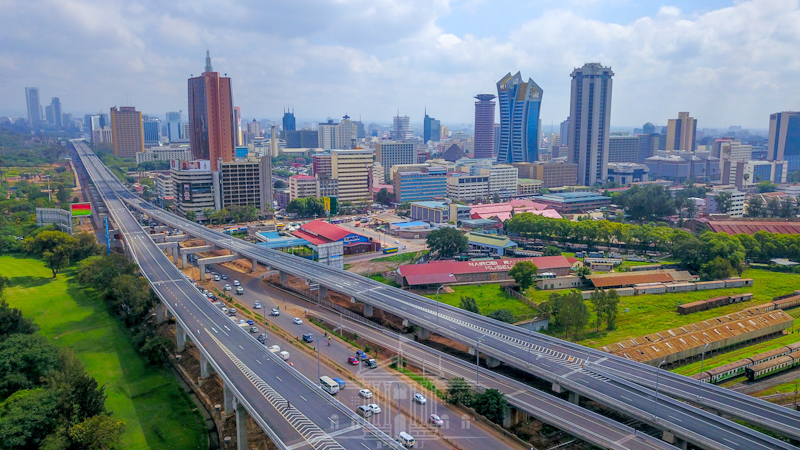
Kenya: the crossroads economy
Kenya sits at the centre of East Africa’s wealth story. It ranked fourth among Africa’s wealthiest cities in the 2025 Africa Wealth Report by Henley & Partners and New World Wealth, with Nairobi home to 4,200 millionaires — nearly half of Kenya’s total private wealth. The country holds 6,800 millionaires in total and 16 centi-millionaires, individuals with liquid assets above USD 100 million.
Wealth here concentrates in banking, manufacturing, agriculture, real estate, and retail, though its source is increasingly the country’s role as a regional connector. “Kenya has emerged as the hub that integrates the East African economy — a place from which to connect to either side of the continent, opening up vast wealth-creation opportunities,” the report notes. Someone running business in Ethiopia, for example, finds it easier to base operations in Nairobi because of the country’s streamlined business permits and openness to foreign direct investment.
Tea remains the country’s leading export commodity, accounting for 16.3% of total exports and ranking as Kenya’s second-biggest source of foreign exchange, according to the USDA Foreign Agricultural Service. But the commercial real estate sector has emerged as the dominant investment vehicle among the wealthy.
“For our clients, property is number one,” said Winnie Koech, Head of Wealth and Investment at Stanbic Kenya. “Kenyan clients prefer investing in Grade A office property, which has become a big sector.”
The pandemic-era work-from-home shift that reshaped commercial property globally never landed in Kenya. Koech attributes this to culture: “Working from home just didn’t work from a cultural perspective.” Co-working spaces filled the gap, creating demand from companies still establishing themselves in the market.
Knight Frank’s 2025 Kenya Market Update reinforces this picture. The prime residential sales index rose 5.63% year on year to June 2025, while prime residential rents grew 7.96% over the same period. “This sustained performance underscores continued demand from high-net-worth individuals and expatriates, particularly for well-priced properties in prime locations,” Knight Frank notes. Infrastructure investment amplifies this: Knight Frank specifically cited Talanta Sports City in Nairobi as the kind of government-led project that shapes surrounding real estate and commercial activity.
A separate 2025 survey published on Khusoko.com found a sharp shift in how Kenya’s wealthy deploy property wealth — the share allocated to primary and secondary homes dropped from 50–60% in 2024 to just 22% in 2025, as investors moved toward income-producing assets. Most wealthy Kenyans now hold two or three homes: a primary residence in Nairobi, a leisure property on the coast or in a rural area, and additional units for rental income or capital appreciation.
Old dynasties, new discipline
Kenya’s financial elite still bears the imprint of long-standing commercial dynasties. “A big percentage of the country’s wealthy belong to well-established commercial networks known for their strong entrepreneurial culture,” Koech said. “Many of our largest clients in this segment are now in their fourth generation of wealth transfer.”
The formula these families use is deliberate. Children study abroad — London is a common destination — then return to work in the family business. Coming back is not optional. “It is not uncommon for these families to allow their kids to pursue good corporate jobs in jurisdictions like London and later pay the kids to come back to Kenya to run the family business,” Koech noted. “They are compensated well for doing so.”
For many other Kenyans, however, wealth transfer remains a cultural obstacle rather than a financial one. The report identifies a widespread discomfort with contemplating mortality as a structural barrier to succession planning. Wills and formal wealth-transfer structures remain under-used, not because people lack the means but because drawing one up feels like an admission.
The African wealth mindset: pragmatism above all
Across East Africa, West Africa, and southern Africa, the report finds a consistent psychological pattern among HNWIs: they engineer wealth more than they accumulate it.
The continent’s wealthy fall into three broad archetypes. The entrepreneur treats capital as fuel and speed as advantage. The corporate grafter converts structured income into durable portfolios, prioritising stability over spectacle. The legacy steward manages wealth not as a personal asset but as a multigenerational endowment, with governance at its core.
What unites them is not how they made their money but how they think about it. “Across regions and sectors, wealth is viewed as a tool of navigation,” the report states. It buys optionality — the ability to move across jurisdictions, fund education, and act quickly.
This orientation reflects rational experience. African entrepreneurs face external shocks that are not theoretical. Currency depreciation can erode savings overnight. Policy changes reshape industries in months. Infrastructure gaps complicate even straightforward expansion plans. In response, capital carries a dual mandate: grow and protect.
“Their businesses are already exposed to political uncertainty, currency swings, and sector challenges,” said Alan Wellburn, Head of Wealth Management at Standard Bank Wealth and Investment SA. “Once profits leave their businesses, the instinct is to protect and diversify family wealth. The first step is converting earnings into hard currency and then investing offshore.”
This is not capital flight. It is rational portfolio construction. Wellburn distinguishes between how African entrepreneurs manage commercial risk and personal wealth: their businesses operate in emerging-market reality, absorbing volatility because that is where the opportunity was. Personal portfolios, by contrast, ring-fence a core wealth component — sufficient to guarantee the family’s lifestyle regardless of market movements — and invest it in hard-currency money-market funds, global bonds, or diversified equity portfolios. Only capital outside that core moves into higher-risk positions.
What Kenya’s wealthy actually invest in
Equity remains a central pillar. Kenyan HNWIs gravitate toward Safaricom and banking stocks because they combine dividend payouts, consistent profitability, and long-term growth.
“Safaricom offers unmatched scale and cash flow, while most bank stocks deliver reliable dividends and benefit from Kenya’s expanding financial sector,” Koech said.
Government bonds attract institutional confidence because of their tax exemptions and long-term yields. The Treasury bond market, which the National Treasury data to March 2025 showed offering yields of 8.88% (91-day) to 10.45% (364-day) on T-bills, remains compelling for capital preservation.
Crypto barely registers. Among older clients — many aged 60 and above — the appetite simply does not exist. “They’ll never put their money into things they’re not familiar with,” said Eddie Masibi, regional head for Wealth and Investment in Gauteng at Standard Bank. Those who do access crypto typically do so through exchange-traded funds, keeping the allocation at 2% or less of the overall portfolio.
Logistics is growing as an investment category, fuelled by Kenya’s position as an East African gateway and the movement of goods across the continent and broader region. As the Africa Continental Free Trade Area (AfCFTA) opens new corridors, Kenya’s wealthy are cashing in on infrastructure gaps before they close.

The family office rises in Africa
Family offices — once considered the domain of European dynasties — are no longer a quiet preserve of the developed world. Africa is catching up fast.
Henley and Partners’ 2025 Africa Wealth Report projects Africa’s millionaire population will grow 65% over the next decade. Knight Frank forecasts that Africa’s ultra-rich will record the fastest wealth growth by 2028, more than twice the global average. Such rapid accumulation demands more sophisticated structures to preserve and transfer family fortunes.
“With so many African fortunes still in their infancy, family offices bring both governance and psychological security, giving founders the confidence that their legacies will endure and grow in the hands of those who follow,” said Stefan Viljoen, Head of Family Office at Standard Bank Wealth and Investment.
A family office is not simply another private bank. It is the family’s coordination centre — managing investment strategy, fiduciary oversight, tax planning, succession, philanthropy, and often the overlooked practicalities: property management, travel logistics, and family security. In Africa, a distinctive feature is the central role of storytelling. Founders place enormous emphasis on ensuring heirs hear how the business was built. “The younger generation hears about the setbacks endured, the long hours invested, and the resilience required, so that they inherit a mindset of responsibility rather than entitlement,” Viljoen said.
The next generation presents its own challenge. Africa’s rising heirs tend to be more digitally engaged, more globally mobile, and more drawn to impact investing and green energy than their parents. The family office plays a mediating role — educating them in investment basics, tax, and governance, while giving them a voice in shaping family direction.

Succession: the defining risk no one wants to discuss
The transition from first-generation creator to second-generation custodian sits at the heart of African wealth risk. The tension is between control and delegation, tradition and modernity, individual ambition and collective responsibility.
Families are responding by formalising governance: establishing family councils, drafting constitutions, and investing in the financial education of heirs. The aim is not simply to transfer assets but to preserve the intent behind them. “The family office is not just about ownership, but about turning ownership into stewardship,” the report notes. “The aim is to pass on both assets and the discipline and values that created those assets in the first place.”
Many founders remember building from nothing. That memory drives behaviour. They fear the “shirtsleeves to shirtsleeves in three generations” proverb — that wealth made by one generation gets spent by the third. The fear, the report notes, is often greater than the reality. But it shapes investment decisions, education spending, and the degree to which children are brought into the business early.
When founders eventually exit their businesses, the proceeds typically flow into a commercial endowment — a diversified pool of assets managed for long-term growth, tax efficiency, and governance. These endowments fund education, philanthropy, and new ventures long after the original enterprise has been sold or transformed.
“When you sell your business, there is euphoria. You get paid,” one client told Chris Browne, Group Head of Wealth and Investment at Standard Bank. “But the following day there is immense depression, because you are on the other side of a different problem — which is managing the wealth you created.”
Real estate still anchors the portfolio
Despite the shift toward income-producing assets, brick and mortar retains its psychological pull. Knight Frank’s Wealth Report 2025 confirms that even the younger well-off generation continues gravitating toward the classic trio of stocks, property, and cash. Among Africa’s ultra-rich, commercial real estate is gaining ground: factories, warehouses, distribution depots, call centres, hotels, shopping centres, and office blocks.
For many business owners, buying the premises from which they operate — whether a factory or an office block — marks the first step into commercial property investment. Many then expand into smaller community shopping centres or warehouses, leasing them to generate additional income streams.
Savills’ latest World Cities Prime Residential Index showed Cape Town recording 6% residential price growth in 2025, well above the global average of 1.8%, ranking it alongside Tokyo, Seoul, Dubai, and Amsterdam as top performers. Cape Town commands Africa’s highest residential real-estate prices at an average of USD 5,800 per square metre, ahead of Tamarin in Mauritius at USD 4,500 per square metre. Savills expects the city to grow by 4% to 5.9% in 2026.
Nairobi ranks as Africa’s fourth wealthiest city and East Africa’s economic powerhouse. Cairo and Nairobi together represent a growing share of the continent’s private wealth concentration, sitting behind Johannesburg and Cape Town.
The trust economy
Wealth management in Africa ultimately runs on trust. The wealthy operate through small, carefully selected circles. They do not expand that circle as their wealth grows — if anything, it tightens.
“Beneath the complexity, they are far more human than people assume,” Browne said. “At their core, they value their families, their security, and above all, their relationships. Trust is not given easily, and once it is earned, it carries enormous weight.”
For advisors, the lesson is not about credentials. It is about consistency over time — being two steps ahead, flagging risks before they surface, and presenting solutions before they are asked for. “In the end, it is the strength of the relationship, not just the quality of the advice, that determines whether you have a seat at the table.”
Africa’s wealthy built their money through resilience and ingenuity in environments that offered few guarantees. What they want now is a partner who understands both the weight of that and the responsibility that comes with it.
