



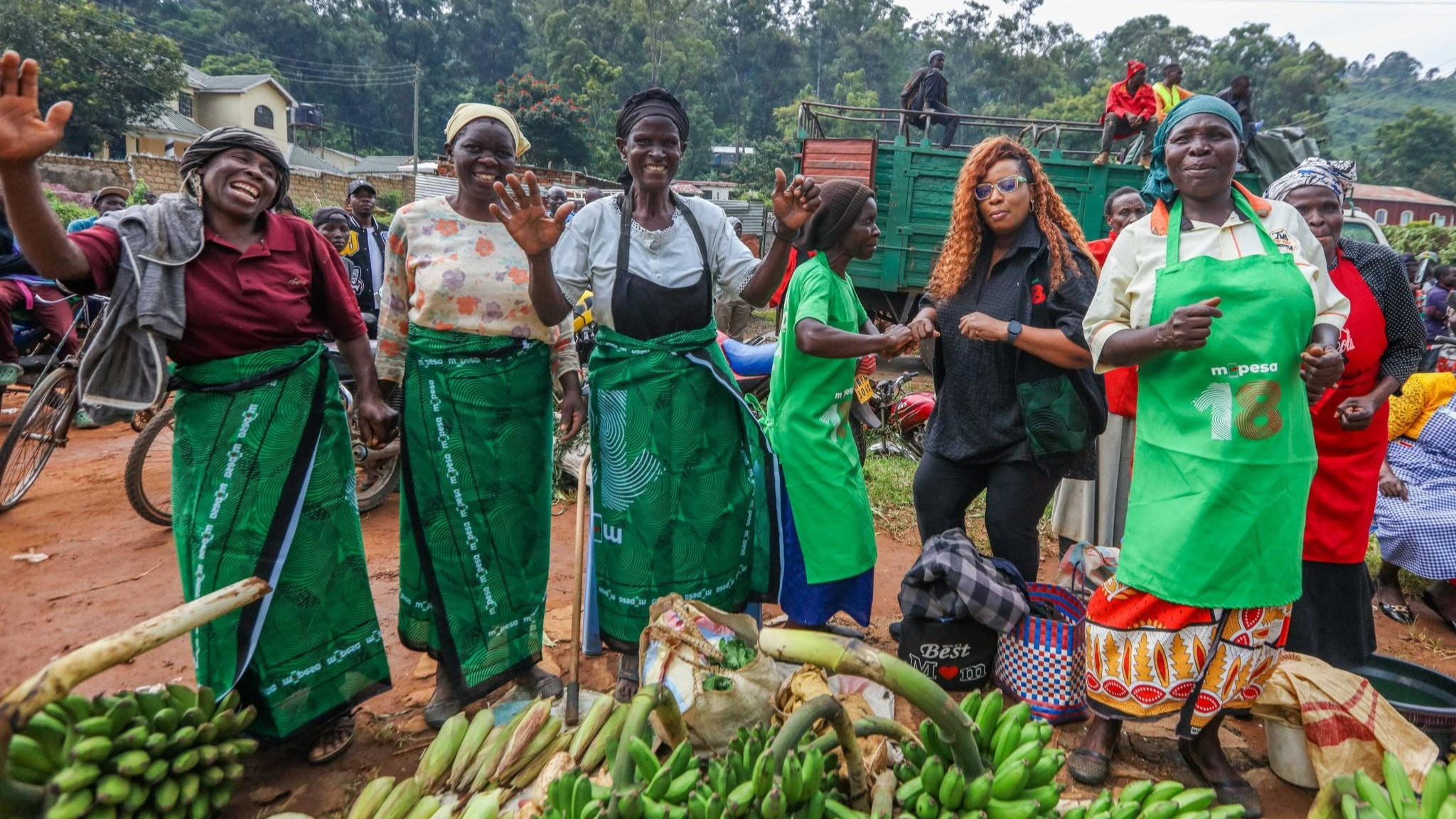
Kenya’s micro-enterprise economy runs on the energy of millions of small traders, most of them women. These entrepreneurs sell produce at dawn, restock shelves by afternoon, and navigate cash flow with no safety net.
Yet until recently, most managed their business and personal money in the same mobile wallet, with no clean record of what they earned, spent, or saved.
A joint case study by Safaricom and the GSMA’s Connected Women programme documents how Pochi la Biashara, Safaricom’s merchant digital financial service, launched in 2020, is reshaping how women micro-entrepreneurs in Kenya manage money, protect income, and build a path toward formal financial participation.
Between December 2024 and December 2025, the number of women actively using Pochi grew by 92%, compared to 78% growth among men. Women now account for just over 52% of active Pochi users, representing more than 900,000 people. Among Safaricom’s M-PESA product suite, Pochi stands out as one of the few products where women form the majority of active users.
The Problem Pochi Was Built to Solve
Micro-enterprises account for roughly 15 million jobs in Kenya and drive the majority of non-farm employment, according to the Ministry of Investments, Trade and Industry. Women make up a disproportionately large share of this workforce: 74.4% of working women in Kenya are self-employed, compared to 57.4% of working men.
Yet these same women consistently lag behind men in adopting digital financial services for business. Only 46% of women micro-entrepreneurs surveyed in a 2022 GSMA Consumer Survey had used mobile money for business in the previous three months, against 62% of men.
The barriers are structural, not personal. Women face steeper challenges around digital confidence, safety concerns, and unequal access to education and credit. They are more likely to close their businesses temporarily when a family member falls ill, and far less likely to have formally registered their enterprises — 5% compared to 10% of male counterparts, according to FinAccess data.
Safaricom identified three pain points that cut deepest for women merchants: mixing business and personal funds, losing income to fraudulent payment reversals, and privacy and harassment linked to their mobile numbers appearing on merchant stickers. Pochi la Biashara was designed to address each of them directly.
What the Product Actually Does
Pochi la Biashara functions as a merchant wallet linked to an M-PESA account, accessible via USSD by dialling *334#, through the M-PESA app, or via SIM toolkit. It separates business income from personal funds and blocks customer-initiated payment reversals once a transaction completes.
| Feature | What It Does for Merchants |
|---|---|
| Dual wallets | Keeps business and personal money separate |
| Non-reversal | Protects sales from fraudulent reversals |
| Mini-statements | Delivers quick transaction summaries for record-keeping |
| Lipa na Pochi | Lets customers pay directly from their own Pochi wallet |
| Airtime sales | Lets merchants earn commission selling airtime |
| Direct agent withdrawals | Enables fast cash access at M-PESA agents |
| Taasi loan | Unlocks working capital tied to business transaction history |
| Ziidi | Offers a savings and investment feature for Pochi income |
The non-reversal feature proved to be the single most powerful driver of adoption. In the longitudinal study, 81% of new users cited it as the reason they preferred Pochi over alternatives including M-PESA Send Money, Lipa na M-PESA, Paybill, and cash. Longer-term users, meanwhile, shifted their praise toward overall reliability, with 59% citing the consistency of the service as their primary reason for continued use.
The Business Impact on Women Entrepreneurs
The GSMA and IDinsight tracked 1,992 women micro-entrepreneurs across 35 markets in Nairobi, Murang’a, and Kajiado counties between January 2025 and June 2025. Researchers conducted baseline interviews with both Pochi users and non-users, then followed up with 188 women who had adopted the product by endline.
What they found across five dimensions of business performance:
| Impact Area | % of New Users Reporting This Effect |
|---|---|
| Now save more money | 35.6% |
| Made more sales | 24.2% |
| Increased income through Pochi | 11.3% |
| Invest more in the business | 10.5% |
| Purchase higher stock volumes | 7.0% |
Around 30% reported no measurable effect on business performance, which the researchers note is consistent with the short adoption window between baseline and endline. For many new users, the most immediate changes were behavioural rather than financial.
Women described using the mini-statement to understand their daily earnings for the first time. Others said the separation of funds stopped them spending business income on household groceries in moments of pressure.
“Before Pochi, I’d use the same money to buy supper. Now, I know what belongs to the shop,” said one merchant in Kajiado County.
Another trader in Kangari Market, Murang’a County, linked the digital payment option directly to new customers: “It has changed sales because now many people are cashless, so they will opt to buy here because they won’t have to withdraw.”

Safaricom’s CFO on Why This Matters
Esther Masese, Chief Financial Officer at Safaricom, connects the numbers to something more personal.
“Pochi makes me feel like the CEO of my business,” one merchant told her team. For Masese, that reaction captures something significant.
“Comments like this remind me why financial inclusion matters,” she says. “One of the most rewarding aspects of my role is seeing how accessible financial tools can empower small business owners to grow, build resilience, and create opportunities for their families and communities.”
She points to credit access as a longer-term consequence that rarely gets enough attention.
“Pochi opens a path to credit for women micro-entrepreneurs by generating transaction records that build a financial history. Across Kenya, SMEs and micro-entrepreneurs are the backbone of our economy, yet many still face barriers to growth, formal financial participation, and access to credit. What stands out most is how simple, practical solutions can unlock confidence, growth, and a stronger sense of ownership for entrepreneurs.”
The Revenue Case for Serving Women
The Safaricom-GSMA collaboration was not framed solely as a social impact initiative. It carried a clear commercial thesis: that women micro-entrepreneurs represent a large, underserved, and loyal customer segment, and that serving them well would drive sustainable revenue growth.
That thesis has held up. In Safaricom’s Half-Year 2026 results, revenue from Pochi grew 95% year-on-year to KES 1.68 billion, equivalent to roughly $12.9 million. Total Pochi accounts reached approximately 1.5 million, a 72.6% year-on-year increase. Despite its smaller base relative to established payment channels, Pochi contributed 19.2% of overall business payment growth in HY26.
The GSMA’s Connected Women programme, which led the collaboration, frames the opportunity in structural terms.
“In Kenya, micro-enterprises play a central role in supporting livelihoods, accounting for nearly 15 million jobs and driving the majority of non-farm employment. While all micro-entrepreneurs face similar challenges, women often experience these challenges more acutely than men. What’s more, the barriers women face are deeply rooted in structural inequalities: unequal access to education and financing, lower incomes, and restrictive social norms.”
Safaricom has since expanded Pochi’s lending portfolio by linking the Taasi loan product to a merchant’s Pochi transaction history, giving women with no formal credit record a route into working capital financing based on demonstrated business activity.

Nine Lessons That Shaped the Strategy
The GSMA draws nine lessons from the Safaricom engagement, each earned through field research rather than theory.
Design for pain points, not features. Products that directly address what women fear most, whether that is fraud, harassment, or loss of financial control, build trust faster than products loaded with capabilities women did not ask for.
Awareness does not equal usage. The study found significant gaps between knowing a feature exists and actually using it. Among new Pochi users, 71% knew about the Lipa na Pochi feature but only 53% had ever used it. The mini-statement gap was starker: 48% knew about it, but only 8% had used it. Closing the awareness-to-action gap requires demonstration, not just messaging.
Onboarding is the beginning, not the endpoint. Users who received no follow-up after signing up tended to drift toward passive usage or churn entirely. Continued engagement, through call centres, targeted SMS, and agent follow-up, meaningfully improved sustained activity.
Agents carry more weight than advertising. 60% of new users at endline said that direct conversations with Safaricom field agents, known internally as TDRs (trade development representatives), was the decisive factor in their decision to adopt Pochi. Marketing campaigns and printed collateral registered at 1.6% and 1.3% respectively. Human interaction, done well, outperforms broadcast reach in this segment.
Women trust other women. Peer advocacy drove 21.3% of adoption decisions, with women citing recommendations from fellow business owners as a key influence. Nearly half of new users first heard about Pochi through friends or family.
Hands-on demonstrations break myths. Many merchants believed they could not withdraw money directly from Pochi without transferring it first. TDRs who demonstrated the withdrawal process live, on the merchant’s own phone, resolved this misconception faster than any written guide.
Privacy is a product feature. Women merchants whose phone numbers appeared on merchant payment stickers reported receiving unwanted calls and messages from customers after hours. Safaricom responded by removing mobile numbers from payment SMS notifications and is developing a further masking feature for 2026. In the endline survey, 63% of new users said optional number masking would add meaningful value.
Multiple access channels serve more people. More than 70% of women in the study owned smartphones, yet most still accessed Pochi through USSD rather than the app. Safaricom chose to improve the USSD journey rather than push app adoption prematurely, reducing step counts and improving navigation while keeping the app as a longer-term aspiration.
Usage evolves over time. New users concentrated on immediate transactions, primarily daily sales and stock purchases (69%). More experienced users shifted toward reinvestment and business expansion (72%). Products and engagement strategies need to follow this arc rather than treat all users as a single cohort.

What Comes Next
Since the endline study concluded, Safaricom has continued refining Pochi through targeted onboarding, improved feature communication, and optimised customer value management campaigns. The company has also committed to new privacy enhancements expected to launch in 2026.
The GSMA’s broader findings from the Pochi collaboration now feed into recommendations for other digital financial service providers across low- and middle-income markets. The core argument is designing products that address the specific, documented challenges that women face, and then investing in the human infrastructure to support adoption, is not charity. It is strategy.
For Kenya’s 900,000 women Pochi users, the impact lands closer to home. As one merchant in Kajiado County put it: “When I save my money in Pochi it is safe. When I was not saving there, I would see items and buy unnecessarily. My savings have increased with Pochi.”
How Digital Payments Are Driving Financial Inclusion for Women Entrepreneurs in Africa
